
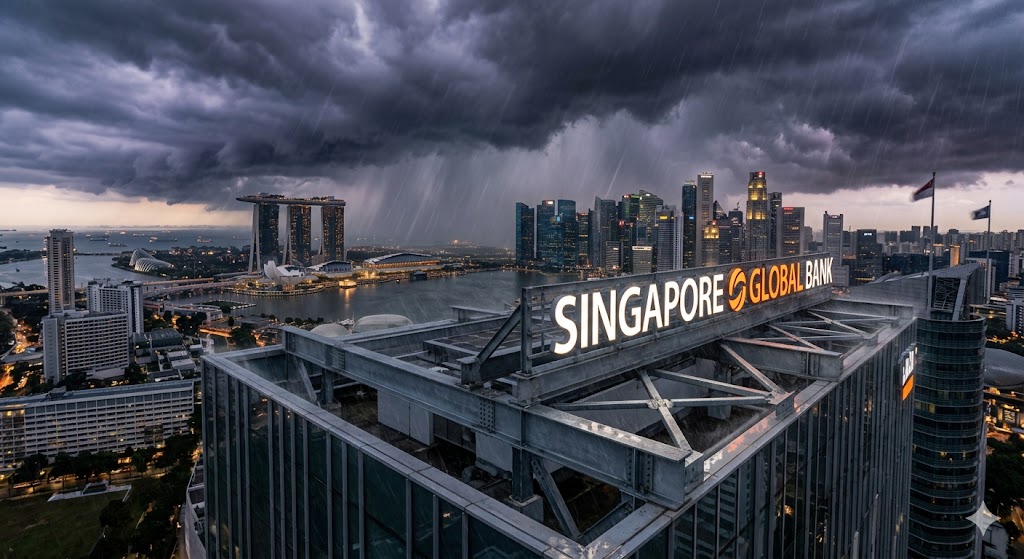
Structural Integrity of Rooftop Signs: Why Wind Load Calculations Matter in Singapore
Focus Keyphrase: Rooftop sign structural integrity
Secondary Keywords: Wind load calculations Singapore, BCA PTU signage requirements, structural design of signage, PE endorsement Singapore, Sumatra squall wind gusts
SEO Tags: Engineering, BCA Licensing, Eurocode SS EN 1991-1-4, Signage Safety
Meta Description: Discover why rooftop sign structural integrity is crucial. Learn how wind load calculations in Singapore ensure compliance with BCA PTU signage requirements.
Introduction to Rooftop Sign Structural Integrity
Rooftop signs dominate the modern urban skyline globally. Consequently, rooftop sign structural integrity is incredibly important. Wind load calculations Singapore prevent catastrophic structural failures.1 Therefore, engineers must perform these calculations with absolute precision.2 The Building and Construction Authority strictly regulates these structures.3 A Permit to Use (PTU) is often legally required.3
Furthermore, Professional Engineer (PE) endorsement is absolutely mandatory.4 This endorsement ensures compliance with rigorous structural standards.4 Singapore utilizes the SS EN 1991-1-4 Eurocode standard.5 This standard dictates specific aerodynamic parameters and wind velocities.5 Ignoring these calculations risks severe damage and public danger.6 Transitioning to sustainable urban design requires robust structural engineering.7 Consequently, this exhaustive report explores these vital engineering methodologies.
Meteorological Hazards: The Sumatra Squall
Singapore occupies a highly complex tropical meteorological zone.8 Prevailing winds are generally light and variable naturally.9 However, specific weather systems pose extreme structural threats.10 The Sumatra squall is a primary environmental hazard locally.10 Consequently, structural design of signage must accommodate these squalls.2
Characteristics of Sumatra Squalls
A Sumatra squall is an organized, intense squall line.10 It consists of severe, fast-moving thunderstorms moving together.10 These squalls develop over the Indonesian island of Sumatra.10 Subsequently, they travel eastwards across the Straits of Malacca.10 Singapore and Peninsular Malaysia frequently absorb their direct impact.10
These squalls typically occur during pre-dawn hours.10 They also strike frequently throughout the early morning.10 Their total duration spans between one and two hours.10 Notably, they deliver extremely heavy rainfall very rapidly.10 Furthermore, they produce sudden, violent, and destructive wind gusts.8
Wind Gust Velocities and Historical Data
Wind speeds during these squalls are highly destructive.10 Typical wind gusts range between 40 and 80 km/h.8 However, historical data reveals much higher extreme wind velocities.10 On April 25, 1984, Tengah recorded a massive gust.10 This specific squall produced winds of 144.4 km/h.10
Another severe event occurred on June 12, 2014.10 Wind gusts reached an alarming 103.7 km/h locally.10 More recently, a severe storm hit on September 17, 2024.10 East Coast Park recorded peak gusts of 83.2 km/h.10 These velocities exert tremendous aerodynamic drag on rooftop signs. Therefore, accurate wind load calculations Singapore matter significantly.
| Historical Squall Event Date | Location Recorded | Maximum Wind Gust Velocity |
| April 25, 1984 | Tengah | 144.4 km/h 10 |
| November 29, 2010 | Islandwide | 90.7 km/h 10 |
| June 12, 2014 | Islandwide | 103.7 km/h 10 |
| March 30, 2018 | Tengah | 133.3 km/h 10 |
| September 17, 2024 | East Coast Park | 83.2 km/h 10 |
Environmental Drivers and Climatology
Sumatra squalls exhibit distinct seasonal atmospheric frequency patterns.10 They primarily occur between April and November annually.10 This period coincides with the active southwest monsoon.10 It also aligns with the transitional inter-monsoon seasons.10 During peak periods, Singapore experiences roughly seven squalls monthly.10
Global climate patterns heavily influence these specific storm frequencies.10 El Nino events generally reduce local squall occurrences.10 Conversely, La Nina events increase their atmospheric frequency significantly.10 The Madden-Julian Oscillation also impacts their eastward geographical movement.10 Climate change introduces further meteorological volatility and uncertainty.10 Increased atmospheric heat enhances violent convective atmospheric instability.10 Consequently, extreme wind events may become much more frequent.10
Structural Impact of the September 2024 Storm
The September 17, 2024 storm caused widespread urban destruction.10 At Mount Faber, massive tree branches fell suddenly.10 The Keppel Viaduct saw significant falling vegetative debris.10 A large branch struck a vehicle driven by a resident.10 Furthermore, an uprooted tree blocked traffic along Beach Road.10 Motorists struggled to navigate the congested three-lane urban street.10
At Raffles Place, the storm damaged a glass canopy.10 Shards of glass scattered across the road outside UOB Plaza.10 Additionally, panels at One Raffles Place suffered significant wind damage.10 Authorities cordoned off the area to ensure public safety.10 These incidents highlight the extreme aerodynamic forces involved.10 Consequently, rooftop sign structural integrity faces immense environmental tests.10
Urban Topography and Wind Tunneling Effects
Singapore features a highly dense, high-rise urban landscape.1 This specific topography heavily alters local atmospheric wind climates.11 Buildings act as massive physical obstacles to prevailing winds.12 Consequently, complex aerodynamic atmospheric interactions occur continuously.12
The Street Canyon Effect
Urban street canyons channel and compress ambient wind flow.12 The height-to-width ratio of streets is a critical metric.13 Narrow spaces between tall structures amplify local wind velocities.14 This phenomenon is widely known as the wind tunneling effect.11 Rooftop signs frequently sit within these accelerated high-speed airflows.15
Computational Fluid Dynamics (CFD) simulations model these complex environments.11 Strategically placed tower blocks enhance localized urban canyon velocities.12 Therefore, standard meteorological wind data often underestimates local loads.12 Engineers must apply topography and exposure factors meticulously always.1 Ignoring microclimate variations compromises overall rooftop sign structural integrity.11
Urban Heat Islands and Thermal Stratification
Urban Heat Islands contribute to increased atmospheric thermal instability.12 Building masses increase the thermal capacity of the city.12 This heat release alters local vertical wind profile characteristics.14 Thermal stratification interacts dynamically with physical urban vegetative barriers.14
Consequently, the boundary layer wind profile becomes highly complex.11 Multi-physics integrated simulation tools help analyze these aerodynamic effects.14 They incorporate thermal stratification, vegetation, and solar irradiance simultaneously.14 Proper structural design of signage must utilize these advanced tools.16
Regulatory Framework: BCA Advertising Guidelines
The Building and Construction Authority strictly ensures public safety.3 Strict guidelines dictate outdoor signage deployment throughout Singapore.17 All advertising structures must undergo rigorous regulatory administrative scrutiny.18 The Advertisement Licensing System manages these applications fully.4
Advertisement Licence Requirements
Displaying outdoor advertising signs requires an official BCA licence.17 The BCA defines “outdoor” under specific physical spatial parameters.17 It includes any roofed space not fully enclosed physically.17 It also includes areas readily accessible to the general public.17
Certain small displays qualify for strict regulatory licensing exemptions.17 Signs under 5 square meters may avoid formal licensing.17 Signboards displayed by religious bodies or hospitals are exempt.17 Signs within underpasses or MRT stations are also exempt.17 However, commercial rooftop signs vastly exceed these minor dimensions.4 Therefore, comprehensive licensing protocols apply strictly to them.19
Positional and Dimensional Regulations
The BCA enforces precise positional constraints for all signage.3 Signs projecting over streets require strict vertical height clearances.3 Displays fixed above footpaths need 2.5 meters of clearance.3 Signs elevated over 5 meters face horizontal projection restrictions.3
Specifically, they must not project beyond 1.5 meters outward.3 Lower signs must not project more than 60 centimeters.3 These dimensional limits prevent structural overloading and streetscape clutter.17 Adhering to these limits ensures rooftop sign structural integrity.3
| Signage Projection Scenario | Vertical Clearance Requirement | Horizontal Projection Limit |
| Over footpath or verandah-way | Minimum 2.5 meters high 3 | Not specified locally 3 |
| Projecting over any street | Minimum 2.5 meters high 3 | Maximum 60 centimeters 3 |
| Height between 3.75m and 5m | Not specified locally 3 | Maximum 60 centimeters 3 |
| Height of 5 meters or more | Not specified locally 3 | Maximum 1.5 meters 3 |
BCA PTU Signage Requirements
Large structures demand a formal Permit to Use (PTU).3 A PTU is a mandatory certificate of structural compliance.4 It is prerequisite before obtaining a final signage licence.3 The BCA PTU signage requirements trigger under specific conditions.3
PTU Threshold Criteria
Firstly, a PTU is required if the sign area exceeds 10m².3 This applies if an advertising structure supports the sign.3 Secondly, the supporting structure itself might exceed 10m².3 Thirdly, the highest structural point might reach 4 meters.3
If any condition is met, a PTU is mandatory.3 Rooftop signs almost universally meet these specific threshold criteria.20 Therefore, building owners must secure a valid BCA PTU.4 The submission process requires detailed architectural and structural plans.4
The CORENET e-Submission System
Applications are processed through the CORENET e-Submission System.3 The Professional Engineer submits all documentation via this portal.3 Required documents include detailed elevation plans and layout drawings.17 Sectional views detailing fixing methods and materials are mandatory.17
The validity period of the PTU is strictly monitored.3 It must cover the entire duration of the display period.3 Otherwise, the associated licence application faces immediate administrative rejection.3 Temporary building regulations also heavily govern these specific submissions.21
Professional Engineer Endorsement Singapore
A registered Professional Engineer must officially endorse the submission.4 The PE guarantees the signage meets current safety standards.22 They assess the structural design against Building Control Act requirements.23 Wind load calculations Singapore fall directly under PE responsibility.2
Duties of the Professional Engineer
PE endorsement Singapore represents a critical engineering safety safeguard.2 Engineers conduct comprehensive design checks on structural modifications.2 They verify that proposed additions meet all relevant codes.2 This includes detailed analysis of precise structural mathematical calculations.2
The PE evaluates dead loads, live loads, and wind loads.2 They ensure connection designs and foundation systems offer structural integrity.2 Material properties and durability requirements are thoroughly assessed formally.2 Without proper PE endorsement, construction works face severe legal penalties.2
Banner Certification Requirements
PE certification is also strictly mandatory for specific banners.3 Banners over 10 square meters using rods need endorsement.3 Banners exceeding 30 square meters require absolute PE certification.24 The PE assesses wind resistance, material strength, and anchorage.2 This ensures temporary soft signage does not cause urban hazards.24
Eurocode SS EN 1991-1-4 Wind Actions
Singapore formally adopted the Eurocode for modern structural design.5 SS EN 1991-1-4 governs wind actions on structures locally.5 This standard provides detailed mathematical guidelines for wind load calculations.25 The Singapore National Annex localizes these aerodynamic calculation parameters.5
Basic Wind Velocity Parameters
The fundamental basic wind velocity is denoted as .26 The Singapore National Annex specifies as 20 m/s.27 This value is critical for baseline structural engineering calculations.27 It represents a standard 10-minute mean wind velocity mathematically.26 It carries an annual exceedance statistical probability of 0.02.26
The basic wind velocity () is calculated comprehensively.28 It multiplies several factors against the fundamental basic velocity.29
Specifically, the directional factor () is considered.29 The seasonal factor () is also integrated mathematically.29 Additionally, the altitude factor () plays a crucial role.29 In many localized applications, these minor factors default to 1.0.28 Consequently, the basic wind velocity generally remains 20 m/s.27
Terrain Categories and Exposure
Terrain roughness significantly dictates ground-level wind speed retardation.30 EN 1991-1-4 classifies terrain into five distinct environmental categories.30 Category 0 represents sea or highly exposed coastal areas.30 Category I represents lakes or flat, horizontal open areas.30 Category II includes areas with low vegetation and isolated obstacles.30 Category III represents suburban terrain with regular building cover.30 Category IV represents dense urban surfaces with tall buildings.30
| Terrain Category | Environmental Description | Roughness Length (z0) |
| Category 0 | Sea or coastal areas exposed to open sea 30 | 0.003 m 30 |
| Category I | Lakes or flat, horizontal areas without obstacles 30 | 0.01 m 30 |
| Category II | Area with low vegetation, isolated sparse obstacles 30 | 0.05 m 30 |
| Category III | Suburban terrain, regular building or vegetation cover 30 | 0.3 m 30 |
| Category IV | Dense urban surfaces, tall buildings over 15m 30 | 1.0 m 30 |
The Singapore National Annex Simplification
The Singapore National Annex simplifies this extensive complex categorization.25 Complex transitions between rural and suburban terrains cause assessment difficulties.25 Consequently, all standard structures must utilize Terrain Category II.25 This conservative approach assumes rural/country terrain parameters universally indoors.25
An exception exists for specific vulnerable coastal structural applications.25 Low-rise roof structures up to 25m height require adjustments.25 If located within 2 km of the sea coast.25 They must utilize Terrain Category 0 to ensure safety.25 This specific exception safeguards against extreme aerodynamic coastal uplift forces.25
Mathematical Load Modeling for Wind Pressures
Wind forces are derived directly from the peak velocity pressure.31 The calculation involves air density and mean wind velocity.28 The formula integrates turbulence and exposure parameters simultaneously and accurately.28
Calculating Peak Velocity Pressure
The peak velocity pressure is denoted mathematically as .28 The calculation requires the local air density, .28 In Singapore, this density is typically 1.194 kg/m³.32 It also requires the wind turbulence intensity, .26 Finally, it relies on the mean wind velocity, .28
The mean wind velocity relies on the roughness factor ().30 It also utilizes the orography factor () mathematically.28 Higher building elevations produce significantly larger peak velocity pressures naturally.28
A structure at 3 meters experiences roughly 664 Pa.28 A structure at 10.97 meters faces 838 Pa.28 Rooftop signs sit much higher, facing extreme pressure escalations. Therefore, rooftop sign structural integrity calculations must be precise. Wind load calculations Singapore matter because they quantify these forces.1
Aerodynamics of Solid Signboards
Signboards present large, flat aerodynamic profiles to the wind.33 Wind pressure acts perpendicularly across the entire surface area.28 The external wind pressure () is calculated methodically.28
Where represents the pressure coefficient for external surfaces.28 For solid standalone signs, specific net force coefficients () apply.34 If a sign possesses openings below 30%, it is solid.34 Openings allow wind passage, reducing aerodynamic drag significantly.35
A reduction factor applies to signs with defined open areas.34 The solidity ratio, , dictates this specific mathematical reduction factor.34 Solid area versus gross area determines the precise solidity ratio.34
Addressing Eccentric Wind Loads
Eccentric wind loads must also be calculated accurately by PEs.34 Wind hitting off-center creates severe torsional structural twisting moments.34 Structural design of signage considers three primary load cases.34
Case A assumes uniform wind load across the entire sign.34 Case B applies the load at a specific calculated offset.34 The eccentricity is usually calculated as (width).34 This eccentric load twists the supporting structural pole violently.34 Professional Engineers ensure support posts resist this hazardous torsion completely.36
| Wind Load Case | Load Distribution Profile | Eccentricity Applied |
| Case A | Uniform across entire face 34 | Zero eccentricity 34 |
| Case B | Offset from the center 34 | multiplied by Sign Width 34 |
| Case C | Split differential across face 34 | Applied at center of spans 34 |
Pole and Support Structure Aerodynamics
The structural pole experiences distinct aerodynamic forces independently.29 Wind flowing around a cylinder creates complex vortex shedding.29 Therefore, calculating the wind force on the pole is necessary.29
Reynolds Number and Free-End Flow
Engineers calculate the Reynolds number () for the support pole.29 This dimensionless number predicts specific fluid flow physical patterns.29 It relies on wind velocity, pole diameter, and kinematic viscosity.29
The force coefficient without free-end flow () is determined.29 This depends heavily on the equivalent surface roughness ().29 Cast iron poles have higher roughness than smooth steel poles.29 A rougher surface increases the overall aerodynamic frictional drag.29
Slenderness and End-Effect Factors
The effective slenderness () of the pole is computed.29 This depends on the pole’s total height versus its diameter.29 Subsequently, the end-effect factor () is derived mathematically.29
The total force coefficient for the pole is finally calculated.29 It multiplies the base force coefficient by the end-effect factor.29 This rigorous Eurocode process ensures accurate rooftop sign structural integrity.29 Without it, the supporting foundation could fail catastrophically.36
Material Selection: Ensuring Structural Durability
Calculated wind loads dictate precise structural material specifications.16 Structural integrity relies completely on material strength and physical durability.7 Singapore’s tropical climate complicates this engineering process significantly.9 High humidity and rainfall accelerate material degradation continuously.10
Structural Steel Grades: S355
Supporting frameworks primarily utilize high-strength structural carbon steel.37 S355 structural steel is the industry standard premier choice.38 It complies strictly with the European Standard EN 10025.38
The numerical “355” indicates its minimum specified yield strength.37 It provides 355 N/mm² of yield stress at nominal thicknesses.38 This high-strength, non-alloy steel handles dynamic physical loads efficiently.39 It prevents permanent structural deformation under extreme wind pressures.40
S355 steel is utilized heavily in offshore platforms and bridges.40 It provides the necessary robustness for massive rooftop advertising structures.7 Compared to weaker S235 or S275 grades, it is superior.40 S355 balances immense load-bearing capacity with excellent fabrication ease.40
| Steel Grade | Standard | Minimum Yield Strength | Typical Applications |
| S235 | EN 10025 40 | 235 N/mm² 41 | Lighter frames, minor supports 40 |
| S275 | EN 10025 40 | 275 N/mm² 41 | General structural beams 40 |
| S355 | EN 10025 40 | 355 N/mm² 37 | Offshore structures, wind towers 39 |
| S460 | EN 10025 40 | 460 N/mm² 41 | Extremely heavy load projects 40 |
Fastener Durability and Corrosion Resistance
Connections are the most physically vulnerable points in any structure.2 Fasteners must withstand immense aerodynamic shear and tensile forces.36 Additionally, they must resist severe environmental atmospheric corrosion effectively.42
The Limits of A2 Stainless Steel
Standard A2 stainless steel fasteners possess limited chemical corrosion resistance.43 They suit inland areas with moderate pollution and low salt.43 However, marine and coastal environments degrade A2 metal quickly.43 Singapore’s high humidity and coastal proximity exacerbate this chemical decay.44
A2 stainless steel utilizes a basic chromium-nickel austenitic composition.44 It provides adequate performance for standard interior structural applications.44 However, it fails against continuous exposure to harsh oxidising agents.44 Therefore, relying on A2 fasteners for rooftop signs is risky.
The Superiority of A4 Marine-Grade Stainless Steel
A4 marine-grade stainless steel is highly recommended for signage.44 A4 stainless steel contains 18% chromium and 8% nickel.45 Crucially, it includes an addition of under 5% molybdenum.45
Molybdenum drastically improves resistance against aggressive chloride-rich coastal environments.44 It prevents physical pitting and destructive intergranular chemical corrosion entirely.42 Consequently, A4 fasteners are known as acid-proof steel components.44
Corroded fasteners directly cause catastrophic structural signage failures frequently.6 Upgrading to A4 fasteners represents a minor initial financial investment.45 Yet, it provides massive returns in long-term structural integrity.45 Professional structural inspections often mandate replacing corroded carbon-steel bolts immediately.18
Case Studies: Consequences of Structural Failure
Ignoring wind load calculations Singapore results in devastating physical consequences.1 Recent incidents highlight the extreme dangers of falling urban signage.6 Examining these failures reveals critical engineering and routine maintenance oversights.
The Holland Village Signboard Collapse (March 2026)
On March 22, 2026, a signboard collapsed in Holland Village.6 The heavy panel fell directly onto a busy pedestrian walkway.6 Two individuals sustained physical injuries requiring immediate hospital treatment.6 Witnesses reported a sudden, strong gust of wind striking beforehand.6
The BCA deployed inspectors immediately to investigate the accident site.6 Preliminary findings identified extensive corrosion on the supporting aluminium frame.6 This chemical degradation severely weakened the critical structural connection points.6 The sudden wind gust exploited this specific hidden mechanical weakness.6
Notably, the main steel support frame remained securely attached firmly.6 This incident proves that minor component failure destroys overall integrity.6 Proper structural design of signage must account for fastener degradation.4
The Causeway Sign Dislodgement (April 2026)
On April 6, 2026, a massive road sign collapsed unexpectedly.46 It fell along the Causeway towards the busy Woodlands Checkpoint.46 The heavy blue signage landed directly atop a passenger bus.46 A neighboring truck was also struck by the falling debris.46 Both traffic lanes were blocked, causing massive international border delays.46
The Immigration and Checkpoints Authority investigated the structural failure thoroughly.47 They confirmed the signage dislodged during heavy, intense rainfall.47 Extremely strong winds preceded the catastrophic structural metal detachment.47 The support gantry itself did not suffer visible physical damage.47
Again, connection failure under aerodynamic stress caused the massive collapse.47 Proper wind load calculations dictate the required connection shear strength.34 The BCA PTU signage requirements aim to prevent these occurrences.4
Regional Signage Failures: Puncak Alam and Tawau
Regional weather affects neighboring nations with similar destructive severity. During a storm in Puncak Alam, massive winds struck violently.48 A gigantic 100×20 foot supermarket signboard collapsed very suddenly.48 The structure crushed six parked vehicles entirely beneath its weight.48 Bystanders reported highly traumatizing scenes during the sudden structural collapse.48
Massive signs present enormous aerodynamic profiles to violent storm winds.48 The total wind force increases proportionally with the surface area.29 A 2000-square-foot sign acts exactly like a giant structural sail. The sheer force exerted overloads inadequate foundation anchor bolts easily.36 Professional Engineers must calculate these specific ultimate load limits meticulously.35
In Sabah, a sudden squall hit a crowded food festival.49 Strong winds picked up without warning or any prior rain.49 A large outdoor signboard was blown over almost instantly.49 Five people were trapped and pinned underneath the heavy metal.49 Victims suffered injuries and required immediate professional clinical treatment.49
Temporary structures are particularly vulnerable to sudden extreme wind gusts.50 The Building Control Regulations heavily govern temporary building permits locally.21 PTU applications for temporary structures require exhaustive engineering documentation.21 PEs must submit detailed design and dynamic structural calculations.21 These calculations must account for sudden, unpredictable atmospheric squall lines.10
Maintenance, Inspection, and BCA PTU Renewal
Structural integrity is not a permanent, unchanging static condition.22 Materials fatigue, corrode, and weaken physically over prolonged time.22 Consequently, proactive maintenance is vital for ensuring ongoing public safety.4 Singapore mandates periodic inspections for all approved outdoor signages.18
The PTU Renewal Cycle
Existing signages with a PTU require regular periodic administrative renewals.4 The maximum lifespan of an approved BCA PTU is 3 years.4 Building owners must initiate the renewal process punctually and accurately.4 Operating with an expired PTU incurs massive statutory legal fines.4
The renewal application mandates updated structural engineering documentation.4 Owners must prove ongoing compliance with current strict safety standards.4 A Professional Engineer must evaluate and re-endorse the structure formally.4 If original technical drawings are missing, physical structural audits occur.4 The ALS portal processes these periodic renewal submissions digitally online.4
Advanced Structural Inspection Methodologies
Inspecting high-altitude rooftop signs presents immense physical logistical challenges.4 Specialized access methods are required to conduct thorough structural evaluations.4
Industrial Rope Access Trade Association (IRATA) technicians scale buildings safely.18 This rope access method is highly efficient for rooftop signs.4 It allows close inspection of areas located in hard-to-reach zones.4 It avoids the heavy deployment costs of temporary scaffolding structures.18
Alternatively, Mobile Elevated Work Platforms (MEWPs) are utilized heavily.4 Boom lifts provide stable platforms for inspectors at high elevations.4 They allow close-up visual and physical structural non-destructive testing.4 Scissor lifts serve similar functions at lower building structural elevations.4
Inspectors search for specific physical signs of structural degradation.4 They check for metal fatigue, weld cracking, and extensive rust.22 They ensure water drainage paths remain entirely unblocked and clear. Trapped water accelerates galvanic corrosion significantly over prolonged periods. Proactive replacement of corroded bolts ensures continuous safe structural integrity.18
Conclusion
Rooftop sign structural integrity protects densely populated urban environments globally. Wind load calculations Singapore matter because aerodynamic atmospheric forces are immense. Singapore’s climate features sudden, destructive Sumatra squall wind gusts constantly. High-rise street canyons further amplify these volatile wind velocities dangerously. Consequently, strict adherence to SS EN 1991-1-4 is practically imperative.
The BCA enforces rigorous BCA PTU signage requirements continuously today. PE endorsement Singapore provides the necessary expertise to navigate codes. Utilizing high-strength S355 steel ensures robust structural load-bearing capabilities continuously. Employing A4 marine-grade fasteners prevents catastrophic chemical corrosion failures completely.
Recent structural collapses severely highlight the fatal cost of negligence. Therefore, meticulous structural design of signage is fundamentally non-negotiable always. Proper mathematical calculation and continuous maintenance remain incredibly vital permanently. Adhering strictly to these principles guarantees that rooftop signs remain safe. Building owners must prioritize these engineering mandates without any hesitation. Ultimately, rigorous engineering safeguards our shared modern urban architectural landscape.
Works cited
- Wind Design in Structures: A Comprehensive Guide for Safe and Resilient Buildings, accessed May 27, 2026, https://structures.com.sg/wind-design-tall-structures-singapore/
- PE Endorsements – Aman Engineering Consultancy, accessed May 27, 2026, https://www.amanengineering.com.sg/pe-endorsement-singapore/
- Supporting information on new and existing licences | Building and …, accessed May 27, 2026, https://www1.bca.gov.sg/safety-and-standards/applications-and-licenses/outdoor-advertising-sign-signboard-licence-application/supporting-information-on-new-and-existing-licences/
- BCA PTU signage submission process and renewal – AEC …, accessed May 27, 2026, https://www.aectechnicalsg.com/bca-ptu-signage-submission-process-and-renewal/
- Singapore Standard on Wind Actions | PDF | Technology & Engineering – Scribd, accessed May 27, 2026, https://www.scribd.com/document/654969345/SS-EN-1991-1-4-2009-Preview
- S’pore man & woman suffer injuries & sent to hospital after …, accessed May 27, 2026, https://mothership.sg/2026/03/signboard-fall-holland-village/
- Guide to Structural Resilience for Singapore’s Buildings Against Extreme Weather, accessed May 27, 2026, https://structures.com.sg/resilience-buildings-against-extreme-weather/
- Weather Systems – Weather Information Portal – Meteorological Service Singapore, accessed May 27, 2026, https://www.weather.gov.sg/learn_weather_systems/
- Forecast | Monsoon Update – Weather Information Portal – Meteorological Service Singapore, accessed May 27, 2026, https://www.weather.gov.sg/weather-forecast-monsoon-update/
- Sumatra squall – Wikipedia, accessed May 27, 2026, https://en.wikipedia.org/wiki/Sumatra_squall
- A review on the study of urban wind at the pedestrian level around buildings – PMC, accessed May 27, 2026, https://pmc.ncbi.nlm.nih.gov/articles/PMC7148650/
- Causes of Urban Heat Island in Singapore: – An investigation using computational fluid dynamics (CFD) – Cool Surfaces Toolkit, accessed May 27, 2026, https://coolrooftoolkit.org/wp-content/uploads/2012/04/UHI-Singapore.pdf
- (PDF) Thermal Comfort in High-rise Urban Environments in Singapore – ResearchGate, accessed May 27, 2026, https://www.researchgate.net/publication/283944359_Thermal_Comfort_in_High-rise_Urban_Environments_in_Singapore
- 9th International Conference on Urban Climate jointly with 12th Symposium on the Urban Environment – ConfTool Pro Printout, accessed May 27, 2026, http://www.meteo.fr/icuc9/LongAbstracts/default_070.html
- Urban Physics: Effect of the micro-climate on comfort, health and energy demand – Moonen et al 2012a – Scipedia, accessed May 27, 2026, https://www.scipedia.com/public/Moonen_et_al_2012a
- Structure Wind Load Simulation Singapore | BroadTech Engineering, accessed May 27, 2026, https://broadtechengineering.com/structure-wind-load-simulation/
- Outdoor Advertising Sign / Signboard Licence Application, accessed May 27, 2026, https://www1.bca.gov.sg/safety-and-standards/applications-and-licenses/outdoor-advertising-sign-signboard-licence-application/
- Signage Inspection and Temporary Building Permit – ABL Consultants, accessed May 27, 2026, https://abl.com.sg/service/signage-inspection-and-temporary-building-permit/
- Signboard License in Singapore: What You Need Before Installing Your Shop Sign, accessed May 27, 2026, https://www.advertandsigns.com/post/signboard-license-in-singapore-what-you-need-before-installing-your-shop-sign
- The 2018 International Building Code®: A Compilation of Wind Resistant Provisions – FEMA, accessed May 27, 2026, https://www.fema.gov/sites/default/files/2020-07/2018-ibc-compliation-wind-resistant-provisions.pdf
- FAQ on Temporary Buildings – Building and Construction Authority, accessed May 27, 2026, https://www1.bca.gov.sg/safety-and-standards/applications-and-licenses/temporary-building-application/faq-on-temporary-buildings/
- BCA PTU signage submission process and renewal – Aman Engineering Consultancy, accessed May 27, 2026, https://www.amanengineering.com.sg/bca-ptu-signage-submission-process-and-renewal/
- BCA Signage License in Singapore | Advert&Signs – Advert & Signs, accessed May 27, 2026, https://www.advertandsigns.com/signage-license-certification-by-pe
- Certification by Professional Engineer | SignageMaker.Sg Singapore, accessed May 27, 2026, https://www.signagemaker.sg/faqs/signage-license/certification-by-professional-engineer/
- SS EN 1991-1-4 : 2009 Eurocode 1 – Actions on structures – – Singapore Standards, accessed May 27, 2026, http://www.singaporestandardseshop.sg/data/ECopyFileStore/090414153313Preview%20-%20SS%20EN%201991-1-4-2009.pdf
- EN 1991: Actions on Structures; Part 1-4 – Eurocodes, accessed May 27, 2026, https://eurocodes.jrc.ec.europa.eu/sites/default/files/2023-10/1.3_N-Malakatas.pdf
- Base wind speed of Singapore according to NA to SS EN 1991-1-4 – Dlubal, accessed May 27, 2026, https://www.dlubal.com/en/load-zones-for-snow-wind-earthquake/wind-ss-en-1991-1-4.html
- EN 1991-1-4 Wind Load Calculation Example – SkyCiv, accessed May 27, 2026, https://skyciv.com/docs/tech-notes/loading/en-1991-1-4-wind-load-calculation-example/
- Wind Load Calculation for Signs – EN 1991 | SkyCiv, accessed May 27, 2026, https://skyciv.com/docs/tech-notes/loading/wind-load-calculation-for-signs-en-1991/
- EN 1991-1-4: Eurocode 1: Actions on structures, accessed May 27, 2026, https://www.phd.eng.br/wp-content/uploads/2015/12/en.1991.1.4.2005.pdf
- Calculation of wind peak velocity pressure – Eurocode 1, accessed May 27, 2026, https://eurocodeapplied.com/design/en1991/wind-peak-velocity-pressure
- Eurocode Wind Load Calculation for Singapore | PDF – Scribd, accessed May 27, 2026, https://www.scribd.com/document/385537033/Wind-load-in-eurocode-calc-pdf
- Wind Load Calculation for Signboards | PDF | Physical Sciences – Scribd, accessed May 27, 2026, https://fr.scribd.com/doc/178902166/In-this-design-example-we-will-try-to-present-how-to-calculate-the-wind-loads-subjected-to-signboards-according-to-Eurocode-1-docx
- Wind Loads on Solid Signs | Article – Meca Enterprises, accessed May 27, 2026, https://www.mecaenterprises.com/wind-loads-on-solid-signs/
- STRUCTURAL CALCULATIONS Example 5.1 Wind on Sign – Struware, accessed May 27, 2026, https://struware.com/examples/Code24%20wind%20Ex%205.1.pdf
- Design Example 1 Cantilevered Overhead Sign Support – Truss with Post, accessed May 27, 2026, https://onlinepubs.trb.org/onlinepubs/nchrp/nchrp_rpt_796_appendix_c.pdf
- Steel material properties – SteelConstruction.info, accessed May 27, 2026, https://www.steelconstruction.info/Steel_material_properties
- Steel Fact Sheet: S355 Grade – Buy a Beam, accessed May 27, 2026, https://buyabeam.com/blogs/steel-beams/s355-grade-steel/
- EN Standard S355 Structural Steel Plate, accessed May 27, 2026, https://www.leecosteel.com/s355-steel-plate/
- High-Quality Steel Sheets: S355JR, S355J0, S355J2, S355K2, accessed May 27, 2026, https://clmetal.com/products/steel-sheets/
- Structural Steel – S235, S275, S355 Chemical Composition, Mechanical Properties and Common Applications – AZoM, accessed May 27, 2026, https://www.azom.com/article.aspx?ArticleID=6022
- All About Stainless Steel Fasteners | Bossard Singapore, accessed May 27, 2026, https://www.bossard.com/sg-en/knowledge-hub/resources/technical-information/stainless-steel-fasteners/
- Stainless Steel Support Systems – Walraven Singapore, accessed May 27, 2026, https://www.walraven.com/sg/stainless-steel/
- Stainless steel material properties – TR Fastenings, accessed May 27, 2026, https://www.trfastenings.com/knowledge-base/materials/stainless-steel-properties
- A4 Stainless Security Fasteners for maritime applications | Fastenright Ltd, accessed May 27, 2026, https://www.fastenright.com/blog/a4-stainless-security-fasteners-for-maritime-applications
- Sign falls off at Causeway & lands on bus & truck, strong winds a likely cause – Mothership.SG, accessed May 27, 2026, https://mothership.sg/2026/04/causeway-sign-falls/
- ‘When heaven gives a sign’: Overhead signage at Causeway falls on Malaysia-registered bus with over $1,200 outstanding fines, Singapore News – AsiaOne, accessed May 27, 2026, https://www.asiaone.com/singapore/woodlands-checkpoint-causeway-signage-fell-malaysia-bus-owe-fines
- 6 cars hit by fallen signboard: due to strong winds in Puncak Alam – YouTube, accessed May 27, 2026, https://www.youtube.com/watch?v=BMFg6LZu5fk
- Chaos at Sabah Food Festival as Strong Winds Topple Signboard, Pinning Visitors Underneath – WORLD OF BUZZ, accessed May 27, 2026, https://worldofbuzz.com/chaos-at-sabah-food-festival-as-strong-winds-topple-signboard-pinning-visitors-underneath/
Structural Engineer Expert Investigation of Sign Collapse at an Event – Robson Forensic, accessed May 27, 2026, https://www.robsonforensic.com/articles/event-sign-collapse-expert