
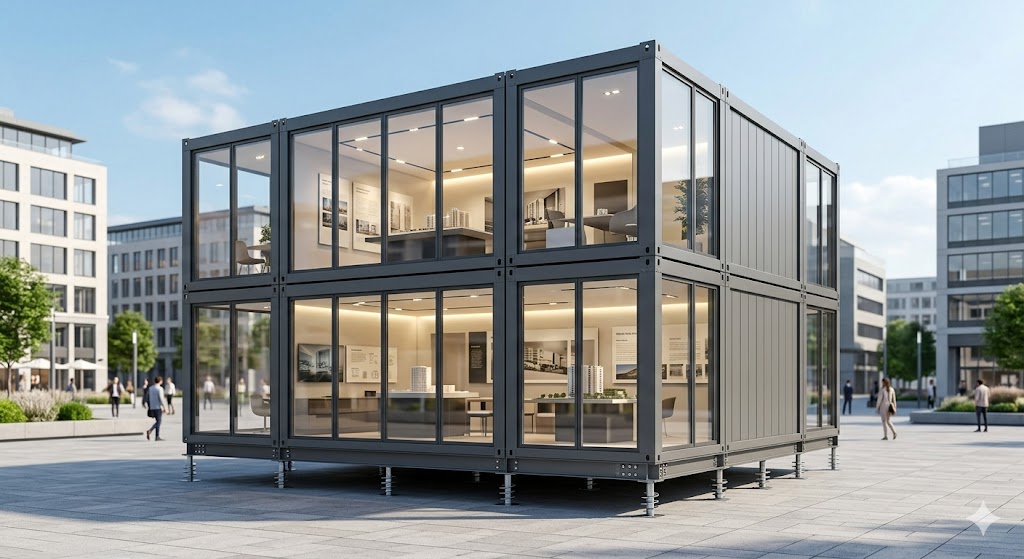
PTU for Temporary Offices and Show Flats: Structural Considerations
The construction of temporary buildings demands rigorous structural oversight. Temporary offices and modular show flats serve critical commercial functions. These short-term builds provide essential workspace and marketing environments. However, their temporary nature does not negate severe structural risks.
Engineers must evaluate wind loads and foundation stability carefully. Moreover, structural modular connections require meticulous engineering design. Local regulations also strictly govern their physical deployment.
In Singapore, the Building and Construction Authority (BCA) enforces rules. Securing a Permit to Use (PTU) is a mandatory milestone. Consequently, project developers must navigate detailed regulatory submission gateways.
Structural considerations dictate safety, efficiency, and strict legal compliance. Therefore, robust engineering principles must guide short-term builds always. This report provides an exhaustive analysis of temporary building structures.
The Regulatory Framework: Permit to Use (PTU) Guidelines
Navigating the regulatory landscape is paramount for temporary structures. The BCA regulates temporary buildings rigorously in Singapore.1 A temporary building utilizes short-lived construction materials.1 Structurally, it must not exceed two storeys in height.1 The Commissioner of Building Control (CBC) limits its lifespan. The maximum permitted duration is typically 36 to 72 months.1
Common examples include modular show flats and site offices.1 Pop-up stores and builder’s sheds also fall under this category.1 However, the BCA specifically excludes certain structural types. Earth-retaining structures are strictly excluded from this definition.1 Any bridge or bridge decking is also permanently excluded.1
Permit Exemptions and Compliance Mandates
Not all temporary structures require a formal PTU. The BCA outlines specific exemptions to streamline minor projects. Temporary buildings below four storeys within a site are exempt.1 These specifically include workers’ quarters and structural site offices.1 Protective hoardings erected for public safety are also exempt.1 Furthermore, insignificant building works bypass the strict PTU requirement.1
Tentage configurations enjoy exemptions under very strict operational constraints. Tentage must operate for fewer than 60 total days.1 Its physical footprint must remain under 2000 square meters.1 Additionally, no structural span can exceed 18 meters.1 Stages and event platforms also receive conditional regulatory exemptions. A stage requires no PTU if used for seven days.1 This exemption strictly applies to the base platform alone.1 It excludes complex structural frames supporting heavy LED screens.1
Specific Requirements for Workers’ Quarters
Exempt structures must still adhere to rigorous design codes. Building Control Regulations 17, 18, 19, and 20 remain enforceable.1 Workers’ quarters demand highly specific architectural and structural parameters. The height of each storey must be 2600 millimeters.4 Every room requires adequate natural ventilation through open windows.4 These windows must equal 10 percent of the floor area.4
Staircases require a clear width of at least 1200 millimeters.4 Contractors must paint these quarters in white or light colors.4 Proper illuminated footways are mandatory for user safety.4 Between 7 p.m. and 7 a.m., warning lights must operate.4 Furthermore, proper lightning conductors must protect the temporary building.4
The Two-Stage PTU Application Process
Securing a PTU involves a systematic two-stage application process. The building owner must appoint a Professional Engineer (PE) immediately.1 This PE must specialize in civil or structural engineering.1 The PE holds responsibility for design, supervision, and physical inspection.1 First, the PE submits building plans for preliminary approval.2 Construction cannot commence until the CBC grants this approval.1
The application must reach the BCA three weeks before construction.1 Depending on the project, other technical agencies require consultation. The Public Utilities Board (PUB) must clear water-related issues.1
The National Environment Agency (NEA) oversees environmental safety.1 The Singapore Civil Defence Force (SCDF) mandates fire safety compliance.1 The Land Transport Authority (LTA) reviews transport impacts.1
Financial Considerations and Plan Fees
Applying for a PTU incurs specific statutory plan fees. Owners pay $200 for every 100 square meters.1 This applies to the statistical gross floor area.1 The gross area includes all storeys and temporary basements.1
Alternatively, owners pay $200 for each individual structure.1 This flat fee applies when structures lack a measurable area.1 Applying for a PTU extension also costs $200 per structure.1 All fees process digitally through the CORENET X payment portal.1
Digital Submissions and CORENET X Integration
Singapore mandates digital submissions for all structural plans. Currently, the industry relies on the CORENET e-Submission system.1 However, the landscape is shifting rapidly toward CORENET X. This advanced portal becomes mandatory for new projects by 2026.9
CORENET X utilizes Building Information Modelling (BIM) for reviews.9 It replaces concurrent approvals with a streamlined digital gateway process.10
The new framework introduces three main submission gateways. These are the Design Gateway, Piling Gateway, and Construction Gateway.10 For temporary modular offices, the Design Gateway is critical.
It resolves major parameters before detailed structural design begins.10 The Construction Gateway requires full structural and architectural BIM models.11 The structural plan submission undergoes review within 20 working days.9
Finalizing the PTU and Demolition Protocols
Following construction, the second regulatory stage activates immediately. The PE must submit specific certificates within seven days.1 Form BCA-CSC-CTSTBW confirms the structural supervision officially.2 A Professional Electrical Engineer must certify the lightning protection system.1 Only after verifying these documents will the BCA grant PTU.1
Temporary buildings possess a strict legal expiration date. The combined duration of all permits cannot exceed 72 months.1 Once the permit lapses, the owner faces immediate legal obligations. The temporary structure must be completely demolished within 14 days.1 Subsequently, the owner must notify the CBC within seven days.1 Failure to comply constitutes a severe legal offence.1
Global Applications of Temporary Modular Buildings
Temporary buildings resolve critical infrastructure shortages worldwide. Their rapid deployment makes them essential in diverse global scenarios. Modular construction supports disaster relief, resource booms, and urban commerce.
Post-Disaster Relief Deployments
Disasters require immediate, large-scale temporary housing solutions. Following the 1999 Turkish earthquakes, rapid deployment was vital.13 The Ministry of Public Works and Settlements managed the program.13 They announced construction tenders for prefabricated temporary units quickly.13
This allowed displaced citizens to find safe, structural shelter.13
Similarly, the United Nations utilizes temporary buildings in conflict zones. The UNDP published tenders for tens of thousands of units.14 These prefabricated, steel-framed units target displaced Palestinians in Gaza.14
The units are specifically 18 square meters in size.14 Each unit houses a bedroom, bathroom, and a kitchenette.14 Planned sanitary modules include accessible toilets for disabled individuals.14 These structural deployments form the backbone of humanitarian rehabilitation.14
Resource Boom Cycles and Legacy Housing
Economic resource booms heavily strain local housing markets. Mining and renewable energy sectors drive rapid workforce expansions. Rockhampton and Gracemere in Australia frequently experience boom-bust cycles.15 These regions host major coal operations and new renewable projects.15 Traditional temporary workers’ quarters often leave no lasting value.
Consequently, developers now pursue innovative legacy housing initiatives. Accommodation Solutions Australia builds high-quality temporary modular offices.15 They design floor plans accommodating temporary workers in single rooms.15
Later, these structures transition into permanent legacy family homes.15 Rather than removing prefabricated units, they create new permanent suburbs.15 This strategy requires exceptional initial structural design and durability.
Wind Load Dynamics on Short-Term Builds
Wind forces pose the most significant lateral threat globally. Modular show flats often feature lightweight construction materials.16 They lack the inherent dead weight of permanent concrete structures. Structural engineers must calculate wind load resistance accurately.17 A nuanced analysis prevents catastrophic overturning or sliding failures. However, temporary buildings present highly unique aerodynamic challenges. Standards like ASCE 37 and Eurocode dictate precise computational approaches.
Application of ASCE 37 Standards
The International Building Code regulates temporary structures superficially.18 Therefore, engineers frequently utilize the ASCE 37 standard globally. ASCE 37 addresses design loads during temporary construction phases.18 Permanent buildings must withstand extreme, statistically rare wind events. Conversely, temporary buildings face a much shorter exposure window.
They are statistically less likely to encounter maximum design winds.21
Consequently, ASCE 37 permits strategic wind load reductions. The standard correlates the reduction factor with the deployment period.22 A temporary modular office deployed for under six weeks qualifies.23 Engineers can apply a 0.75 multiplier to the wind speed.22 Because wind pressure squares the velocity, the actual load drops.21 The final calculated wind load becomes 56 percent.21
| Construction Period | ASCE 37 Wind Speed Reduction Factor |
| Less than six weeks | 0.75 22 |
| Six weeks to one year | 0.80 22 |
| One to two years | 0.85 22 |
| Two to five years | 0.90 22 |
Dangers of Arbitrary Load Reductions
Engineers must apply these specific reductions very judiciously. Structures housing the general public demand higher safety margins.24 Construction workers voluntarily accept higher risks on active sites.24
They possess training for operating in hazardous construction environments.24 Conversely, visitors inside a modular show flat expect absolute safety. Therefore, arbitrary wind load reduction invites severe liability risks. Temporary structures utilized by the public require reliable structural stability.24
Eurocode and Singapore Standard SS EN 1991-1-4
In Singapore, structural design strictly follows the Eurocode framework. The BCA mandates the use of Singapore Standards.25 Specifically, SS EN 1991-1-4 governs wind actions on structures.25 This standard requires engineers to determine basic wind velocities. According to the National Annex, the basic wind velocity is fixed.28 This fundamental value () is exactly 20 meters per second.28
The calculation of peak velocity pressure () is sophisticated. It considers ground roughness, height, and atmospheric turbulence carefully. Engineers utilize the following specific Eurocode mathematical equation 30:
In this formula, represents the mean wind velocity.30 This velocity depends on the height () above ground.30 The value indicates the standard local air density.30 The turbulence intensity, , quantifies the gustiness of the wind.30
Terrain categories significantly influence all these aerodynamic parameters.30 A modular office in an urban center experiences unique winds. An office in an open field experiences entirely different forces. The topography factor and roughness factor dictate these variables.30
Aerodynamic Variations and Large Openings
Temporary structures often demand high versatility and flexibility.17 A modular show flat might feature large removable glass panels. Such architectural modifications drastically alter structural aerodynamic profiles.17 When large doors remain open, wind enters the building interior.
This generates immense internal pressure pushing outward against walls.31
An imbalance in wind load distribution triggers catastrophic failures.31 Rectangular halls attract different pressure coefficients than circular pavilions.31 Engineers must evaluate partially enclosed states during their initial calculations. Designing only for a fully sealed structure is a dangerous oversight.
Foundation Engineering for Temporary Builds
Every structure requires a robust connection to the earth. Temporary modular offices lack traditional, deep concrete foundations.17 Excavating deep footings contradicts the temporary nature of projects. Rapid deployment and site remediation are primary project goals. Therefore, developers increasingly rely on helical piles and kentledge ballast.
Helical Piles versus Traditional Concrete Pads
Concrete foundations provide excellent compressive strength for permanent buildings. Traditional methods include drilled shafts, driven piles, and caissons.32 However, they present significant logistical hurdles for short-term deployments. Concrete demands excavation, spoil removal, and lengthy curing times.32 Furthermore, concrete possesses a high carbon footprint.34
It significantly complicates site restoration when the project ends.34
Helical piles represent a highly innovative foundation technology.36 Also known as screw piles, these are specialized steel shafts.32 They feature helically shaped steel plates welded to them.32 Hydraulic equipment rotates them deep into the soil strata.32 This mechanism provides immediate load-bearing capacity without curing delays.33
Helical piles resist both compressive loads and tensile uplift forces.38 This tensile resistance is critical for lightweight temporary buildings. High wind uplift can easily overturn unsecured modular structures.
Comparative Cost and Efficiency Analysis
The foundation choice impacts overall project budgets significantly. Helical piles generally carry a higher initial material cost.39 Conversely, concrete footings appear cheaper during initial procurement.39 However, total lifecycle costs strongly favor helical piles.38
| Foundation Feature | Concrete Pads | Helical Piles (Screw Piles) |
| Installation Speed | Slow (requires extensive curing time) 33 | Fast (immediate load capacity) 38 |
| Environmental Impact | High carbon footprint, high soil disturbance 34 | Low impact, easily removable 34 |
| Weather Sensitivity | High (curing affected by rain) 39 | Low (can be installed in varied weather) 39 |
| Long-Term Predictability | Susceptible to soil movement 35 | High stability, verified capacity 39 |
| Lifecycle Maintenance | Moderate to High 39 | Low 39 |
The speed of helical installation reduces labor hours drastically. Weather delays rarely impact the insertion of screw piles.39 Furthermore, capacity is verified dynamically during the installation process.39
When the modular show flat finishes its commercial purpose, decommissioning begins. The helical piles simply unscrew from the ground in minutes.33 The site returns to its original state instantly. This makes helical piles optimal for sloped or restricted yards.34
Kentledge and Gravity Ballast Systems
Some project sites prohibit ground penetration entirely. Heritage zones or protected pavements require non-invasive foundation support. Underground utility hubs also prevent the use of driven piles.
In these scenarios, engineers deploy kentledge foundation systems.33
Kentledge involves utilizing massive, heavy concrete blocks.41 These ballast blocks anchor the temporary structure securely.41 They counteract overturning moments and severe lateral wind thrust.41 Kentledge systems remain highly popular for securing temporary hoardings.42 Hand carry kentledge plates exist for smaller infrastructure installations.33
Calculating the required ballast weight demands extreme mathematical precision. The friction between the kentledge block and ground prevents sliding. Engineers must analyze lateral wind force and friction coefficients simultaneously. A theoretical model determines the required ballast weight () 43:
In this equation, represents the calculated tensile force.43 The angle of the supporting guy line is .43 The symbol represents the friction coefficient of the terrain.43 The installed ballast weight must significantly exceed the theoretical minimum. This safety factor prevents sliding during unexpected extreme wind gusts.43
Modular Construction and Volumetric Assembly
Temporary offices heavily utilize volumetric modular construction methodologies. Factories pre-engineer three-dimensional room modules entirely off-site.44 Transport vehicles deliver these finished units directly to the location.34 Cranes then stack and assemble the modules rapidly.46
This methodology guarantees high quality control and minimizes site disruption.47
Modular projects combine volumetric and non-volumetric components frequently.47 Non-volumetric components form large openings or massive structural spans.47
Non-volumetric panelized construction transports compactly, reducing overall shipping costs.47 However, it requires additional on-site assembly and weather sealing work.47 Still, total labor costs remain significantly lower than traditional construction.47
The Critical Role of Inter-Connections
A modular building relies entirely on its structural connections. Structures behave as a cohesive unit only with proper interconnection.48 Individual modules must transfer loads effectively to adjacent modules.48 Consequently, inter-module connections are heavily engineered structural components.
If designers neglect connection stiffness, the assembly becomes vulnerable. The connections must transmit significant vertical and lateral loads.49 The Australian standard (AS/NZS 1170.0) requires specific lateral transmission capacities.49 Connections must transmit 5 percent of combined gravity loads laterally.49 Insufficient load transfer results in severe structural slipping or collapse.49
Typologies of Modular Connections
Engineers employ various mechanical devices to lock modules together.48 Research categorizes inter-module connections into several distinct types.50
First, Bolted Connections are standard across the construction industry. They utilize high-strength structural bolts and thick steel plates.51 Direct bolted (DB) systems require workers to access joints manually.50
Conversely, plug-assisted bolted (PB) systems simplify the assembly process.50 Research indicates that PB bolts offer excellent all-around performance.50
Second, Tie-Rod Connections utilize vertical post-tensioned steel rods.51 These rods thread through hollow structural columns continuously.51 They tie the upper and lower modules seamlessly together.51 Tie-rods provide exceptional tensile resistance against severe wind uplift.51
Third, Locking Mechanisms mimic shipping container corner castings.51 A rotary inter-module connection locks upper and lower fittings.51 Locating pins facilitate rapid site assembly and improved alignment.51 These pins provide robust initial shear resistance against lateral forces.51
Mitigating Connection Vulnerabilities
Bolted steel connections introduce specific structural vulnerabilities. Notably, they conduct thermal loads between adjoining interior modules.49 They also transmit acoustic vibrations rapidly throughout the temporary building.49
Engineers must insert dampening materials to break this conduction.49 Sandwiched acoustic plates resolve this specific architectural issue.49
Additionally, bolted connections experience natural slip under lateral loads.49 The moment-rotation behavior of a slipping bolt compromises stiffness.49 The global stiffness of the temporary building drops dangerously.49 To counteract slip, designers specify highly pre-tensioned structural bolts.49
External bracing elements supplement the module’s own lateral resistance.49 Structural cores or shear walls provide necessary global rigidity.49 The ultimate failure mode is often the bolt shank fracturing.51 Therefore, rigorous numerical modeling and finite element analysis dictate sizing.52
Engineers evaluate connections using the Composite Compatibility Score (CCS).50 This score assesses steel-oriented connection applicability for composite modules.50 The Validation Evidence Score measures experimental and numerical validation depth.50 The Demountability and Reusability Score evaluates the ease of disassembly.50 Finally, the Normalised Capacity Index standardizes structural capacity assessments.50
Thermal Performance and Environmental Efficiency
Temporary buildings notoriously suffer from poor thermal regulation globally. Lightweight structural walls possess minimal inherent thermal mass.53 Consequently, they heat up rapidly under direct solar radiation. They also lose heat instantly in cooler evening weather. Maintaining thermal comfort inside a modular show flat is essential. It directly impacts the effectiveness of the marketing environment. Moreover, energy efficiency regulations target non-domestic rented properties strictly.54
Phase Change Materials (PCMs)
Engineers integrate Phase Change Materials (PCMs) to boost thermal mass.53 PCMs absorb, store, and release latent heat continuously.55 They transition physically between solid and liquid states daily. During peak sunlight, the PCM absorbs excess solar heat.55 This prevents indoor temperature spikes effectively.55 As the environment cools, the PCM solidifies naturally. It releases the stored heat back into the room slowly.
This mechanism drastically reduces reliance on active air-conditioning systems. Low thermal conductivity ensures that PCMs release heat gradually.55 Research confirms that integrating a 5.0 millimeter PCM layer works.53
Applying it on the interior surface improves thermal comfort significantly.53 Multi-orientation layout schemes maximize this energy-saving performance further.53 Consequently, PCMs offer an innovative thermal solution without adding weight.
Roof Insulation and Regulatory Compliance
Flat roofs dominate the architecture of temporary modular offices. However, flat roofs represent a massive surface area for heat. Upgrading insulation on a flat roof yields immediate energy reductions.56
Rigid polymer boards placed over the roof deck trap air.57 Synthetic polymers offer durability approaching that of mastic asphalt.57 Protecting these materials with solar reflective coatings is highly recommended.57
Ignoring insulation invites severe regulatory penalties in many jurisdictions. Properties rented for commercial purposes face strict energy performance mandates.54 In the UK, regulations prohibit letting highly inefficient properties.54
It is illegal to let properties with EPC ratings below E.54 Properties rated F or G require immediate structural thermal upgrades.54 Temporary buildings deployed for under two years may secure exemptions.54 However, longer-term modular offices must comply with these laws.54
Site Logistics, Execution, and Safety
Human error and poor site logistics exacerbate structural risks. The design criteria for temporary works are often less detailed.58 Planners sometimes overlook the complex logistics of temporary structures.58 Contractors frequently utilize second-hand materials for temporary offices.58
Relying on degraded materials introduces highly unpredictable stress fractures.
Singapore regulations emphasize the Temporary Works Coordinator (TWC) role.7 The TWC ensures site construction strictly follows certified structural designs.7 They coordinate all necessary physical inspections and eventual dismantling procedures.7 The TWC maintains the essential Temporary Works Register diligently.7
Managing Construction Staging Loads
During construction, contractors sometimes stack panels on finished floors.59 This uncalculated staging load can exceed structural capacities easily.59 Engineers must explicitly account for these staging loads during design.59
BS 5975 outlines industry best practices for managing these loads.7 Wheeled vehicles transporting materials impose massive dynamic stresses.61 Planners must incorporate adequate safety factors to prevent overloading.62
Site Accessibility and Safety Provisions
Access to temporary offices demands strict safety compliance. Laing O’Rourke standards mandate robust access steps for all cabins.63 These steps must feature proper treads and fixed metal handrails.63 The landing area must span at least 1.2 meters wide.63 This allows a person to open outward-swinging doors safely.63
Corridors must maintain a minimum clear width of 1000 millimeters.63 Temporary office doors require a minimum width of 750 millimeters.63 Ramps for disabled individuals must comply with AS 1428 standards.63
Site office doors and windows must have physical security screens.63 Fly screens must protect all temporary accommodation units from insects.63 Furthermore, wire netting must close the cabin underside securely.63 This prevents rubbish buildup and eliminates severe fire hazards.63
Structural Pathology: Collapse Case Studies
Understanding failure is a prerequisite for robust structural design. Temporary structures frequently suffer catastrophic collapses globally. These disasters highlight critical vulnerabilities in design and site execution.61 Structural pathology illuminates exactly how these fatal errors compound. Forensic engineers study these collapses to improve future building codes.
Inadequate Load Distribution and Punching Shear
Gravity loads must travel safely through the superstructure downwards.59 Interruptions in this vertical load path cause immediate buckling failures. The Harbour Cay condominium collapse illustrates punching shear dangers.64 This tragedy occurred in Cocoa Beach, Florida, in 1981.64 Concrete slabs sheared completely through their supporting structural columns.64
Inadequate reinforcement and construction errors triggered this progressive collapse.64 Similarly, L’Ambiance Plaza collapsed in Connecticut in 1987.64 The 2000 Commonwealth Avenue apartment failure shares similar pathological traits.64 The lift heads used to hoist slabs failed catastrophically.64 Better inspections of materials and construction details prevent these disasters.64
Wind-Induced Collapse Mechanisms
High winds frequently trigger temporary structure collapses. The 2011 Indiana State Fair stage collapse underscores this danger.18 Temporary structures often rely on guy lines to resist wind. They also use fin plates to connect bracing elements securely. In multiple investigations, engineers identified under-designed fin plates.18
When lateral wind exceeded 59 mph, the plates sheared.18 The connecting elements failed under the massive applied wind load.18 The bending capacity of the underlying steel tubes was insufficient.18 These failures prove that calculating wind pressure is not enough. Every weld, bolt, and plate must withstand the calculated force.18
Anemometers should be required on-site and monitored continuously.21 Weather forecasts must dictate immediate evacuation procedures for temporary sites.21
Seismic Failures and Detailing Errors
Earthquakes exploit any structural weakness instantly. A Guam structure collapsed due to extreme design and construction flaws.65 Engineers found columns rotated 90 degrees from their correct orientation.65 Additional confinement hoops around column splices were completely missing.65 Masonry infill walls created dangerous short-column conditions throughout.65
The contractor failed to follow the structural details provided.65 They substituted U-shaped stirrups for required closed ties in joints.65 They also omitted closed hoops in many concrete frame joints.65 Tragically, special inspection reports approved this flawed reinforcing steel placement.65 Shear failure of joints resulted in a catastrophic partial collapse.65
Conclusions
The deployment of temporary modular offices represents a complex challenge. Labeling a structure “temporary” does not suspend the laws of physics. Consequently, structural integrity, load resistance, and regulatory compliance demand rigor. Based on this exhaustive analysis, several distinct recommendations emerge logically.
First, developers must initiate the PTU process proactively in Singapore. Engaging a Professional Engineer early ensures seamless navigation of guidelines. Understanding CORENET X gateways prevents costly project delays and revisions. Recognizing specific exemptions can optimize project timelines and budgets significantly.
Second, wind load analyses must reject overly optimistic reduction factors. ASCE 37 permits load reductions for short construction durations legitimately. However, engineers must prioritize life safety for public show flats. Singapore’s SS EN 1991-1-4 standard provides a robust analytical baseline. Designers must account for aerodynamic shifts caused by architectural openings.
Third, helical piles constitute the superior foundation for temporary structures. Their immediate load-bearing capacity outperforms traditional concrete pads dramatically. They reduce environmental disturbance and facilitate rapid site decommissioning effectively. Where ground penetration is impossible, kentledge systems provide safe alternatives. Engineers must calculate ballast weight using strict mathematical friction formulas.
Finally, structural stability relies entirely on robust inter-module connections. Engineers must specify plug-assisted bolts capable of transmitting shear forces. Thermal efficiency requires Phase Change Materials and flat roof insulation. Site logistics demand dedicated Temporary Works Coordinators enforcing strict safety. By addressing these considerations, developers guarantee safe, compliant short-term builds.
Works cited
- FAQ on Temporary Buildings | Building and Construction Authority, accessed May 25, 2026, https://www1.bca.gov.sg/safety-and-standards/applications-and-licenses/temporary-building-application/faq-on-temporary-buildings/
- Temporary Building Application | Building and Construction Authority, accessed May 25, 2026, https://www1.bca.gov.sg/safety-and-standards/applications-and-licenses/temporary-building-application/
- Our Ref : APPBCA-2018-13 Building Plan & Management Group 14 December 2018 See Distribution list Dear Sir/Madam, NEW REQUI – Skypro, accessed May 25, 2026, https://skypro.com.sg/wp-content/uploads/2022/04/circular-to-industry-on-amended-building-control-temporary-building-regulations-2018.pdf
- Building Control (Temporary Buildings) Regulations – Singapore Statutes Online, accessed May 25, 2026, https://sso.agc.gov.sg/SL-Rev/BCA1989-RG5/Published/20000131?DocDate=20000131
- Temporary Building Regulations in Singapore | PDF | Government | Justice – Scribd, accessed May 25, 2026, https://fr.scribd.com/document/369255471/Building-Control-Temporary-Buildings-Regulations
- GUIDELINES FOR STRUCTURAL ENGINEERS, accessed May 25, 2026, https://isomer-user-content.by.gov.sg/338/7fefc1c0-6299-41fa-bf17-17c3a9896f1a/psi-guidelines-for-structural-engineers-(sep-2024).pdf
- Temporary Works Design in Singapore: Mastering Safety – Stellar Structures, accessed May 25, 2026, https://structures.com.sg/ultimate-guide-temporary-works-design-singapore/
- Temporary Building Design & Permit Submission – TKT Engineers, accessed May 25, 2026, https://tktengineers.com/service/temporary-building-design-permit-submission-singapore/
- Structural Plan submission – Building and Construction Authority, accessed May 25, 2026, https://www1.bca.gov.sg/safety-and-standards/applications-and-licenses/structural-plan-submission/
- CORENET X Structural Submission and IFC-SG Requirements, accessed May 25, 2026, https://info.corenet.gov.sg/docs/default-source/default-document-library/corenet-x-structural-submission-and-ifc-sg-req-22-nov-2023.pdf?sfvrsn=3e37db9a_1
- Submission Workflows – Singapore – CORENET X, accessed May 25, 2026, https://info.corenet.gov.sg/regulatory-process/about-the-new-submission-process/submission-workflows
- New Temporary Building Regulations 2018 | PDF | Singapore | World Politics – Scribd, accessed May 25, 2026, https://www.scribd.com/document/723456710/circular-to-industry-on-amended-building-control-temporary-building-regulations-2018-PTU
- Impacts of prefabricated temporary housing after disasters: 1999 earthquakes in Turkey, accessed May 25, 2026, https://www.academia.edu/963017/Impacts_of_prefabricated_temporary_housing_after_disasters_1999_earthquakes_in_Turkey
- Exclusive: UN Publishes Tender for Tens of Thousands of Prefabricated Temporary Units for Gaza, accessed May 25, 2026, https://www.shomrim.news/eng/gaza-un-tender
- Housing as an essential consideration in renewable energy development – RE-Alliance, accessed May 25, 2026, https://www.re-alliance.org.au/housing_essential_consideration_renewable_development
- Prefabricated temporary units (left). Temporary units made of, accessed May 25, 2026, https://www.researchgate.net/figure/Prefabricated-temporary-units-left-Temporary-units-made-of-masonry-materials-right_fig2_327077832
- The Importance of Wind Loading Analysis In Temporary Structures – Fenton Holloway, accessed May 25, 2026, https://www.fentonholloway.com/blog/the-importance-of-wind-loading-in-temporary-structures
- Temporary Structure Failure – Case Studies – Penn State College of Engineering, accessed May 25, 2026, https://www.engr.psu.edu/ae/thesis/failures/MKP/failures/failures.wikispaces.com/Temporary%20Structure%20Failure%20-%20Case%20Studies.html
- Wind Load Calculation for Temporary Structures – ELREEDYMAN, accessed May 25, 2026, https://elreedyman.com/how-to-calculate-wind-load-in-temporary-structure/
- Wind Loads for Temporary Structures – SE University, accessed May 25, 2026, https://learnwithseu.com/wind-loads-for-temporary-structures/
- Wind Loads for Temporary Structures: Making the Case for Industrywide Standards – ASCE Library, accessed May 25, 2026, https://ascelibrary.org/doi/pdf/10.1061/%28ASCE%291076-0431%282009%2915%3A2%2835%29
- Wind Loads on Temporary Structures – SK Ghosh Associates, accessed May 25, 2026, https://www.skghoshassociates.com/blog/wind-loads-on-temporary-structures/
- accessed May 25, 2026, https://www.skghoshassociates.com/blog/wind-loads-on-temporary-structures/#:~:text=So%2C%20based%20on%20ASCE%2037,event%20as%20a%20permanent%20structure.
- S116-22 – Florida Building Code, accessed May 25, 2026, https://www.floridabuilding.org/fbc/thecode/2026_Code_Development/Pre_TAC_Reports_ICC_Sept_2024/Mod-11175-S116-22.pdf
- Building Control (Temporary Buildings) Regulations 2018 – Singapore Statutes Online, accessed May 25, 2026, https://sso.agc.gov.sg/SL/BCA1989-S807-2018?DocDate=20181212&ProvIds=Sc2-&ViewType=Advance&Any=5+Factories+Safety+Training+Courses+Order&WiAl=1
- The Ultimate Guide to SS EN 1990: Singapore’s Foundation for Structural Design, accessed May 25, 2026, https://structures.com.sg/guide-ss-en-1990-sg-foundation-structual-design/
- SS EN 1991-1-4 : 2009 Eurocode 1 – Actions on structures – – Singapore Standards, accessed May 25, 2026, http://www.singaporestandardseshop.sg/data/ECopyFileStore/090414153313Preview%20-%20SS%20EN%201991-1-4-2009.pdf
- NA To SS EN 1991-1-4 – 2009 | PDF – Scribd, accessed May 25, 2026, https://www.scribd.com/document/673967688/NA-to-SS-EN-1991-1-4-2009
- Base wind speed of Singapore according to NA to SS EN 1991-1-4 – Dlubal, accessed May 25, 2026, https://www.dlubal.com/en/load-zones-for-snow-wind-earthquake/wind-ss-en-1991-1-4.html
- Façade Engineering in SG: Mastering Wind Loads, Materials, accessed May 25, 2026, https://structures.com.sg/facade-engineering-in-sg-mastering-wind-loads/
- Wind load on temporary structures | Losberger De Boer, accessed May 25, 2026, https://www.losbergerdeboer.com/global/insights/what-is-the-wind-load-capacity-of-losberger-de-boer-buildings/
- Helical Piles vs. Traditional Deep Foundations: A Complete Guide – Geotek Design-Build, accessed May 25, 2026, https://geotek-co.com/helical-piles-vs-traditional-deep-foundations-which-is-better/
- Screw Pile Foundations & Steel Grillage Solutions | FLI Structures, accessed May 25, 2026, https://www.fli.co.uk/screw-piles/why-use-screw-piles/
- Screw Foundations for Modular Buildings | Helical Systems – Techno Metal Post, accessed May 25, 2026, https://www.technometalpost.com/en-GB/projects/modular-buildings/
- Why use a helical pier foundation instead of concrete? – Techno Metal Post, accessed May 25, 2026, https://www.technometalpost.com/en-US/faq/why-use-a-helical-pier-foundation-instead-of-concrete/
- Screw pile foundations for modular homes, accessed May 25, 2026, https://www.winkelmann-construction.com/en/presse-center/posts/blog-5
- What ground screws are, how you install them and what is the benefit for using them for lodges and pods? – YourRetreats, accessed May 25, 2026, https://www.yourretreats.co.uk/blog/what-ground-screws-are-how-you-install-them-and-what-is-the-benefit-for-using-them-for-lodges-and-pods
- Helical Piles vs. Concrete Foundations: Comparison & Complete Guide, accessed May 25, 2026, https://torcsill.com/feeds/blog/helical-piles-concrete-piers
- Life-Changing Cost Breakdown: Helical Piers vs. Concrete Footings Cost – FnD Piers, accessed May 25, 2026, https://fndpiers.com/helical-piers-vs-concrete-footings-cost/
- Best Foundation Options for Sloped Yards: DIY Pergola Installation, accessed May 25, 2026, https://sunsetpergolakits.com/blogs/news/best-foundation-options-for-sloped-yards-diy-pergola-installation-guide
- Kentledge in Construction: Weight Calculation & More – Infinity Design Solutions, accessed May 25, 2026, https://www.ids-dmv.com/encyclopedia/kentledge/
- Hoarding ballast blocks wind loading stability calculations – Elite Precast Concrete, accessed May 25, 2026, https://www.eliteprecast.co.uk/hoarding-ballast-blocks-wind-loading-stability-calculations/
- Determination of Safe Ballasts for Anchoring Event Tents by Finite Element Analysis – Clemson OPEN, accessed May 25, 2026, https://open.clemson.edu/cgi/viewcontent.cgi?article=3812&context=all_theses
- Modular construction – SteelConstruction.info, accessed May 25, 2026, https://www.steelconstruction.info/Modular_construction
- Complete Guide To Temporary Buildings, accessed May 25, 2026, https://temporarystoragebuildings.com/knowledge/complete-guide-to-temporary-buildings/
- Temporary Construction Office (Site Office) – Prefabex, accessed May 25, 2026, https://www.prefabex.com/our_galleries/temporary-construction-office-site-office
- DESIGN FOR MODULAR CONSTRUCTION: AN INTRODUCTION FOR ARCHITECTS – National Institute of Building Sciences, accessed May 25, 2026, https://nibs.org/wp-content/uploads/2025/04/NIBS_OSCC_AIA_Modular-and-Off-Site-Construction-Guide.pdf
- CHAPTER 7: Connections – HUD User, accessed May 25, 2026, https://www.huduser.gov/publications/pdf/res2000_4.pdf
- Handbook for the Design of Modular Structures | Construye2025, accessed May 25, 2026, https://construye2025.cl/wp-content/uploads/2022/07/Handbook-for-the-design-of-modular-structures-Monash-University.pdf
- Evaluation Framework for Inter-Module Connections in Steel–Concrete Composite Modular Structures – MDPI, accessed May 25, 2026, https://www.mdpi.com/2075-5309/16/2/431
- Shear Behavior of Modular Steel Connections | PDF | Yield (Engineering) | Fracture – Scribd, accessed May 25, 2026, https://www.scribd.com/document/788391032/1-s2-0-S2352012422010852-main
- (PDF) Modular Building Connections – A review – ResearchGate, accessed May 25, 2026, https://www.researchgate.net/publication/360547402_Modular_Building_Connections_-_A_review
- Numerical study on the thermal performance of lightweight temporary building integrated with phase change materials | Request PDF – ResearchGate, accessed May 25, 2026, https://www.researchgate.net/publication/324126470_Numerical_study_on_the_thermal_performance_of_lightweight_temporary_building_integrated_with_phase_change_materials
- Energy efficiency of rented property: non-domestic – Business Companion, accessed May 25, 2026, https://www.businesscompanion.info/en/quick-guides/miscellaneous/energy-efficiency-of-rented-property-non-domestic
- Enhancing Building Thermal Performance: A Review of Phase Change Material Integration, accessed May 25, 2026, https://www.mdpi.com/1996-1073/18/12/3200
- Insulating Flat Roofs | PDF – Scribd, accessed May 25, 2026, https://www.scribd.com/document/327572122/Insulating-Flat-Roofs
- Energy Efficiency and Historic Buildings Insulating flat roofs – Michael Hornsby & Co – Property Surveyor & Valuation Services, accessed May 25, 2026, https://www.michaelhornsby.co.uk/assets/Uploads/documents/eehb-insulating-flat-roofs.pdf
- Temporary Structures – National Academy of Construction, accessed May 25, 2026, https://www.naocon.org/wp-content/uploads/Temporary-Structures.pdf
- STRUCTURE MAGAZINE: Off-site Construction – Light Steel Framing Studs & Connectors, accessed May 25, 2026, https://steelnetwork.com/structure-magazine-off-site-construction/
- Loads during construction: what to consider and what methods to use – bba, accessed May 25, 2026, https://www.bbaconsultants.com/en-us/publications/loads-during-construction-what-to-consider-and-what-methods-to-use
- ASCE 37-14: Construction Load Guidelines | PDF | Wound | Tropical Cyclones – Scribd, accessed May 25, 2026, https://www.scribd.com/document/492479270/Design-Loads-During-Construction-ASCE-37-14
- Workplace Safety and Health Guidelines – Design for Safety, accessed May 25, 2026, https://www.tal.sg/wshc/-/media/tal/wshc/resources/publications/wsh-guidelines/files/wsh-guidelines-design-for-safety.pdf
- PS SITE ESTABLISHMENT, LOGISTICS AND CHAIN OF RESPONSIBILITY – HSEMS, accessed May 25, 2026, https://lorhsems.com/wp-content/uploads/Primary-Standard-Site-Establishment-and-Logisitics.pdf
- Building Failure Cases – William States Lee College of Engineering, accessed May 25, 2026, https://engr.charlotte.edu/asce-failure-case-studies/building-failure-cases/
Structural Failures: A Case Study Researched by: Ronald O. Hamburger, SE, accessed May 25, 2026, https://www.selicensure.org/sites/default/files/StructuralFailures_guam.pdf