

Property developers and construction firms in Singapore face a persistent and increasingly complex challenge: selecting facade systems that satisfy both the Building and Construction Authority’s (BCA) regulatory requirements and the aesthetic expectations of modern commercial and residential developments. As Singapore’s Green Mark certification framework tightens and sustainability benchmarks rise, the margin for error in facade selection narrows considerably. Two recent landmark projects, Dalvey Haus and Keppel Bay Tower, offer concrete, data-supported benchmarks for how innovative facade technologies can simultaneously achieve regulatory compliance, long-term durability, and architectural distinction.
Table of Contents
- Criteria for selecting an innovative facade solution
- Undercut anchors and BWM Bracket Solution: Dalvey Haus case
- Energy-saving facades and BIPV: Keppel Bay Tower example
- Comparison of concealed vs. glass and BIPV systems
- Lessons learned: What experts get wrong about facade innovation
- Next steps: Innovative facade support from Aman Engineering
- Frequently asked questions
Key Takeaways
| Point | Details |
|---|---|
| Compliance-first solutions | Innovative facade systems like BWM Bracket and BIPV ensure regulatory compliance for Singapore projects. |
| Concealed fixings advantages | Undercut anchors and bracket solutions reduce installation time and maintenance needs while boosting aesthetics. |
| Energy-saving designs | BIPV and automated facade controls can deliver measurable reductions in energy use and operational costs. |
| Strategic system selection | Comparing different facade technologies helps target best-fit solutions for climate, visual, and safety requirements. |
Criteria for selecting an innovative facade solution
Before committing to any facade system, developers and construction firms must evaluate options against a structured set of technical, regulatory, and performance criteria. Facade selection is not simply an aesthetic decision; it carries direct implications for statutory approvals, long-term maintenance obligations, and occupant safety.
The following criteria form a practical evaluation checklist for Singapore projects:
- Regulatory certifications: The facade system and its fixing components must carry recognized certifications. For example, the European Technical Assessment (ETA) ensures compliance in Singapore’s humid tropical climate, where thermal cycling, high rainfall, and UV exposure place exceptional demands on materials and fixings.
- Climate performance: Systems must demonstrate resistance to Singapore’s year-round humidity, wind-driven rain, and sustained heat. Material selection, including stone, glass, aluminum, or engineered composites, must account for thermal expansion coefficients and moisture ingress risk.
- Structural load capacity: Facade panels and their substructures must be engineered to withstand both dead loads and dynamic wind pressures, particularly for high-rise applications where wind uplift forces are significant.
- Aesthetic flexibility: The system must accommodate the architectural vision, whether that involves large-format panels, flush surface finishes, or complex geometric configurations.
- Maintenance accessibility: Systems with concealed fixings reduce long-term maintenance costs and preserve visual integrity over the building’s lifespan.
- Installation efficiency: Faster installation cycles reduce labor costs and program risk, which directly affects project delivery timelines and overall budget performance.
Developers focused on optimizing building envelopes will recognize that these criteria are interdependent. A system that excels aesthetically but fails on maintenance accessibility will generate recurring costs that erode the project’s financial performance over time. Similarly, the integrated design advantages of coordinating facade engineering with structural and M&E systems from the outset are well established, reducing coordination conflicts and costly design revisions during construction.
Pro Tip: Specify concealed fixing systems from the design development stage. Retrofitting concealed fixings into a facade design that was initially specified with exposed fasteners is technically complex and typically cost-prohibitive.
Undercut anchors and BWM Bracket Solution: Dalvey Haus case
After establishing evaluation criteria, the next step is examining a proven, high-performance system deployed in Singapore. The Dalvey Haus residential development provides a detailed and well-documented case study for developers considering large-format stone or engineered stone panel facades with concealed fixing requirements.
The fischer BWM Bracket Solution light (BSL) was deployed at Dalvey Haus to secure Cosentino Dekton panels across a facade area of 2,200 square meters. The system uses undercut anchors, specifically the FZP II, which engage mechanically within the panel material itself rather than relying on adhesive bonding or surface clamping. This approach delivers concealed fastening, high load capacity, and significant installation flexibility.
The key technical and operational advantages of this system can be summarized as follows:
- Concealed aesthetics: The undercut anchor sits entirely within the panel, leaving no visible fastener on the facade surface. This is critical for premium residential and commercial projects where surface finish quality directly affects market positioning.
- High load capacity: The FZP II undercut anchor is rated for substantial tensile and shear loads, making it suitable for large-format panels where wind pressure and panel self-weight generate significant fixing demands.
- Material savings: The BSL substructure is engineered to minimize the volume of supporting metalwork required, reducing both material costs and the thermal bridging effect through the facade assembly.
- Reduced training requirements: The system’s installation methodology is standardized and straightforward, reducing the level of specialist training required for site operatives and accelerating the overall installation program.
- Flexible panel positioning: The bracket system accommodates tolerance adjustments in three dimensions, which is essential for achieving the tight panel alignment tolerances required on premium facades.
“The fischer BWM Bracket Solution light (BSL) secures Cosentino Dekton panels on 2,200 m² at Dalvey Haus using undercut anchors (FZP II) for concealed fastening, flexible installation, high loads, and material savings.” — Fischer International, Dalvey Haus Reference
The practical implications for developers are significant. Faster installation reduces scaffold hire periods and associated preliminaries costs. Concealed fixings eliminate the need for periodic fastener inspection and re-torquing programs that are mandatory for exposed mechanical fixing systems. For guidance on mitigating facade risks over the building’s operational life, the choice of fixing system at the design stage is one of the most consequential decisions a developer can make.
The following table compares key performance parameters between the BWM BSL undercut anchor system and conventional glass panel facade systems:
| Feature | BWM BSL undercut anchor system | Conventional glass panel system |
|---|---|---|
| Fixing visibility | Fully concealed | Typically exposed or semi-exposed |
| Load capacity | High (tensile and shear) | Moderate to high |
| Installation complexity | Low to moderate | Moderate to high |
| Material options | Stone, engineered stone, composite | Glass, limited composites |
| Maintenance frequency | Low | Moderate to high |
| Thermal bridging risk | Low (minimized substructure) | Moderate |
| Water-tightness testing | Standard | Rigorous (mandatory) |
For projects where interior design quality must match the facade’s premium specification, the office design innovation principles applied at Dalvey Haus demonstrate that exterior and interior design strategies benefit from coordinated development. Additionally, for general guidance on construction fastening best practices, secure fastening tips from industry sources provide useful supplementary reference material.
Pro Tip: When specifying undercut anchor systems, require the supplier to provide project-specific pull-out test data for the exact panel material and thickness being used. Generic load tables may not accurately reflect performance in thinner or non-standard panel configurations.
Energy-saving facades and BIPV: Keppel Bay Tower example
Next, see how energy-focused facade systems drive compliance and sustainability in major towers. Keppel Bay Tower represents the most advanced application of facade technology currently documented in Singapore’s commercial sector, and its performance data provides a compelling benchmark for developers targeting Green Mark Platinum or Zero Energy certification.
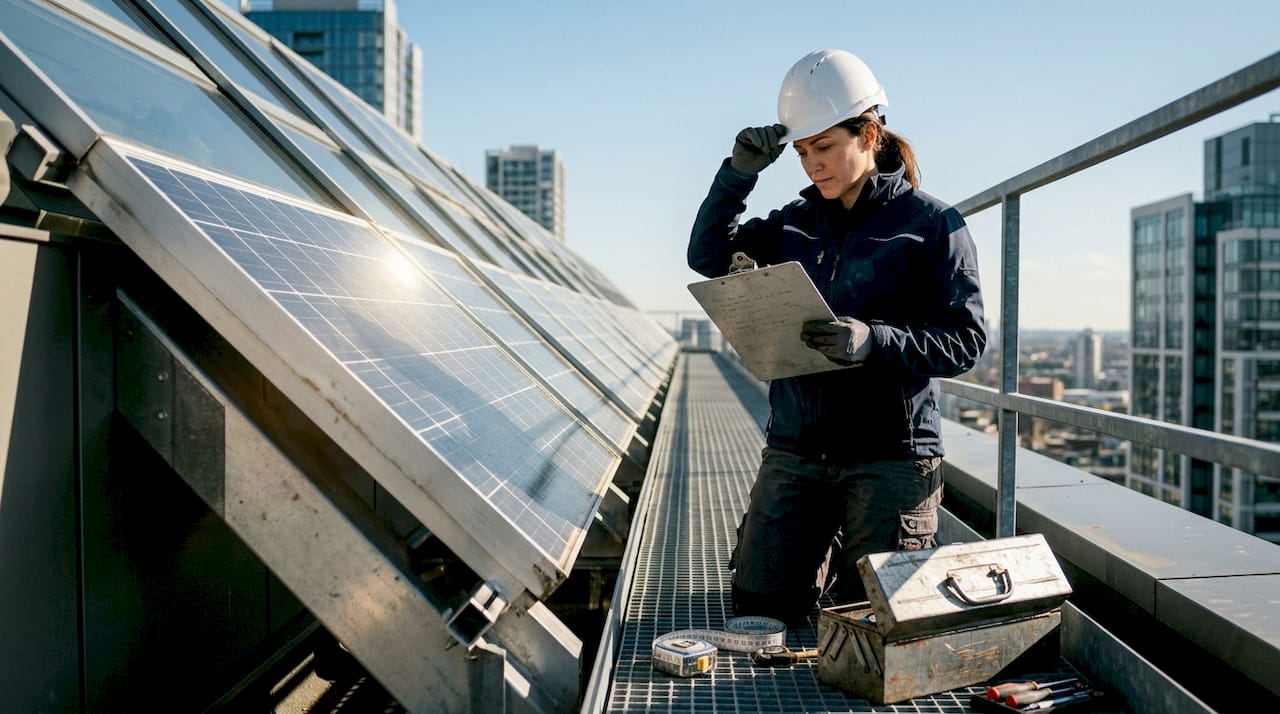
Keppel Bay Tower achieved the distinction of being Singapore’s first Green Mark Platinum (Zero Energy) building, a designation that required the facade system to function as an active energy generation and management component rather than a passive enclosure. The building’s facade integrates Building Integrated Photovoltaics (BIPV), a technology that embeds photovoltaic cells directly into facade panels or glazing units, enabling the building skin to generate electricity while simultaneously performing its weather-protection and thermal-control functions.
The measured outcomes from Keppel Bay Tower’s facade system include:
- 100,000 kWh per year in energy conservation attributable to the BIPV installation and associated facade controls
- 22.3% reduction in total building energy consumption compared to the pre-retrofit baseline
- Automated facade controls that adjust shading elements in response to real-time solar angle and intensity data
- Integrated sun shades that reduce solar heat gain and glare without compromising occupant views or daylighting quality
- Natural ventilation pathways incorporated into the facade design, reducing mechanical cooling loads during periods of favorable external conditions
The passive cooling strategies embedded in Keppel Bay Tower’s facade design are directly transferable to new commercial developments seeking to achieve Singapore’s Super Low Energy (SLE) building standards. The automated control systems, in particular, represent a significant operational advantage, as they eliminate the reliance on occupant behavior for energy management and deliver consistent performance across all operating conditions.
The following comparison table contrasts standard facade integration approaches with the advanced integration methodology applied at Keppel Bay Tower:
| Parameter | Standard facade system | Advanced integrated facade (Keppel Bay Tower) |
|---|---|---|
| Energy generation | None | BIPV: 100,000 kWh/year |
| Shading control | Fixed or manual | Automated, sensor-driven |
| Natural ventilation | Incidental | Designed and integrated |
| Green Mark rating | Typically Gold or below | Platinum (Zero Energy) |
| Energy reduction | Minimal | 22.3% |
| Regulatory compliance | Standard BCA compliance | SLE and Green Mark Platinum |
| Lifecycle cost | Moderate | Lower (energy offset) |
For projects requiring facade rectification following BCA Stage 2 inspections, the integration of BIPV and automated controls during rectification works can convert a compliance-driven expenditure into a long-term energy cost reduction. Developers should also review aluminum facade tips when considering the substructure options for BIPV panel mounting, as aluminum framing systems offer favorable strength-to-weight ratios and corrosion resistance in Singapore’s coastal environment.
Comparison of concealed vs. glass and BIPV systems
With these examples in mind, let’s directly compare these facade strategies for practical project use. Each system carries distinct functional strengths and situational limitations that developers must weigh against their specific project requirements, budget parameters, and regulatory targets.
The following table provides a direct comparison across the three primary facade system categories:
| Criterion | Concealed anchor system (e.g., BWM BSL) | Glass panel system | BIPV integrated system |
|---|---|---|---|
| Installation time | Moderate | Moderate to long | Long |
| Regulatory compliance | ETA-certified, BCA-compliant | Requires water-tightness testing | Green Mark and SLE compliant |
| Maintenance requirement | Low | Moderate to high | Low to moderate |
| Visual impact | Premium, seamless finish | High transparency, light-filled | Modern, technology-forward |
| Energy performance | Neutral | Moderate (solar gain risk) | High (active energy generation) |
| Material flexibility | High (stone, composite) | Limited to glass variants | Moderate (panel-integrated PV) |
| Best application | Residential, premium commercial | Office, retail, hospitality | Commercial towers, SLE targets |
Developers selecting between these systems should consider the following project-type guidance:
- Concealed anchor systems are best suited to premium residential developments, high-end hotel facades, and commercial projects where surface finish quality and long-term maintenance minimization are primary drivers.
- Glass panel systems excel in daylighting and natural ventilation performance but require rigorous water-tightness testing protocols, particularly for Singapore’s wind-driven rain conditions. The thermal mass advantage of opaque panels is absent in glass systems, which may increase cooling loads in west-facing orientations.
- BIPV and automated control systems deliver measurable energy gains with regulatory credibility under Singapore’s Green Mark framework, making them the preferred choice for commercial towers targeting SLE or Platinum certification.
Developers and building owners who conduct regular facade inspections will find that the choice of facade system at the design stage directly determines the complexity and cost of ongoing inspection and maintenance programs. Systems with concealed fixings and integrated controls require less frequent physical inspection but demand more sophisticated monitoring and diagnostic capabilities.
Lessons learned: What experts get wrong about facade innovation
Stepping back, here is what stands out from expert and practical review of facade design in Singapore. The most consistent error observed across facade projects is the prioritization of visual impact over system integration and long-term performance. Developers and their design teams frequently select facade materials based on rendered images and showroom samples, without adequately stress-testing the proposed system against Singapore’s specific climatic, regulatory, and maintenance conditions.
The assumption that a visually impressive facade will automatically satisfy regulatory requirements is demonstrably incorrect. BCA’s periodic facade inspection regime imposes ongoing obligations on building owners, and systems that were specified without adequate attention to inspection access, fixing durability, and panel replacement methodology generate disproportionately high compliance costs over the building’s operational life.
A second common error is the underestimation of installation complexity for systems that appear straightforward in supplier documentation. The undercut anchor and BSL substructure system at Dalvey Haus reduced training requirements and installation time precisely because the system was engineered for site practicality, not just laboratory performance. Glass facades, while visually compelling, require rigorous water-tightness testing and more demanding quality control during installation, factors that are frequently underweighted in early-stage cost planning.
The third and most consequential oversight is the failure to factor maintenance cycles into the total cost of ownership analysis. A facade system that costs 15% more to install but reduces maintenance expenditure by 40% over a 30-year building life delivers superior financial performance. Developers who engage expert facade inspection services early in the design process gain access to operational data that informs system selection with real-world maintenance cost benchmarks rather than theoretical projections.
Pro Tip: Request a 30-year maintenance cost projection from your facade consultant before finalizing system selection. The capital cost differential between competing systems is rarely as significant as the cumulative maintenance cost differential over the building’s operational life.
Next steps: Innovative facade support from Aman Engineering
If you are ready to take action based on these examples, here is how Aman Engineering supports your goals. Selecting the right facade system for a Singapore development requires more than product knowledge; it demands integrated expertise across structural engineering, regulatory compliance, BCA inspection protocols, and architectural design coordination.

Aman Engineering Consultancy provides bespoke facade consultancy services that cover the full project lifecycle, from system selection and specification during design development through to statutory submissions, BCA approval coordination, and periodic inspection management during building operation. The firm’s value engineering services identify opportunities to optimize facade system performance and cost without compromising regulatory compliance or aesthetic quality. For projects where digital coordination is a priority, Aman Engineering’s BIM modeling for facades capability enables clash detection, installation sequencing analysis, and regulatory documentation to be managed within a single integrated model, reducing coordination risk and accelerating statutory approval timelines.
Frequently asked questions
How do facade solutions help meet Singapore’s regulatory requirements?
ETA-certified systems like the BWM Bracket Solution are specifically designed to comply with Singapore’s building codes and perform reliably under the region’s humid tropical climate conditions. Regulatory compliance is built into the system’s certification pathway rather than addressed retrospectively.
What is the main advantage of undercut anchors for facade panels?
Undercut anchors provide fully concealed fastening with high tensile and shear load capacity, reducing both on-site labor requirements and long-term maintenance obligations compared to exposed mechanical fixing systems.
How much energy can integrated BIPV facades save?
Keppel Bay Tower’s facade system conserves 100,000 kWh annually and achieves a 22.3% reduction in total building energy consumption through the combined effect of BIPV generation, automated shading controls, and integrated natural ventilation design.
Are glass facades a good choice for Singapore’s climate?
Glass facades excel in daylighting and natural ventilation performance but require rigorous water-tightness testing protocols to manage Singapore’s high-intensity wind-driven rainfall, making them more demanding to specify and install correctly than opaque panel systems.
Recommended
- Facade engineering: optimizing building envelopes in Singapore
- Identifying Potential Hazards And Mitigating Risks With Periodic Façade Inspections – Aman Engineering Consultancy
- Maximizing Building Safety And Compliance With Expert Façade Inspection Services – Aman Engineering Consultancy
- Facade Rectification Works (PFI Stage 2) – Aman Engineering Consultancy
- Best Practices In 3D Design For Architects In 2026