
Introduction
Your building’s PSI cycle is either 5 years or 10 years, and the deciding factor is its approved use in BCA records. Non-residential buildings and shophouses undergo periodic structural inspection every 5 years. Residential buildings require PSI every 10 years. The classification follows the building’s approved purpose, not its current tenants or internal fit-out.
This article is written for commercial building owners, facility managers, and MCST councils in Singapore who need to confirm which PSI cycle applies to their asset and translate that into actionable deadlines. It is not a technical inspection manual; it is a scheduling and compliance decision guide. The focus is on the Building and Construction Authority (BCA) periodic structural inspection regime under Singapore’s Building Control Act, Section 28.
By the end of this article, you will be able to:
-
Determine whether your building falls under a 5-year or 10-year PSI cycle based on approved use
-
Calculate your PSI trigger dates using your TOP or CSC date
-
Understand how mixed-use developments, change-of-use approvals, and shophouse classification affect your deadline
-
Plan internal timelines so you are never caught off guard by a BCA PSI notice
-
Know when and how AMAN Engineering Consultancy can support your PSI compliance across single assets or portfolios
Understanding PSI Cycles in Singapore
Periodic structural inspection is a statutory obligation, not an optional maintenance activity. The Building Control Act mandates that building owners submit their buildings for structural inspection at fixed intervals, and the length of those intervals is set by BCA based on building use classification.
The PSI regime is age-based: it starts from the 13th year after a building receives its temporary occupation permit (TOP) or certificate of statutory completion (CSC), whichever is earlier. After that first trigger, the interval between inspections (5 or 10 years) is determined by whether BCA classifies the building as non-residential or residential.
What Is a Periodic Structural Inspection (PSI)?
A periodic structural inspection PSI is a recurring structural health check of a building’s main load-bearing elements, mandated under Section 28 of the Building Control Act. Periodic structural inspections focus on structural elements like beams, columns, and load-bearing components. Structural inspections address issues like cracks, corrosion, and unauthorized alterations.
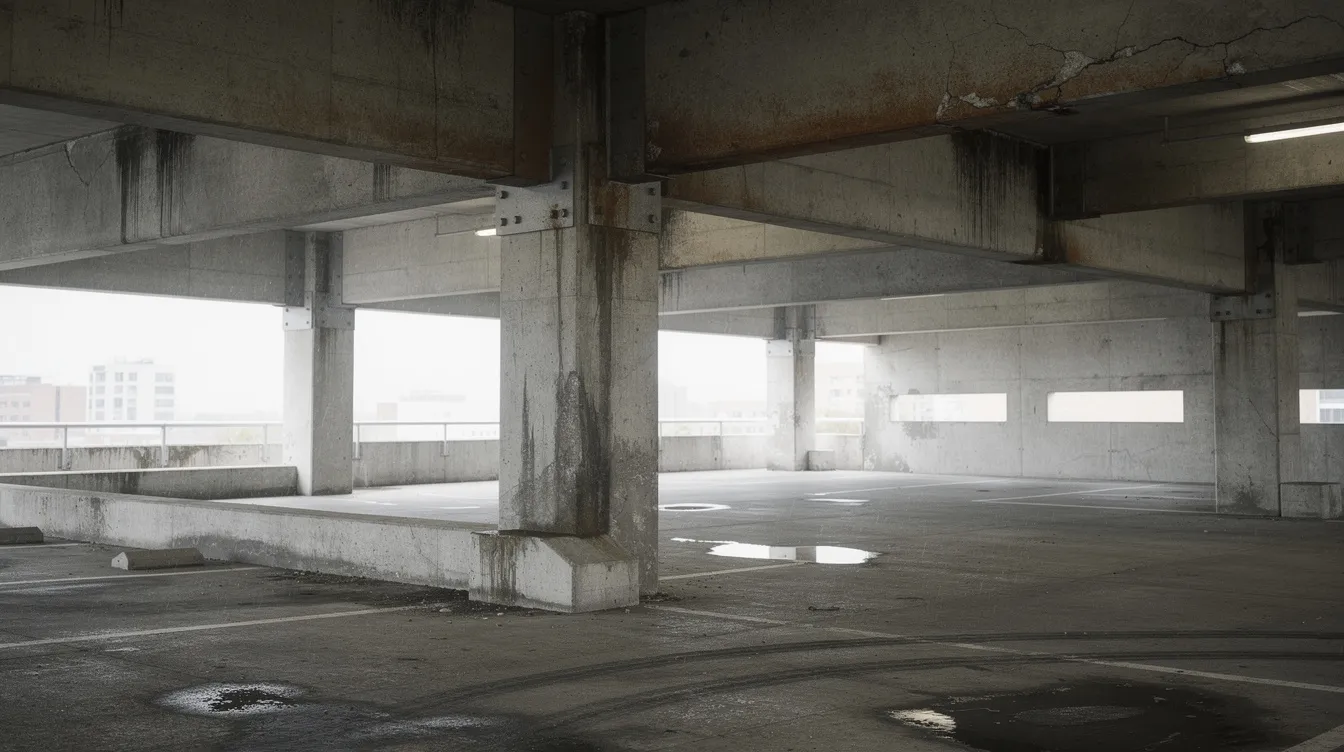
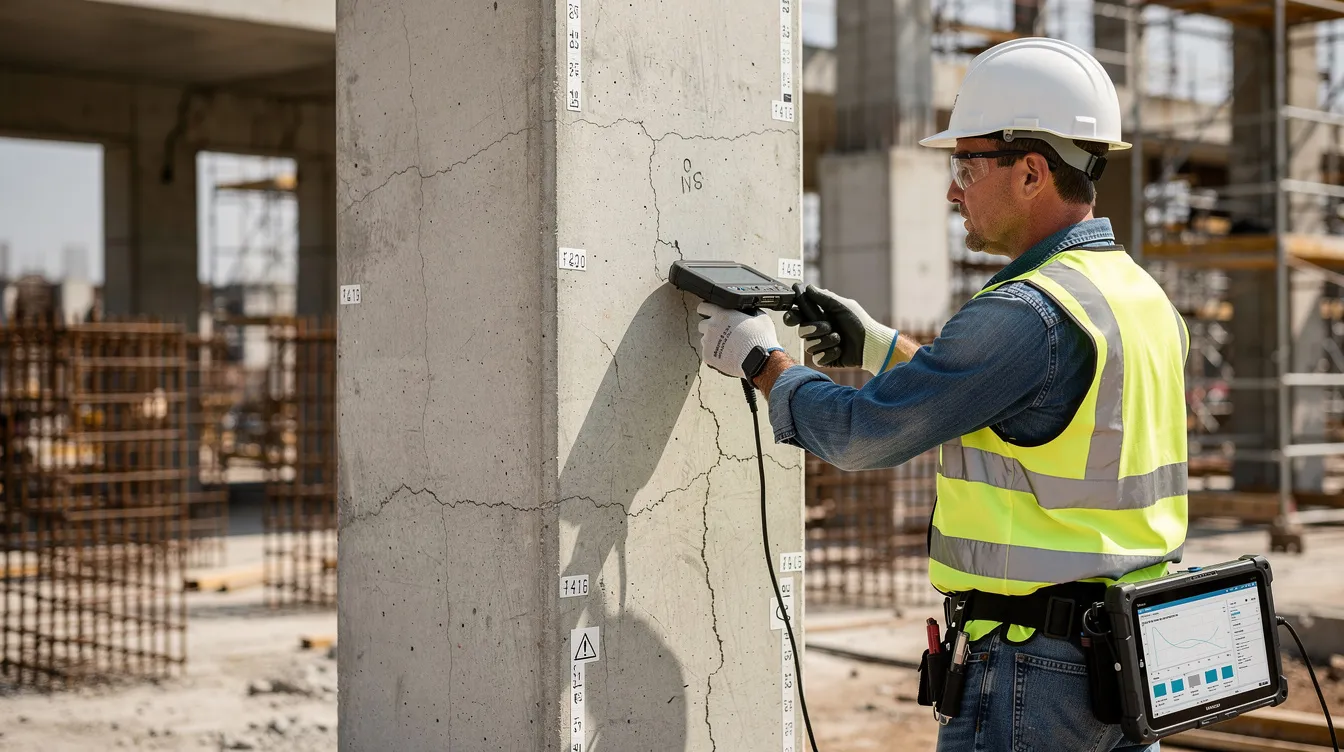
The PSI process has two stages. Stage 1 involves a visual inspection of accessible structural elements, including columns, beams, slabs, roof structures, retaining walls, and car park structures. Stage 2 includes non-destructive testing if defects are found; this full structural investigation is triggered when a structural engineer identifies signs of structural deterioration during Stage 1. Stage 2 testing includes concrete core sampling and load analysis.
PSI does not cover M&E systems or façade conditions. Periodic façade inspections are separate from periodic structural inspections and require different compliance measures, different timelines, and different qualified inspectors.
The Two Main PSI Cycles: 5 Years vs 10 Years
BCA applies two default intervals for periodic inspection:
-
5-year PSI cycle: applies to all non-residential buildings, including commercial buildings, industrial buildings, shophouses, hotels, hospitals, schools, and warehouses. PSI occurs every 5 years for non-residential buildings.
-
10-year PSI cycle: applies to most residential buildings, including condominiums and private apartments. Residential buildings require PSI every 10 years.
HDB blocks are inspected under a separate regime managed by Town Councils; individual HDB flat owners do not receive BCA PSI notices. Detached and temporary residential properties are exempt from the periodic structural inspection regime. This exemption covers detached houses, semi-detached houses, terrace houses, and linked houses used solely as private residences. Temporary buildings are also exempt.
Civil and industrial structures such as jetties and heavy manufacturing plants fall into the non-residential 5-year regime but may face enhanced inspection scope under BCA’s Differentiated PSI Approach.
The label that determines your cycle is your approved building use in URA and BCA records, which is the subject of the next section.
Why Building Use Determines PSI Frequency
BCA’s rationale for differentiating cycles is rooted in structural risk. Commercial and industrial buildings carry heavier floor loads, experience more frequent tenant modifications, and accommodate larger numbers of occupants. A logistics warehouse with forklift traffic and racking systems presents a different structural demand profile than a residential condominium with fixed partition walls and household furniture. The 5-year cycle reflects this higher rate of structural change and loading variability.
Building use is defined by planning and approval records: URA zoning, BCA submissions, and the usage schedule attached to the TOP or CSC. If someone converts an apartment unit into an informal tuition centre, that does not change BCA’s classification. Only formal, approved changes of use affect the PSI cycle.
Residential buildings are defined as those where at least 90% of the floor area is used for residential purposes. Every building that falls below this 90% residential threshold is classified as non-residential for PSI purposes.
Shophouses are always inspected every 5 years because of their age (many predate modern building codes), mixed-use nature, and masonry-plus-timber construction that requires closer monitoring.
Which Buildings Fall Under 5-Year vs 10-Year PSI Cycles?
Building use is sometimes less obvious than it appears. Serviced apartments in commercial towers, condominiums with ground-floor retail, and converted shophouses all create classification questions. Owners who misclassify their PSI interval risk multi-year non-compliance. The inspection cycle is determined by the primary usage classification of the building.
5-Year PSI Cycle: Non-Residential, Commercial and Industrial Buildings
The following building types fall under the 5-year cycle: office towers, business parks, retail malls, hotels, industrial factories, warehouses, hospitals, schools, stand-alone commercial car parks, and any building where more than 10% of the floor area serves non-residential purposes.
Non-residential buildings require PSI every 5 years after the first PSI, which is due in the 13th year after TOP or CSC. The first PSI is due in the 13th year after TOP.
Consider a CBD office tower with TOP issued on 15 June 2014. Its first PSI falls due in 2027 (13 years after TOP). Subsequent cycles follow at 5-year intervals: 2032, 2037, 2042. A logistics warehouse with CSC dated 10 January 2010 would have its first PSI in 2023, then 2028, 2033, and so on. Podium car parks forming part of a non-residential development follow the same 5-year regime as the main building.
For a detailed breakdown of PSI obligations for these asset types, see AMAN’s guide to PSI for commercial and industrial buildings.
10-Year PSI Cycle: Residential Buildings
BCA treats as “residential” any building where at least 90% of the floor area is devoted to residential use. This covers condominiums, private apartments, walk-up flats, cluster housing, and serviced apartments approved under a residential-use classification.
A condominium with TOP dated 1 March 2015 would face its first PSI in 2028 (year 13). The next cycle would fall in 2038, then 2048. For strata-titled developments, the management corporation strata title (MCST) is legally responsible for PSI compliance on common property; individual unit owners cannot opt out.
Landed detached, semi-detached, and terrace houses used solely as residences are exempt from the BCA PSI regime. Owners of these properties can still commission voluntary structural checks if they have structural concerns.
Special Case: Shophouses and Conservation Buildings
Conservation shophouses sit in a distinct category. They undergo PSI every 5 years regardless of whether upper floors are residential, because their ground floors are commercial and their heritage-era construction (masonry walls, timber floors, lime plaster) requires closer structural monitoring.
A shophouse with a major reconstruction CSC in 2000 would have faced PSI cycles in 2013, 2018, 2023, and next in 2028. In May 2026, BCA and URA launched a joint pilot project requiring structural engineers to declare observed usage during shophouse PSIs and assess whether actual loads deviate from original design assumptions.
Owners often underestimate PSI complexity for shophouses. Access to party walls, inspection of timber structural elements, and coordination with URA conservation requirements all add time and cost. AMAN’s shophouse PSI guide addresses these requirements in detail.
Mixed-Use Developments and Borderline Cases
Mixed-use buildings may fall under the 5-year inspection cycle if commercial components are present. BCA classifies the entire building based on total floor-area usage:
-
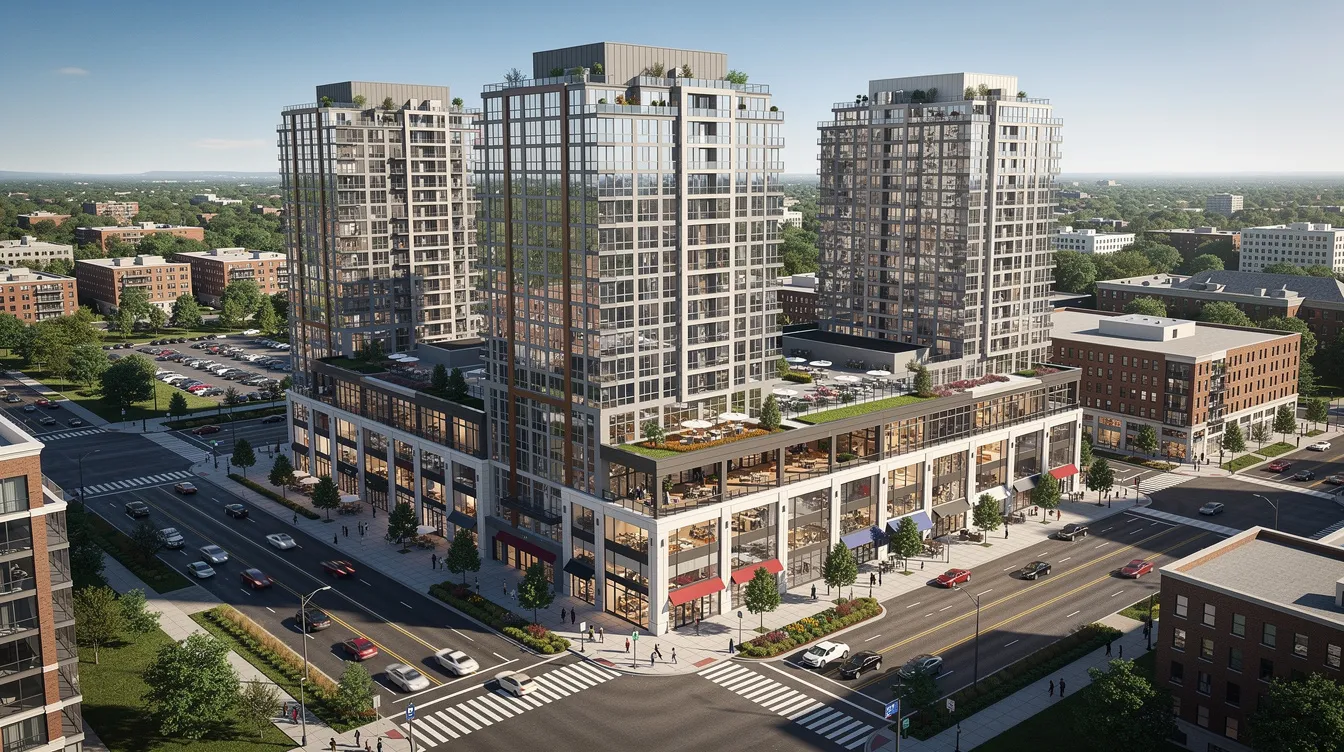
An integrated development with a retail mall, office floors, and residential towers where non-residential GFA exceeds 10% of total floor area falls under the 5-year PSI cycle for the whole structural system.
-
A neighbourhood condominium with a few ground-floor retail units where residential GFA still exceeds 90% typically remains on the 10-year cycle.
A common mistake is assuming residential classification because residential units dominate numerically. What matters is floor area, not unit count. If you are uncertain, check your BCA PSI notice, review the TOP/CSC usage schedule, or consult a qualified structural engineer to interpret the classification.
From Law to Dates: Calculating Your PSI Deadlines
Knowing your cycle length is half the problem. The other half is converting that knowledge into calendar dates and internal milestones that keep you ahead of BCA’s timeline.
Step-by-Step: How to Work Out Your Next PSI Due Date
-
Locate your TOP or CSC date from BCA records, the developer’s handover documents, or MCST files. PSI starts in the 13th year after TOP or CSC, whichever is earlier.
-
Add 13 years to determine your first PSI trigger year.
-
Apply your cycle length. For non-residential buildings and shophouses: add multiples of 5 years from the first trigger. For residential buildings: add multiples of 10 years.
-
Mark the expected BCA notice window. BCA issues PSI notices approximately 12 months before due dates. Flag this in your maintenance calendar.
-
Plan internal milestones. Work backwards from the submission deadline: PE appointment, inspection window, draft report review, any Stage 2 investigation if defects are found, rectification timeline, and final submission via CORENET-X.
Worked example, 5-year cycle: A business park building receives TOP on 1 July 2012. First PSI due: July 2025 (year 13). BCA notice expected around mid-2024. Next PSI cycle: July 2030, then 2035, 2040.
Worked example, 10-year cycle: A residential condominium receives TOP on 15 March 2015. First PSI due: March 2028 (year 13). BCA notice expected around early 2027. Next PSI cycle: March 2038, then 2048.
How BCA Notices Align With PSI Cycles
BCA tracks building age centrally and issues a BCA PSI notice automatically when a building reaches its next PSI cycle. Receiving a notice does not imply that BCA has identified defects; it is a routine administrative trigger.
The notice states the building address, the statutory submission deadline, and the classification. PSI reports must be submitted to BCA within 3 to 6 months of the notice, depending on building size and risk category; larger or more complex commercial buildings may receive up to 12 months. The legal deadline is the report submission date, not the date the structural engineer walks the site. Building owners need to work backwards from this date.
Building owners must appoint a structural engineer within 2 months of receiving the notice. Owners must appoint a registered professional engineer for PSI; that engineer must be registered with the Professional Engineers Board and hold civil or structural engineering registration.
Single-Owner vs Strata-Titled Buildings: Who Tracks the Cycle?
For a single-owner commercial building, the landlord or asset manager is fully responsible for tracking PSI cycles, appointing the PE, providing site access, and submitting the inspection report to BCA on time.
For strata-titled developments, the management corporation assumes owner responsibilities. The MCST council must manage the PSI calendar for common property; individual subsidiary proprietors cannot delegate or transfer this obligation.
MCSTs should build a 20-to-30-year PSI and PFI master schedule as part of long-term maintenance planning and sinking-fund forecasting. AMAN can review existing PSI history and construct a forward-looking schedule for entire portfolios; see our condominium and MCST PSI compliance guide.
How Change of Use and Alterations Affect Your PSI Cycle
Many building owners assume that changing tenants or reconfiguring floor plates will shift their PSI frequency. In practice, PSI cycles are anchored in approved use and are slow to change.
Does Changing Tenants or Fit-Out Change Your PSI Interval?
Swapping tenants or renovating interiors (new offices, restaurants, gyms) does not change the statutory PSI cycle. The building remains non-residential or residential as originally approved by BCA and URA.
Such changes can, however, increase structural loading or vibration, which may trigger more detailed checks during the next periodic structural inspection. A warehouse repurposed for heavy data-centre equipment, for example, may impose floor loads well above the original design. If the structural engineer discovers such loading during a visual structural inspection, a Stage 2 structural investigation could follow. Owners planning major internal changes should consult a PE early to assess structural implications before the next PSI window.
Formal Change of Use (URA/BCA) and Its Impact on PSI
A formal change of use requires URA change-of-use approval, and sometimes A&A projects that reclassify GFA. Examples include converting office floors to serviced apartments, or adding a commercial podium to a residential tower.
If the conversion shifts the building from commercial to residential-dominant (90% or more residential floor area), future PSI cycles could move from 5 to 10 years. The reverse also applies: a residential building that gains enough non-residential GFA to exceed the 10% threshold would shift to a 5-year regime. These changes do not alter PSI deadlines mid-cycle; they affect the regime for subsequent cycles, after BCA updates its classification records.
AMAN can help owners model the structural analysis implications of conversion projects and prepare authority submissions that align with future PSI cycles.
High-Risk Uses and the Differentiated PSI Approach
BCA’s Differentiated PSI Approach applies enhanced inspection scope to higher-risk buildings, even when the formal interval remains at 5 years. Buildings that may draw this treatment include:
-
Factories with heavy overhead cranes where dynamic loading stresses structural elements beyond typical design assumptions
-
Event venues accommodating large, moving crowds where vibration and concentrated loads are a concern
-
Buildings with extensive unauthorised structural modifications discovered during previous PSI reports
While the PSI cycle length (5 vs 10 years) usually stays constant, BCA can direct additional checks or shorter follow-up intervals on a case-by-case basis when a building’s PSI status reveals structural concerns. From 2023 to 2025, out of more than 7,000 buildings structurally inspected annually under PSI, over 600 were found to have structural defects each year. Around 91% had either no defects or only minor ones; the remaining 9% required further action.
Planning Around 5-Year vs 10-Year Cycles: Practical Implications for Commercial Owners
The 5-year PSI cycle for commercial assets doubles the inspection frequency compared to residential buildings. That translates directly into budgeting, tenant coordination, and maintenance planning.
Budgeting and Sinking Fund Planning by Cycle Length
A 5-year cycle means recurring professional fees every five years and more frequent discovery of structural repairs. Cost ranges for PSI vary by building type: small commercial or shophouse buildings (2 to 4 storeys) typically cost S$3,500 to S$7,500; mid-rise commercial buildings (5 to 15 storeys) range from S$8,000 to S$18,000; large commercial complexes above 30 storeys can exceed S$25,000 per cycle.
Residential MCSTs on 10-year cycles have longer to accumulate sinking-fund reserves, but the per-cycle rectification scope is often larger because deterioration has more time to progress. Both types of building owners should establish dedicated PSI budget lines and set aside a 15-to-20% contingency allowance for Stage 2 investigations. Stage 2 investigations may be required if defects are found during the initial visual inspection, adding concrete core sampling, reinforcement corrosion testing, and structural analysis to the scope.
Aligning PSI with PFI and Other Inspections
PSI and periodic facade inspection operate on different cycles. PSI runs at 5 or 10 years from year 13 of the building’s life. Façade inspection runs every 7 years for buildings over 13 metres tall and more than 20 years old. For a commercial building on a 5-year PSI cycle, the PSI and PFI schedules overlap every 35 years (the lowest common multiple of 5 and 7), but partial overlaps occur more frequently, creating opportunities to share access equipment like boom lifts and scaffolding.
Owners should create a statutory inspection matrix for each property covering PSI, PFI, fire safety certification, and lift inspections. AMAN can coordinate integrated PSI and PFI campaigns with shared site photography and BIM-based defect mapping to reduce mobilisation costs and disruption.
Operational Planning: Tenant and Car Park Disruption
Coordinating PSI in occupied commercial buildings requires advance planning for access to visible structural elements and common structural elements in areas that tenants and the public use daily:
-
Engage a PE 6 to 9 months before the deadline for larger commercial assets, including those with multiple podium levels or basement car park structures
-
Issue tenant notices 2 to 3 months before intrusive inspections, specifying areas and timeframes
-
Phase inspections block-by-block or deck-by-deck so that building operations continue during the inspection period
-
Schedule plant-room and roof-deck inspections during off-peak hours to avoid operational conflicts
Owners must provide site access for the structural engineer’s assessment. In residential buildings, inspections primarily affect common areas and car parks rather than interior units, except in cases where the engineer must inspect sample units (at least 20% of units for buildings 30 years old or younger; 30% for older buildings).
Common Mistakes About PSI Cycles and How to Avoid Them
Most missed deadlines and enforcement actions trace back to misunderstandings about the 5-year and 10-year distinction and about who is actually responsible for PSI compliance.
Mistake 1: Assuming All Buildings Are on a 10-Year Cycle
Some owners believe PSI is a once-per-decade obligation across all building types. Non-residential buildings and shophouses are on 5-year cycles. Overlooking this can produce multi-year non-compliance. Failure to comply with PSI can result in fines up to S$20,000, and failure to appoint a structural engineer can lead to imprisonment. Non-compliance can result in fines up to S$20,000. Insurance complications may arise from non-compliance with PSI.
Always confirm classification from your BCA notice or building approval records. When in doubt, treat the asset as 5-year until you receive written clarification from BCA.
Mistake 2: Treating Each Component as Having a Different Cycle
Owners sometimes assume that the car park, podium, and tower each carry separate PSI intervals. PSI is applied at the building or development level; car parks forming part of a non-residential development follow the same 5-year regime as the main building. Maintain a single master PSI calendar per structural system, even if the development comprises multiple blocks sharing a common podium. Foundations are assessed based on signs of settlement or cracking across the entire structural footprint.
Mistake 3: Waiting for a BCA Notice Before Planning
BCA issues notices approximately 12 months before PSI due dates. Owners who treat the BCA notice as the starting signal, rather than a formal confirmation, often find themselves rushing to appoint a registered professional engineer, schedule inspections, and prepare submissions within a compressed timeframe.
For large commercial complexes, start planning 12 to 18 months ahead of anticipated PSI years. Repeated late filings of PSI reports can lead to prosecution, and BCA can issue enforcement notices for immediate action. Proactively calculate your PSI trigger years and book your PE early.
Mistake 4: Ignoring Cycle Shifts After Major Redevelopment
Extensive reconstruction, addition of new wings, or a full change-of-use that results in a new TOP or CSC can reset the PSI countdown and alter the building’s classification. Owners who continue using old PSI schedules after redevelopment risk misalignment with BCA’s updated records.
After any major redevelopment project, perform a post-completion compliance review with your PE to confirm the new PSI start date and interval. This is particularly relevant for heritage shophouses undergoing conservation-grade restoration, where a new CSC may be issued. AMAN’s structural assessment guide covers the compliance review process in detail.
How AMAN Engineering Consultancy Helps You Navigate PSI Cycles
AMAN Engineering Consultancy is a Singapore-based engineering and architectural consultancy with direct experience in BCA PSI, periodic facade inspection, authority submissions, and commercial portfolio advisory. We work with building owners, MCSTs, and facility managers to ensure PSI compliance is handled on time and to a standard that satisfies BCA requirements.
Confirming Your Correct PSI Cycle and Deadlines
AMAN’s first-step service for new clients involves reviewing BCA PSI notices, TOP and CSC documents, URA approved-use records, and existing inspection history. We confirm whether the building is on a 5-year or 10-year cycle and whether special provisions apply (shophouse, heritage, differentiated PSI).
The output is a simple PSI timeline showing past inspections, the current PSI status, and next due dates. This review can be conducted remotely based on scanned documents and official records. For buildings with complex histories (multiple A&A projects, partial change-of-use, or phased TOP dates), we cross-reference structural drawings and BCA correspondence to resolve ambiguities.
Delivering End-to-End PSI for Commercial Buildings
AMAN’s core periodic structural inspection offering for non-residential clients includes:
-
PEB-registered Civil/Structural Professional Engineers performing Stage 1 visual inspection of all accessible structural elements and Stage 2 investigations where required
-
On-site inspection of columns, beams, slabs, transfer structures, car parks, retaining walls, and roof structures, with photographic records and defect severity classification
-
Assessment for spalling concrete, reinforcement corrosion, concrete spalling patterns, structural deterioration, and any unauthorised structural modifications
-
Practical repair recommendations aligned with building operations, so remedial works can be phased without unnecessary tenant disruption
-
CORENET-X submission of the certified inspection report and liaison with BCA until acceptance
Building owners must implement recommended repairs promptly after PSI. Owners must implement recommended rectifications within specified timeframes set out in the PSI report. AMAN assists with specifying rectification works and, where needed, value-engineering major structural repairs.
Portfolio-Level Planning and Digital Documentation
For asset owners, REITs, and corporate portfolios managing multiple properties, AMAN provides:
-
Portfolio PSI calendars mapping which assets are on 5-year vs 10-year cycles, with next-due-date alerts for each property
-
BIM/Revit or Tekla 3D models overlaid with inspection findings, enabling tracking of structural deterioration across future PSI cycles and supporting early detection of recurring defect patterns
-
Standardised PSI report formats suitable for internal governance, lender covenant reporting, and insurer reviews
-
Photographic documentation and schematic diagrams formatted for ESG, safety, or board-level reporting
Past PSI reports and previous PSI reports are cross-referenced to identify trends in structural condition over time. This approach turns PSI from a reactive compliance exercise into a proactive asset-management tool.

Conclusion and Next Steps
PSI is mandatory under the Building Control Act. Whether your cycle is 5 or 10 years depends on your building’s approved use and the 90% residential floor-area threshold. Identifying your correct cycle and planning ahead prevents enforcement action, avoids rushed inspections, and supports long-term structural integrity and asset planning.
Actionable next steps:
-
Identify your TOP or CSC date and confirm your building classification (residential, non-residential, shophouse, mixed-use)
-
Calculate your PSI trigger years using the 13-year start point and 5-year or 10-year intervals, and mark them in your maintenance calendar
-
Review any existing BCA PSI notices and check whether deadlines are approaching or overdue
-
Engage a registered PE firm like AMAN Engineering Consultancy 6 to 12 months ahead of key deadlines, particularly for large commercial assets
-
Consider aligning PSI with PFI and other statutory checks where timing overlaps allow shared logistics
For further reading, explore AMAN’s guides on the detailed PSI process, integrating PSI with façade inspection, and 2026 BCA policy updates.
FAQ: 5-Year vs 10-Year PSI Cycles in Singapore
These questions address the most common points of confusion from building owners, MCSTs, and facility managers about PSI frequency and how building use drives deadlines.
How do I quickly tell if my building is on a 5-year or 10-year PSI cycle?
Check your BCA PSI notice first; it will indicate your building type or make the classification clear from context. If you do not have a notice yet, check building classification: non-residential and shophouse buildings undergo PSI every 5 years; residential buildings (where at least 90% of floor area is residential) every 10 years. If your building has a mixed-use or complex approval history, verify with a PE or contact AMAN for a classification review.
My building looks new. Do I still follow the 13-year trigger and cycle rules?
Yes. PSI countdown is based on your TOP or CSC date, not the building’s visual condition. Extensive retrofits and renovations do not reset the building’s age unless a major reconstruction results in a new TOP or CSC being issued by the building and construction authority.
Can BCA change my PSI frequency from 10 years to 5 years?
BCA can reclassify a building if its approved use changes from residential-dominant to non-residential-dominant, or if special risk factors justify a different regime. Such reclassification is formal and communicated through official correspondence; it is not applied casually. Mixed-use buildings may fall under the 5-year inspection cycle if commercial components push non-residential floor area above 10%.
What happens if I miss a PSI deadline because I misread my cycle?
Consequences include enforcement notices, fines of up to S$20,000, criminal liability risk for persistent non-compliance, and potential insurance complications. If you have missed a deadline, engage a PE immediately, inform BCA, and propose a clear catch-up plan with a realistic submission date. AMAN assists owners in regularising overdue PSIs and restoring PSI compliance.
Does each block in a multi-block development have its own PSI cycle?
Blocks sharing a single TOP or CSC record and a connected structural system typically share the same PSI cycle. Phased developments where each block has a separate TOP date will have staggered PSI triggers. Review your TOP and CSC documents for each block and group them logically. Coordinating PSI across blocks with aligned schedules reduces mobilisation costs and ensures consistent inspection findings across the development.