
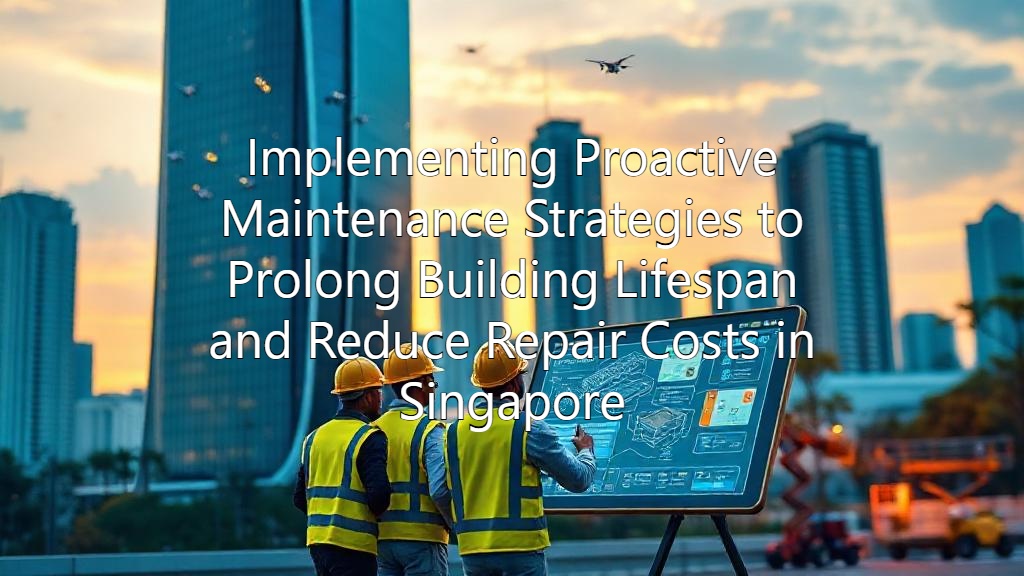
The city-state of Singapore continues to grow and urbanize, its buildings can be thought of as intricate machines, with each component working in harmony to provide a safe and comfortable environment for occupants.
But just like a well-oiled machine, they require regular maintenance to prevent breakdowns and ensure optimal performance.
With the average cost of repair and maintenance in Singapore being significantly higher than proactive maintenance, it’s a wonder why many building owners and managers still adopt a reactive approach, only addressing issues when they arise.
Implementing proactive maintenance strategies can be likened to being a master chess player, anticipating and planning several moves to stay ahead of potential problems.
By doing so, building owners and managers can prolong the lifespan of their properties, reduce repair costs, and create a safer and more comfortable environment for occupants.
As Singapore’s building stock continues to age, the need for proactive maintenance strategies has never been more pressing, with many experts citing it as a crucial step in reducing the city-state’s maintenance backlog.
Implementing Proactive Building Maintenance Strategies to Minimise Downtime and Reduce Repair Costs
Proactive building maintenance is a crucial aspect of ensuring the longevity and efficiency of a building’s systems and infrastructure, ultimately leading to significant cost savings and reduced downtime.
By implementing regular maintenance checks and addressing potential issues before they become major problems, building owners and managers can avoid costly repairs and minimise disruptions to occupants.
Effective maintenance strategies can also enhance the overall safety and comfort of a building, making it a more desirable and productive space for its users.
The consequences of neglecting building maintenance can be catastrophic, resulting in sudden and drastic failures that bring entire operations to a grinding halt.
- Regular inspections can help identify potential issues before they become major problems, allowing for timely and cost-effective interventions.
- Data-driven maintenance approaches can provide valuable insights into a building’s performance, enabling more informed decision-making and optimised resource allocation.
- Predictive maintenance techniques, such as those leveraging AI and IoT technologies, can help anticipate and prevent equipment failures, reducing downtime and repair costs.
Maximising Equipment Lifespan through Regularly Scheduled Inspections and Servicing in Singapore

Regularly scheduled inspections and servicing can help identify potential issues before they become major problems, allowing building owners and managers to take proactive measures to maintain equipment’s optimal performance.
By doing so, they can prevent minor issues from escalating into costly repairs, reduce downtime, and ultimately increase their business’s overall efficiency.
This approach not only saves building owners and managers money but also helps ensure the safety of employees and customers.
Many businesses in Singapore are now recognising the importance of proactive servicing in maximising equipment lifespan.
Preventive Maintenance Techniques for Reducing Unexpected Breakdowns and Increasing Productivity
A notable example of the benefits of preventive maintenance can be seen in the manufacturing industry, where companies have implemented robust maintenance schedules to minimise downtime and increase overall efficiency.
By doing so, they have reduced unexpected breakdowns by up to 50% and improved productivity by 20%, leading to significant cost savings and improved product quality.
Preventive maintenance involves regular inspections and repairs to identify and address potential issues before they become major problems, reducing the likelihood of unexpected breakdowns and increasing productivity.
Effective preventive maintenance techniques include routine cleaning and lubrication of equipment, regular software updates, and employee training on maintenance procedures.
Effective Predictive Maintenance Approaches to Identify Potential Issues before Major Problems Arise
Predictive maintenance is like having a crystal ball that forecasts equipment failures, allowing companies to take proactive measures to prevent downtime and reduce costs.
By leveraging advanced technologies such as artificial intelligence, machine learning, and Internet of things (IoT) sensors, businesses can detect early warning signs of potential issues.
This approach enables companies to schedule maintenance during planned downtime, minimizing the impact on operations and reducing the risk of accidents.
Predictive maintenance can also help companies optimize their maintenance schedules, prioritizing tasks based on equipment criticality and potential impact on operations.
Optimising System Performance through Proactive Maintenance Strategies and Data-Driven Insights

To optimise system performance, it is essential to implement proactive maintenance strategies that leverage data-driven insights, allowing for prompt identification and resolution of potential issues.
This approach enables organisations to reduce downtime, increase efficiency, and improve overall system reliability.
By adopting a proactive stance, companies can stay ahead of potential problems, minimising the risk of unexpected failures and associated costs.
Data-driven insights provide valuable information on system usage patterns, helping to inform maintenance schedules and resource allocation.
Integrating Prescriptive Analytics and Artificial Intelligence in Building Maintenance Operations
Leveraging technology to streamline maintenance processes is crucial in today’s facilities management landscape.
- Optimising equipment performance through predictive maintenance scheduling
- Utilising machine learning algorithms to detect potential issues before they occur
- Implementing automated work order systems to reduce manual labour and increase efficiency
- Enhancing decision-making with data-driven insights and prescriptive analytics
- Streamlining communication between maintenance teams and stakeholders through AI-powered platforms
By embracing these innovative solutions, building managers can reduce costs, improve occupant satisfaction, and create a more sustainable and efficient maintenance operation.
Unlocking Significant Savings through Proactive Maintenance Strategies and Energy-Efficient Practices
By implementing proactive maintenance strategies, businesses can reduce energy consumption and lower their utility bills significantly.
Effective energy management is key to unlocking long-term savings and reducing environmental impact.
Proactive maintenance involves regularly inspecting and maintaining equipment to prevent breakdowns and ensure they are operating at optimal levels.
Energy-efficient practices, on the other hand, focus on reducing energy waste and promoting sustainable behaviours.
Real savings can be achieved by implementing proactive maintenance strategies and energy-efficient practices.
Utilising Smart Building Systems and IoT Devices to Streamline Facility Management Activities
Contrary to the common perception that smart buildings are a luxury only affordable by large corporations, many small to medium-sized enterprises are now adopting these technologies to enhance their facility management.
The cost savings and increased efficiency provided by smart building systems can benefit businesses of all sizes.
The idea that smart buildings are only for the elite is no longer valid.
The smart building market is expected to continue growing rapidly, with many companies already seeing significant returns on their investments.
Enhancing Building Performance and Prolonging Lifespan through Regular Upkeep and Preventive Maintenance
Regular upkeep and preventive maintenance are crucial for enhancing building performance and prolonging its lifespan, as they help identify and address potential issues before they become major problems.
By incorporating a proactive maintenance approach, building owners and managers can ensure that their properties remain safe, efficient, and functional, while also improving the overall quality of life for occupants.
This, in turn, can lead to increased property values, reduced liability, and a competitive edge in the market.
A well-maintained building can also contribute to a reduction in energy consumption and environmental impact, making it an attractive option for environmentally conscious individuals and organizations.
As the city-state of Singapore continues to grow and urbanize, the importance of implementing proactive maintenance strategies will only continue to escalate, with building owners and facilities managers seeking to maximize the lifespan of their properties while minimizing costly repairs.
By embracing a forward-thinking approach to maintenance, these individuals can help ensure that their buildings remain safe, efficient, and functional for generations to come.
The key to unlocking a future of prolonged building lifespan and reduced repair costs lies in the willingness to adopt proactive maintenance strategies, and as such, it is crucial that building owners and facilities managers in Singapore remain committed to this pursuit.
With this commitment, Singapore’s buildings will continue to stand tall, a testament to the power of proactive maintenance and a beacon of sustainability for years to come.