
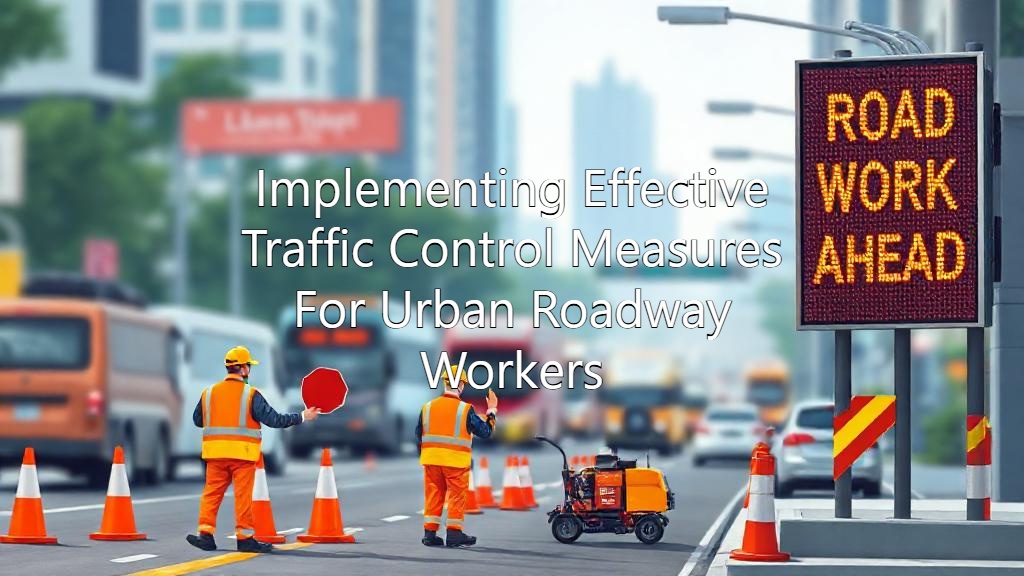
As the city’s pulse beats faster, its streets transform into a complex orchestration of moving parts, where construction crews and commuters intersect in a delicate dance.
Can we find harmony in this chaos, or will the discord of congested roads and worker safety concerns continue to plague our urban landscapes?
The answer lies in implementing effective traffic control measures, a symphony of signage, barriers, and strategic planning that ensures the safety of both workers and drivers.
Just as a master conductor expertly weaves together disparate melodies, urban planners must carefully balance the needs of construction crews, pedestrians, and motorists to create a harmonious and safe environment.
By doing so, they can mitigate the risks associated with urban roadway work, reducing the approximately 1,500 worker fatalities that occur annually in the United States alone.
Implementing Urban Roadway Traffic Control Measures to Ensure Worker Safety and Compliance
Ensuring worker safety in urban roadway construction projects is crucial, as it not only saves lives but also enhances the overall quality of the project, with effective safety management strategies being key to achieving this goal.
Urban roadway construction safety regulations and compliance requirements for contractors play a significant role in preventing accidents and minimising risks.
Developing customised safety solutions for unique urban roadway construction challenges and hazards is essential for protecting workers and ensuring compliance with regulations.
As the construction industry continues to grow, the need for effective safety management strategies becomes increasingly urgent, with lives hanging in the balance every day.
- Regular training is essential for urban roadway workers to stay aware of potential hazards and take necessary precautions.
- Clear signage is critical in reducing accidents in urban roadway work zones, providing workers and motorists with vital information.
- Implementing third-party safety consulting can provide expert guidance for urban roadway construction companies, helping them navigate complex safety regulations and compliance requirements.
Improving Roadway Worker Safety with Technology and High-Visibility Gear
Enhancing urban roadway worker visibility and safety is crucial, and one notable example is the implementation of fluorescent vests and reflective clothing in roadway construction zones, which has been shown to reduce accidents by increasing worker visibility, especially in low-light conditions.
For instance, a construction company implemented a mandatory policy requiring all workers to wear high-visibility vests, resulting in a significant reduction in accidents.
The use of electronic message boards can be particularly effective in urban areas, where traffic volumes are high, and construction zones can be complex, making it difficult for drivers to navigate safely.
By providing real-time information and alerts, these boards can help reduce the risk of accidents and improve worker safety, and when combined with high-visibility clothing, can create a safer working environment.
Optimising urban roadway construction safety with technology is an ongoing effort, with researchers and industry experts exploring new solutions to improve worker safety and reduce accidents.
The implementation of these technologies, along with the use of high-visibility gear, can help create a safer and more efficient construction environment, ultimately reducing the risk of accidents and improving worker safety.
In the end, it’s all about safety, and repeated safety measures, such as high-visibility clothing and electronic message boards, can make all the difference in the pursuit of zero accidents — and a safer, more efficient urban roadway construction environment.
Speed Cameras
Speed cameras are a ubiquitous feature of modern roads, watching over drivers like hawk-eyed sentinels, ever ready to pounce on those who dare to defy the speed limits.
Their cameras snap away with lightning speed and accuracy, capturing the license plates and faces of errant drivers with the precision of a paparazzo at a celebrity wedding, the resulting fines and penalties serving as a stark reminder to motorists to keep their speeds in check.
As the number of speed cameras on our roads continues to grow, so too does the sense of unease among drivers, who must now navigate the roads with the constant knowledge that they are being watched and monitored, their every move tracked and recorded.
The presence of speed cameras serves as a constant reminder to drive safely and responsibly, and to respect the rules of the road, which are in place to protect us all.
As we navigate the complex web of speed limits and traffic laws, we must also be mindful of the role speed cameras play in shaping our driving habits and behaviours and influencing how we think about safety and risk on the roads.
Tips for Implementing Radar Feedback Signs
Implementing radar feedback signs is an effective way to reduce speeding and improve road safety.
These signs use radar technology to detect the speed of approaching vehicles and display the speed to the driver, providing instant feedback and encouraging them to slow down if necessary.
By installing these signs in areas with high speeding incidents, authorities can increase driver awareness and promote a safer driving environment.
Radar feedback signs can also be used to collect data on traffic patterns and driver behaviour, providing valuable insights for urban planners and traffic engineers.
This data can be used to identify areas where additional traffic calming measures are needed, and to evaluate the effectiveness of existing measures.
Boosting Online Presence with SEO Strategies and Tools
Effective online marketing starts with a solid plan, including launching a website with a clear value proposition, conducting thorough keyword research to inform content, creating high-quality, engaging content that resonates with the target audience, analysing performance using metrics such as click-through rates and conversion rates, and optimising website elements like meta tags and headers for better search engine rankings.
By following these steps, businesses can improve their online visibility and drive more traffic to their website, ultimately leading to increased sales and revenue, and a stronger online presence that sets them apart from the competition.
Crafting Effective SEO Strategies for Long-Term Success
To develop a successful SEO strategy, it’s essential to conduct thorough keyword research, analysing search volume, competition, and relevance to the target audience, while also considering the ever-changing landscape of search engine algorithms and user behaviour.
By understanding the intricacies of SEO, businesses can create high-quality, optimised content that resonates with their target audience and drives meaningful engagement.
A well-planned SEO strategy should also take into account technical optimisation, including page speed, mobile responsiveness, and XML sitemaps, to ensure a seamless user experience.
As the digital landscape continues to evolve, a reflective approach to SEO can help businesses stay ahead of the curve and achieve long-term success.
The key to SEO success lies in adaptability and continuous improvement.
A well-crafted SEO strategy is crucial for driving organic traffic and revenue growth.
As we consider the complexities of urban roadway worker safety, it becomes clear that effective traffic control measures are not just a necessity, but a crucial investment in human life.
The image of a worker in a brightly lit vest, directing traffic with confidence and precision, is a testament to the power of well-designed safety protocols.
Looking ahead, we must continue to innovate and improve these measures, embracing new technologies and strategies that prioritise the well-being of workers and motorists alike.
Ultimately, the future of urban roadway safety will be shaped by our ability to balance efficiency with protection and to create a symbiotic relationship between the flow of traffic and the safety of those who work tirelessly to maintain our infrastructure.