
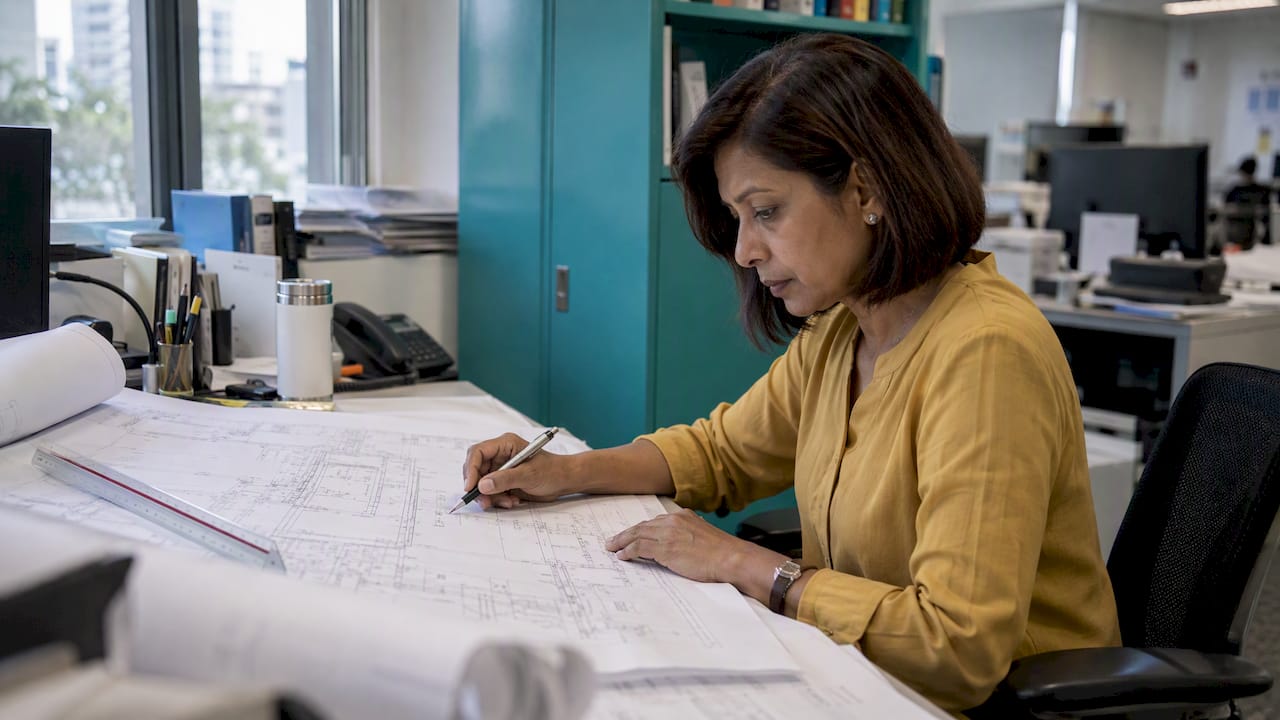
In Singapore, independent structural peer review is carried out by an Accredited Checker (AC), and it is a statutory requirement for major building works. The AC examines the detailed structural plans and design calculations prepared by the project’s structural Qualified Person (QP), and certifies the result before the Building and Construction Authority (BCA) can approve the structural plans. The term “peer review” is also used in performance-based fire safety design, where it describes a different process under the Singapore Civil Defence Force (SCDF). This article explains both, with the emphasis on the structural process that developers, builders and building owners must plan for.
TL;DR
- Major building works in Singapore require an independent structural check by an Accredited Checker, as set out by the BCA.
- The AC’s certificate must accompany the application for approval of structural plans; BCA processing is typically 10 working days for a first submission and 14 for later ones.
- The AC must be independent of the design team. The Courts have treated a failure to check properly as a criminal matter.
- Fire safety engineering has a separate peer reviewer regime under the SCDF, which applies only to performance-based solutions.
- Early coordination between the QP, the AC and the authorities shortens the approval timeline.
Table of Contents
- What structural peer review means in Singapore
- The legal basis: Building Control Act, section 18
- When an Accredited Checker is required
- The submission process step by step
- Processing times and programme planning
- What the Accredited Checker examines
- Choosing the procurement route
- A separate regime: peer review in fire safety engineering
- Common causes of delay
- Our perspective
- Support for structural and statutory submissions
- FAQ
- Sources
What structural peer review means in Singapore
Singapore law does not use the phrase “structural peer review” as a defined term. The mechanism that performs this function is the Accredited Checker system under the Building Control Act 1989. The structural QP designs the structure and takes professional responsibility for it. A second, independent professional, the AC, then checks that design before the authority approves it.
The rationale is a separation of duties. According to the High Court’s discussion in Public Prosecutor v Leong Sow Hon, the system is a counter-check intended to prevent design and verification from being performed by the same individuals or entities. The checker has no conflicting interest in the design, and that independence is what gives the certificate its value.
For project owners, the practical consequence is simple. A structural submission for major works is incomplete without the AC’s certificate, and the AC must be appointed in time to complete a full check, not a cursory one.

The legal basis: Building Control Act, section 18
Section 18 of the Building Control Act sets out the duties and independence of accredited checkers and accredited checking organisations. As reproduced in the text of section 18, an accredited checker appointed for major building works, or acting on behalf of an accredited checking organisation, must check the detailed structural plans and design calculations of the building works. The check is made in accordance with the building regulations, and the checker carries out such other duties as prescribed.
Three features of the provision matter in practice:
- The scope is the detailed structural plans and the design calculations. The check covers both the drawings and the analysis behind them.
- The standard is the building regulations. The AC does not substitute a preferred design philosophy; the question is whether the design meets the regulatory requirements.
- Independence is built into the role. The Act and the Accredited Checkers and Accredited Checking Organisations Regulations govern who may be accredited and how the Commissioner of Building Control appoints the committee that assesses applicants.
Consequences of a deficient check
The duty is enforced. In the appeal reported as [2020] SGHC 228, an accredited checker appealed against a sentence of six months’ imprisonment under section 18(1) of the Act, imposed after a guilty plea. A commentary in the Singapore Academy of Law journal, headed “Jail for Rubber Stamping”, discusses the case and the statutory duty. The message for the industry is that a certificate issued without a genuine check carries personal criminal exposure for the checker, and that owners should expect a real review, with queries and revisions, rather than a formality.
When an Accredited Checker is required
The BCA states that major building works require structural plan review by an AC. For such works, the application for approval of structural plans must be accompanied by the AC’s certificate confirming the absence of structural inadequacy in the key structural elements. Smaller works that are not classified as major building works follow a different route, and the QP should confirm the classification with the BCA before programming the submission.
The following table summarises the roles.
| Party | Role in structural approval | Independent of the design? |
|---|---|---|
| Developer or owner | Appoints the QP and the AC; jointly applies for the permit to start structural works | Not applicable |
| Structural QP | Designs the structure, submits the plans, remains responsible for the submission | No, this is the designer |
| Accredited Checker | Checks detailed plans and design calculations; issues the certificate | Yes, required |
| BCA (Commissioner of Building Control) | Approves the structural plans | Regulator |
| Builder | Carries out the structural works under the permit | No |
For an overview of who may endorse structural drawings and how the roles divide, the guide on who can endorse structural drawings in Singapore sets out the professional categories.
The submission process step by step
The sequence below reflects the BCA’s published process. Project-specific conditions can alter it, so the QP should confirm requirements at each stage.
- Appoint the structural QP. The QP is responsible for obtaining approval of the structural plans and a permit before construction begins, as the BCA guidelines for structural plan applications state.
- Appoint the Accredited Checker. The AC should be engaged before the design is frozen for submission, so that the check proceeds in parallel with the final stages of design development.
- Complete the detailed structural design. This includes the drawings, the calculations and the supporting site investigation and ground information.
- AC check and iteration. The AC raises queries; the QP responds and revises. The AC then issues the certificate once satisfied.
- Submit to the BCA. The application for approval of structural plans is lodged with the AC’s certificate.
- Obtain approval, then the permit. Once the plans are approved, a permit for structural works is required before structural works start. The application is made jointly by the developer, the QP and the builder who will carry out the works.
The structural submission fits within a wider approvals sequence. The guide to BCA structural submissions and the article on streamlining structural design approval describe how the structural strand relates to other agency submissions.
Processing times and programme planning
The BCA publishes processing times for structural plans. For applications with an accredited checker’s certification, processing is typically 10 working days for the first submission and 14 working days for subsequent submissions. For projects submitted under CORENET X, the structural review is included in a joint submission, processed within 20 working days.
These figures cover the authority’s processing only. They do not include the time the AC needs to complete the check, or the time the QP needs to answer queries. A realistic programme therefore allocates separate durations to:
- design completion and internal checking by the QP;
- the AC’s review and the resolution of comments;
- BCA processing of the first submission;
- a contingency for a second submission if the BCA raises queries.
Projects that treat the AC’s check as a final-week task typically lose the time later, through resubmission. Engaging the AC early, and providing complete calculations and design basis statements at the first issue, reduces the number of review cycles.
What the Accredited Checker examines
The scope follows from section 18: the detailed structural plans and design calculations, checked against the building regulations. In practice, the documents the QP should have ready include:
- the structural design basis, including loads, materials and codes applied;
- foundation design and the site investigation findings on which it relies;
- calculations for key structural elements, including the analysis model and its assumptions;
- structural drawings consistent with the calculations;
- construction-stage considerations that affect structural stability, such as temporary works interfaces.
Inconsistency between drawings and calculations is among the most avoidable causes of delay. The article on the structural engineering checklist and the 2026 structural compliance checklist list the items that reviewers and authorities commonly expect to see.
Choosing the procurement route
The appointment structure of the design team affects how independence is maintained. Under a design-and-build arrangement, the builder may hold the design contract, which makes it especially important that the AC is appointed and answerable independently of the party being checked. Owners weighing contractual routes can consult a comparison of design and build versus architect-led projects, noting that the statutory requirements discussed here are specific to Singapore.
A separate regime: peer review in fire safety engineering
Readers who search for “peer review” in a Singapore building context are sometimes looking for the fire safety process. It is distinct from the structural AC system, although the underlying logic is similar.
For performance-based fire safety designs, the building owner must engage a peer reviewer. The SCDF describes the peer reviewer as another Fire Safety Engineer, engaged by the building developer or owner, who checks the performance-based solution prepared by the original engineer. Key points from the SCDF’s guidance:
- The peer reviewer is expected to verify the findings independently, for example through separate fire or evacuation modelling, and not merely comment on the original report.
- According to the SCDF’s frequently asked questions, the reviewer should be engaged after the Fire Safety Engineer has completed the design and report, so that the review does not interfere with the concept stage.
- Where the two engineers disagree and cannot resolve the matter, the project QP remains responsible for the final submission to the SCDF.
The differences from the structural system are material. Structural checking by an AC is mandatory for major building works under the Building Control Act. Fire safety peer review applies to the performance-based approach, which departs from the prescriptive requirements. Owners considering that approach should budget for the additional appointment, since it adds an upfront cost to the design phase.
| Feature | Structural AC check | Fire safety peer review |
|---|---|---|
| Regulator | BCA | SCDF |
| Reviewer | Accredited Checker | Another Fire Safety Engineer |
| Trigger | Major building works | Performance-based fire safety solution |
| Appointed by | Developer or owner | Building developer or owner |
| Timing | Parallel with final design | After the engineer’s report is complete |
| Output | Certificate accompanying the structural plan application | Independent study and report |
Common causes of delay
Based on the structure of the process, owners and QPs should watch for the following:
- Late AC appointment. A check compressed into the final days of the programme leaves no room for queries.
- Incomplete geotechnical information. The BCA guidelines place site investigation, preconstruction survey and ground information within the QP’s responsibilities, and the check depends on them.
- Mismatched documents. Revisions to drawings that are not reflected in calculations invite rejection.
- Unclear roles. Confusion over who submits, who certifies and who holds the permit application can delay the start of structural works.
- Overlooking other agencies. Structural approval is one strand; projects may also need submissions to URA, PUB, LTA, SCDF and others, depending on scope.
Our perspective
We regard the Accredited Checker process as the point at which a structural design is tested by someone with no stake in defending it. Owners who treat it as an obstacle usually discover that it is cheaper to resolve a query during checking than during construction.
Our work is built around statutory submissions and authority approvals, and we coordinate the structural strand with the other agency submissions that a project requires. We state that we operate with a single point of statutory coordination and a multidisciplinary Professional Engineer team, and we report a 99% authority clearance rate. Those are our own figures, and clearance depends on the completeness of the information the project provides.

Our advice is consistent. Appoint the checker early. Issue complete calculations with the first drawings. Keep the design basis explicit. Resolve comments in writing and record them. Where a project also involves performance-based fire safety design, plan for the peer reviewer’s independent modelling in the programme, and not as an afterthought.
The independence of the checker should never be compromised for convenience. A review that confirms what the designer already believes has no value to the owner.
— Aman
Support for structural and statutory submissions
Aman Engineering Consultancy provides authority approvals, PE endorsements, periodic structural inspection and related engineering services for developers, construction firms and building owners in Singapore. Our page on the Accredited Checker role describes how the check relates to the submission. To discuss a project, contact us through the Aman Engineering Consultancy website.
FAQ
Is structural peer review mandatory in Singapore?
For major building works, yes. The BCA requires the application for approval of structural plans to be accompanied by an Accredited Checker’s certificate. Works that are not major building works follow different requirements, which the QP should confirm with the BCA.
Can the designing engineer also act as the Accredited Checker?
No. The system exists to prevent design and verification from being performed by the same individuals or entities. The checker must have no conflicting interest in the design being checked.
How long does BCA take to process structural plans?
For applications with an accredited checker’s certification, the BCA states a typical 10 working days for the first submission and 14 working days for subsequent ones. Under CORENET X, the structural review forms part of a joint submission processed within 20 working days. The AC’s own review time is additional.
Is fire safety peer review the same as structural peer review?
No. The fire safety peer reviewer is another Fire Safety Engineer who independently verifies a performance-based solution for the SCDF. The structural check is performed by an Accredited Checker for the BCA and applies to major building works.
Sources
- BCA: Structural plan submission
- BCA: Guidelines for ST plan applications
- BCA: Permit for structural works
- Building Control Act 1989, section 18
- Accredited Checkers and Accredited Checking Organisations Regulations
- [2020] SGHC 228
- Jail for Rubber Stamping, Singapore Academy of Law
- SCDF: Review of fire safety engineering report by the peer reviewer
- SCDF: Performance-based approach FAQ