
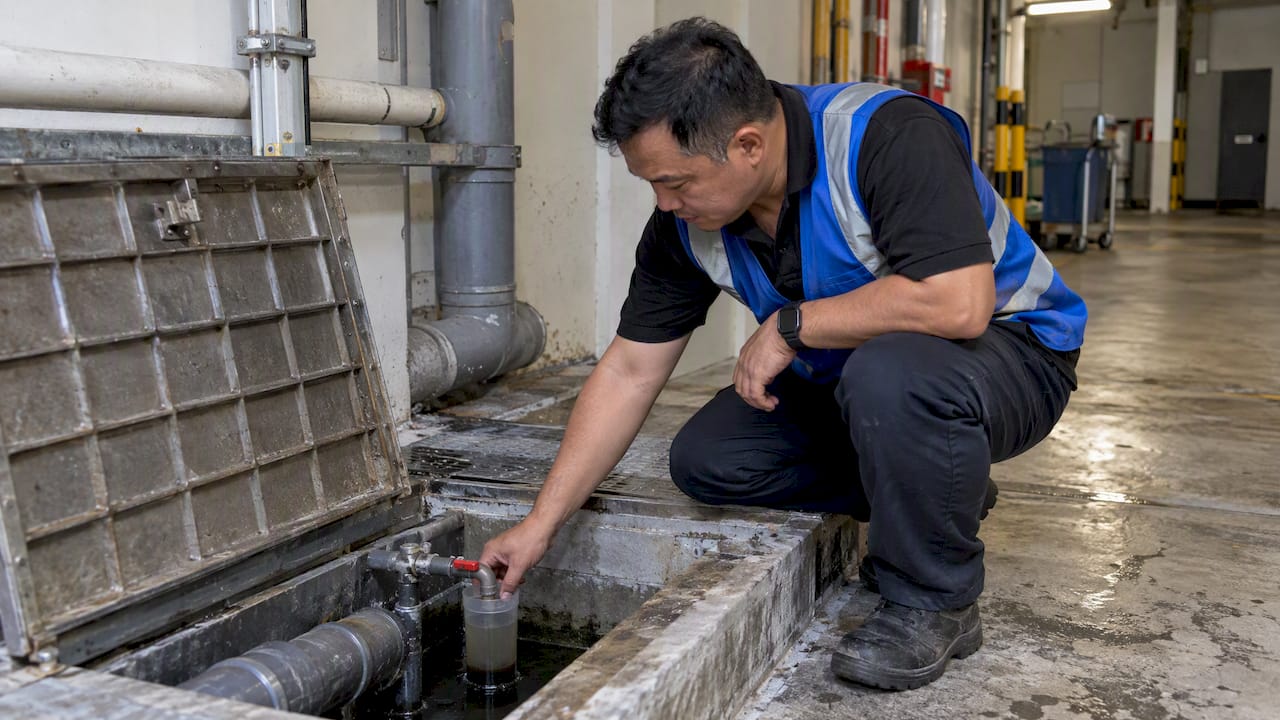
Yes, you must obtain PUB’s prior written approval before discharging trade effluent into the public sewerage system, under the Sewerage and Drainage (Trade Effluent) Regulations. The obligation covers used water from industrial, business, manufacturing, engineering and construction processes. Numeric limits, prohibited substances, sampling duties and fee rules apply once approval is granted.
TL;DR:
- Owners or operators are responsible for applying; new projects and submissions tied to BCA approval require a Qualified Person to lodge technical plans.
- Prepare site, layout, and section plans showing sewer connections, treatment equipment, and sampling points; PUB publishes no fixed review turnaround.
- PUB may allow higher BOD or TSS only with prior permission and fees based on discharge strength; payment alone does not authorize discharge.
- Notify PUB within 14 days of any change to business processes, operations, or company details; failure to report can invalidate permission.
- Keep required pretreatment equipment working and place accessible sampling points before the sewer connection; grease traps apply to food outlets, and oil interceptors to workshops.
Table of Contents
- Who needs a trade effluent discharge license from PUB?
- How do you apply for PUB written approval?
- What are the discharge limits, prohibited substances and fee rules?
- Which on-site controls and sampling points does PUB expect?
- What are the penalties, and when can PUB refuse or revoke approval?
- Why does early coordination matter?
- Our view: treat the approval as a design input, not a hurdle
- How we support PUB trade effluent approvals
- FAQ
- Sources
Who needs a trade effluent discharge license from PUB?
PUB defines trade effluent as liquid outflow, with or without suspended particles, from trade, business, manufacture, engineering or construction works. Domestic sewage, such as flows from toilets and washbasins in an ordinary office, is a different category. A factory floor wash-down, a central kitchen’s cooking and cleaning discharge, or a workshop’s process water all fall on the trade effluent side.
Typical qualifying activities include:
- Food processing and food preparation outlets that produce grease-laden used water
- Manufacturing and engineering plants that discharge process or cleaning water
- Construction works that release site used water toward the sewer
- Certain medical and laboratory discharges, excluding normal toilet flows
Responsibility sits with the property owner or business operator, who must engage a contractor or Qualified Person (QP) to submit the application. A QP is needed whenever technical plans must go to PUB directly, which is the case for new projects and those linked to BCA approval.
How do you apply for PUB written approval?
Applications go through PUB’s e-services portal at bpu.pub.gov.sg. Existing premises typically use Form F, and the written approval process requires approval before any discharge or sanitary works begin. Our drainage submission checklist covers the documents in more detail.
- Confirm whether your premises generate trade effluent and classify each discharge stream.
- Appoint a QP or contractor to prepare and lodge the online application.
- Prepare the site plan, layout plan and section plans showing the connection to the public sewer.
- Add pre-treatment equipment details and the location of sampling or test points.
- Submit through the portal, answer PUB’s queries, and wait for written approval before starting works.
PUB does not publish a fixed turnaround in the sources we reviewed, so plan your programme around the approval, not the other way round. The most common causes of delay are incomplete plans and unresolved clarifications. Our guide to how long PUB takes to respond explains the review cycle.
Pro Tip: Segregate grease-producing outlets from toilet flows on the drawings before you submit; mixed sanitary lines are among the most common mistakes that delay approval.
What are the discharge limits, prohibited substances and fee rules?
PUB sets water quality standards for trade effluent, including limits on BOD, TSS and COD, in its requirements for discharge into the public sewer. Check the current schedule in that document for the exact thresholds that apply to your premises, because we do not restate them here from memory.
Higher-strength discharges are not automatically refused. The Regulations allow PUB to permit higher BOD or TSS with prior permission, subject to payment under the Trade Effluent Fee Scheme. Fees are assessed under PUB’s schedule, so they depend on the strength of what you discharge.
The Regulations let PUB permit higher-strength discharges only with prior permission and payment under the Trade Effluent Fee Scheme. Permission is never implied by the fee.
Substances that can lead to refusal include:
- Materials hazardous to sewer workers
- Wastes that interfere with used water treatment
- Biohazardous wastes, which need separate treatment or specific permission under the Code of Practice
- Discharges routed through unsafe entry points to the sewer
Which on-site controls and sampling points does PUB expect?
PUB expects pre-treatment to be installed and kept working, as the trade effluent guidance makes clear. Its focus is on the quality of what finally leaves your premises, including during peak production. The Code of Practice on Sewerage and Sanitary Works sets grease-trap rules, standard drawings and testing requirements.
- Grease traps: required for categories such as food outlets, sized and maintained to the code.
- Oil interceptors: for workshops and plants that release oils.
- Neutralisation tanks: where process flows can be acidic or alkaline.
- Sanitary segregation: food-preparation flows kept apart from toilet flows.
- Sampling test points: positioned so PUB can inspect effluent before it joins the public sewer, with records and routine maintenance kept on file.
Pro Tip: Fix the sampling point location at design stage with unobstructed access; relocating it after construction usually means reopening drainage works.
What are the penalties, and when can PUB refuse or revoke approval?
The Regulations contain offence provisions with fines, including daily continuing fines for ongoing breaches. Read the current penalty amounts in the Regulations text before relying on any summary.
- PUB may refuse or revoke permission where a discharge endangers sewer workers.
- It may do the same where a discharge interferes with the sewerage system.
- It may impose conditions or direct discharge to a specified part of the public sewerage system.
- Approval is not set-and-forget: any change to your process, operation or company details must be reported to PUB within 14 days, and failure to notify may invalidate your permission.
Why does early coordination matter?
Trade effluent approvals touch architectural, mechanical and sanitary design at once, and gaps between those disciplines cause most rework. A QP engaged early classifies discharges correctly, fixes the sampling-point layout, sizes pre-treatment, and assembles a complete drainage submission. DIY assumptions about what counts as domestic versus trade flow are where projects most often stall. Our POWS PUB submission work follows this single-point coordination model.
Our view: treat the approval as a design input, not a hurdle
Most advice frames the PUB approval as paperwork to clear after the design is done. That ordering is where the cost sits. By the time plans are final, the kitchen layout, floor falls and plant room position are fixed, and a missing grease trap or an inaccessible sampling point means redesign.

What deserves attention first is classification. Decide which streams are trade effluent, which are domestic, and whether any are strong enough to raise the fee question. Everything else, from tank sizing to drawing detail, follows from that. What is overrated is the hunt for a single numeric limit to design against: the schedule, your discharge strength and PUB’s conditions interact, so a headline number rarely settles anything.
Our advice is to bring the QP in at concept stage, give them the process description, and let the drainage layout respond to the classification. Treat the 14-day notification duty as an operating procedure owned by someone by name, not a clause in a file.
— Aman
How we support PUB trade effluent approvals

We prepare complete submission packages for PUB written approvals, from drainage plans to statutory coordination. Our services include authority approvals, PE endorsements and mechanical engineering design for pre-treatment equipment. We design sampling and test points, liaise with PUB on queries, and keep the submission consistent across disciplines. Current pricing details are available on our site. To discuss your premises, contact our authority approvals team and tell us what your site discharges.
FAQ
Do I need PUB approval to discharge trade effluent?
Yes. Prior written approval from PUB is required before discharging trade effluent into the public sewerage system, under the Sewerage and Drainage Act and its Trade Effluent Regulations. Approval must be in place before discharge or sanitary works start.
How do I apply for a trade effluent discharge license?
Your contractor or QP submits an online application through PUB’s e-services portal, such as Form F for existing premises. It is accompanied by site, layout and section plans showing the sewer connection, as set out in PUB’s written approval process.
Can I discharge higher-strength effluent?
Possibly. PUB can permit higher-strength discharges with prior permission, subject to the Trade Effluent Fee Scheme. Permission can still be refused if the discharge endangers sewer workers or interferes with treatment.
What must I report after approval?
Report any change to your business process, operation or company details to PUB within 14 days. Failing to notify can invalidate your permission and create compliance problems.