
Introduction
Singapore’s best BIM companies deliver Building Information Modeling services that span regulatory submissions, multi-disciplinary coordination, and digital delivery across the full project lifecycle. With CORENET X requiring BIM models for projects over 5,000 m² GFA starting October 2026, choosing the right BIM partner is no longer optional – it directly determines whether your construction projects pass authority gateways on the first attempt or face costly resubmission delays.
This guide covers the top BIM companies in Singapore, their service specializations, and a structured evaluation framework for selecting the right partner. It is written for architects, contractors, and developers who need to comply with BCA’s digital delivery requirements and want to understand how leading providers differ in capability, pricing, and technical depth. Singapore has emerged as a major hub for Building Information Modelling (BIM), and the construction industry increasingly relies on BIM for complex projects – making informed partner selection a competitive advantage rather than an administrative task.
Leading BIM companies in Singapore include AMAN Engineering Consultancy, AcePLP, Bimeco, ONG&ONG Group, and BIM-SG, each offering distinct services from 3D modeling and clash detection to full CORENET X submissions and facility management handover. Over 50 specialized BIM companies operate in Singapore, and firms providing BIM services must demonstrate regulatory submission experience to remain competitive.
By reading this guide, you will:
-
Learn concrete evaluation criteria for shortlisting BIM partners based on CORENET X compliance track records
-
Understand how service specializations (regulatory compliance, embedded staffing, full-service digital delivery) affect project outcomes
-
Know the compliance requirements for IFC-SG format, geo-referencing, and authority submissions to BCA, URA, SCDF, PUB, LTA, and NEA
-
Gain cost management strategies across different pricing models (project-based, man-month, hybrid)
-
Develop risk mitigation approaches for staff turnover, scope creep, and workflow integration challenges

Understanding Building Information Modeling (BIM) Companies in Singapore
BIM companies in Singapore are specialized service providers offering information modeling services across the project lifecycle – from early design through construction sequencing to facility management and asset management. Unlike traditional CAD drafting firms, these companies produce structured, data-rich models that support regulatory review, clash detection, cost estimation, and digital twin readiness. BIM supports advanced 3D to 6D modeling capabilities, and BIM capability includes model quality, coordination, and compliance for projects.
Their relevance has intensified under CORENET X. BCA manages integrated electronic submission requirements in Singapore, and as of October 2026, GFA ≥ 5,000 m² requires CORENET X submissions. BIM models must comply with CORENET X submission standards, including parameters for URA, LTA, PUB, SCDF, and NEA. Local standards and regulatory compliance requirements drive the adoption of BIM, making BIM critical for compliance-driven projects in Singapore’s construction market.
Regulatory Compliance Specialists
Regulatory compliance specialists are BIM companies that focus primarily on authority submissions – ensuring models meet the exact attribute, classification, and geo-referencing requirements that agencies demand. These firms build expertise in IFC-SG format compliance (Singapore’s extension of Industry Foundation Classes), geo-referencing in SVY21 coordinates, and automated model checking capabilities. BIM models must include parameters for URA, LTA, PUB, SCDF, and NEA, and automated compliance checking tools improve CORENET X submission success rates.
What differentiates these specialists in the Singapore market is their first-time approval rates, depth of experience across multiple agencies, and ability to navigate discipline-specific submission rules. Companies must align with BCA standards in their BIM workflows, and quality assurance and compliance checking are essential in BIM service delivery. For project stakeholders unfamiliar with gateway processes, a regulatory compliance specialist reduces the risk of rejected submissions that can delay projects by weeks.
Full-Service BIM Providers
Full-service BIM providers offer comprehensive capabilities spanning 3D BIM modelling, 4D scheduling for construction sequencing, 5D cost estimation, and 6D facility management handover. These firms integrate compliance into broader project delivery workflows, handling everything from BIM execution plans and design review processes to COBie delivery and digital twin readiness.
The relationship between full-service providers and regulatory specialists is complementary: full-service providers embed compliance capabilities within a wider service offering that also addresses design intent, spatial layout optimization, and operational efficiency. BIM enhances collaboration and workflow efficiency in architecture and construction, and 53% of firms in Singapore have implemented Integrated Digital Delivery – a workflow approach that combines BIM with Virtual Design and Construction for seamless integration across project phases.
Understanding whether your project needs a focused compliance specialist or a full-service BIM provider is the first step in narrowing your search – a distinction that becomes clearer when examining how the top BIM companies in Singapore position their offerings.

Top BIM Companies and Their Specializations
With the foundational categories established, here is a detailed analysis of leading BIM service providers in Singapore. Each firm occupies a distinct position in the market based on service model, technical tooling, pricing structure, and domain expertise. Singapore has over 50 specialized BIM companies, and Singapore’s architectural practices recognize firms that excel in BIM processes – these five represent different approaches to meeting the market’s demands. Led by innovation, Singapore’s BIM firms are often at the forefront of technology.
AMAN Engineering Consultancy
AMAN Engineering Consultancy provides comprehensive BIM and Tekla 3D engineering services alongside deep authority submission expertise across BCA, URA, JTC, LTA, NEA, and PUB. Their service scope extends beyond standard BIM modelling to include structural and facade inspection integration (Periodic Structural Inspection and Periodic Facade Inspection), value engineering, and full 3D through 6D BIM workflows. AMAN’s BIM advisory and information management covers EIR/AIR development, CDE setup, classification systems aligned with ISO 12006 and ISO 81346, and model audits using tools like Navisworks and Solibri. Their strength lies in combining local regulatory knowledge with lifecycle and digital twin readiness, making them particularly effective for infrastructure projects and construction projects requiring both inspection capabilities and BIM coordination services.
AcePLP Singapore
AcePLP has operated since 1992 and built its reputation around an embedded staff model – placing trained BIM personnel directly in clients’ offices for consistent, long-term BIM presence. Their man-month pricing structure suits organizations needing ongoing BIM coordination across MEP, architecture, and structural disciplines. AcePLP’s internal training programs ensure staff meet standardized BIM/CAD workflows, and they advocate for OpenBIM principles through software-agnostic approaches. Their R&D efforts contributed to the development of an IFC-SG compliance validation tool, demonstrating their commitment to adopting BIM within broader industry standards. AcePLP is best suited for firms with a continuous pipeline of construction projects that justify sustained BIM team investment, rather than one-off discrete deliverables.
Bimeco
Bimeco positions itself with an all-inclusive BIM compliance package – BIM managers, modelling, coordination, shop drawings, and authority submissions bundled at approximately SGD $12,000 per project under certain conditions. Their proprietary Bimeco Validator software performs live checking of deliverables against CORENET X and IFC-SG requirements, verifying correct classification, attribute presence, and format compliance before formal submission. With over 400 vetted professionals matched by discipline (not generic drafters), Bimeco offers strong scalability for project teams needing rapid deployment. BIM can save 10 to 50 times more costs by resolving conflicts early, and Bimeco’s automated validation approach directly supports this by catching compliance issues during production rather than at submission.
ONG&ONG Group
ONG&ONG Group is a large multidisciplinary consultancy with approximately 600 professionals spanning architecture, engineering, landscape, interior, lighting, and environmental design across Singapore and the region. Their dedicated Digital Technology function drives Integrated Digital Delivery culture with ISO 19650 certified workflows – ISO 19650 is the standard for managing information using BIM. ONG&ONG has earned BCA IDD Platinum awards, reflecting high internal BIM adoption including cloud CDE, AR/VR, generative design, and centralized libraries. Their architectural BIM services integrate seamlessly with engineering, master planning, and sustainable construction practices, and support architects through coordinated digital models on large-scale, complex projects. Surbana Jurong and AECOM are large-scale international consultancy firms with in-house BIM capabilities that operate at similar scale, but ONG&ONG’s Singapore-rooted depth gives it particular authority on local compliance.
BIM-SG
BIM-SG (BIM Singapore) brings over 10 years of industry experience with particular strength in scan to BIM services, 3D laser scanning, AR/VR visualization, and COBie delivery for facility management. Their portfolio includes notable projects such as Netflix Singapore Office, PSA Tuas Port Maintenance Base, and Funan Digital Life Mall across hospitality, healthcare, transport, and commercial sectors. BIM-SG excels in coordination, quantity take-off, and clash detection, and their flexibility makes them well-suited for mid-sized projects, retrofit work, and adaptive reuse scenarios. Digital twins integrate real-time data with BIM models for better asset management, and BIM-SG’s scanning and FM handover capabilities position them well in this growing segment.
Key differences across these firms center on service model (embedded staff vs. project-based), pricing structure, technical tooling (proprietary validators vs. manual QC), and project scale comfort zones. Understanding these distinctions is essential when applying a structured evaluation process to your specific project requirements.
How to Choose the Best BIM Company in Singapore
Building on the company profiles above, selecting the right BIM partner requires a systematic evaluation aligned with your project’s discipline mix, GFA range, compliance obligations, and internal capacity. BIM is critical for compliance-driven projects in Singapore’s construction market, and BIM Execution Plans must define model scope and submission timing – your chosen provider must demonstrate competence across both dimensions. Certified Digital Delivery Managers are required for government projects, adding another layer to your evaluation criteria.
Evaluation Process and Criteria
Use this framework when evaluating BIM companies for any project where CORENET X compliance or multi-disciplinary BIM coordination is required:
-
Assess CORENET X submission experience and first-time approval rates – Ask candidates for specific projects that used CORENET X gateway submissions (Design Gateway, Technical Gateway) with IFC-SG models. What percentage passed without resubmission? More than 140 projects involving approximately 300 firms have already submitted via CORENET X since the rollout for projects ≥ 30,000 m² in October 2025, reporting time savings of up to two months.
-
Verify discipline expertise matching your project requirements – List every discipline your BIM project needs: architectural BIM, structural, mechanical, electrical, plumbing, fire safety (SCDF), facade inspection. BIM enhances resource allocation by identifying clashes in MEP systems – ensure your provider has proven MEP BIM services capability if your project is MEP-intensive.
-
Review relevant portfolio projects matching building type and GFA range – A company experienced in housing may lack matching experience for data centres or airports. BIM coordination reduces costly errors and rework in projects, but only when the BIM team has domain-relevant experience. Projects exceeding 30,000 m² involve substantially more complexity than those near the 5,000 m² threshold.
-
Confirm presence of Certified Digital Delivery Managers (DDMs) for public projects – Check for staff credentials including BIM manager certifications, ISO 19650 certification, and IDD awards. ONG&ONG holds ISO 19650 certification; AMAN references classification standards ISO 12006 and ISO 81346 in their workflows.
-
Analyze pricing models and contract terms for cost predictability – Compare embedded staff (man-month), project-based milestone payments, tool licenses, and change order rates. Bimeco offers project-based pricing at approximately SGD $12,000 per project; AcePLP’s staffing model costs according to personnel months. Transparent pricing directly affects project costs and budget confidence.
Service Model Comparison
|
Factor |
Embedded Staff Model |
Project-Based Model |
Hybrid Model |
|---|---|---|---|
|
Control over daily work |
High – you manage BIM staff directly |
Lower – managed via project deliverables |
Moderate |
|
Cost predictability |
Requires forecasting; ongoing costs |
Fixed per milestone; more predictable |
Blend of both approaches |
|
Management overhead |
Higher (supervision, infrastructure) |
Lower (deliverable-focused) |
Medium |
|
Scalability |
Scales if provider has sufficient pool |
Scales by adding deliverable scope |
Flexible partial scaling |
|
Best suited for |
Long-term, multi-project pipelines |
One-off or discrete BIM projects |
Variable project loads |
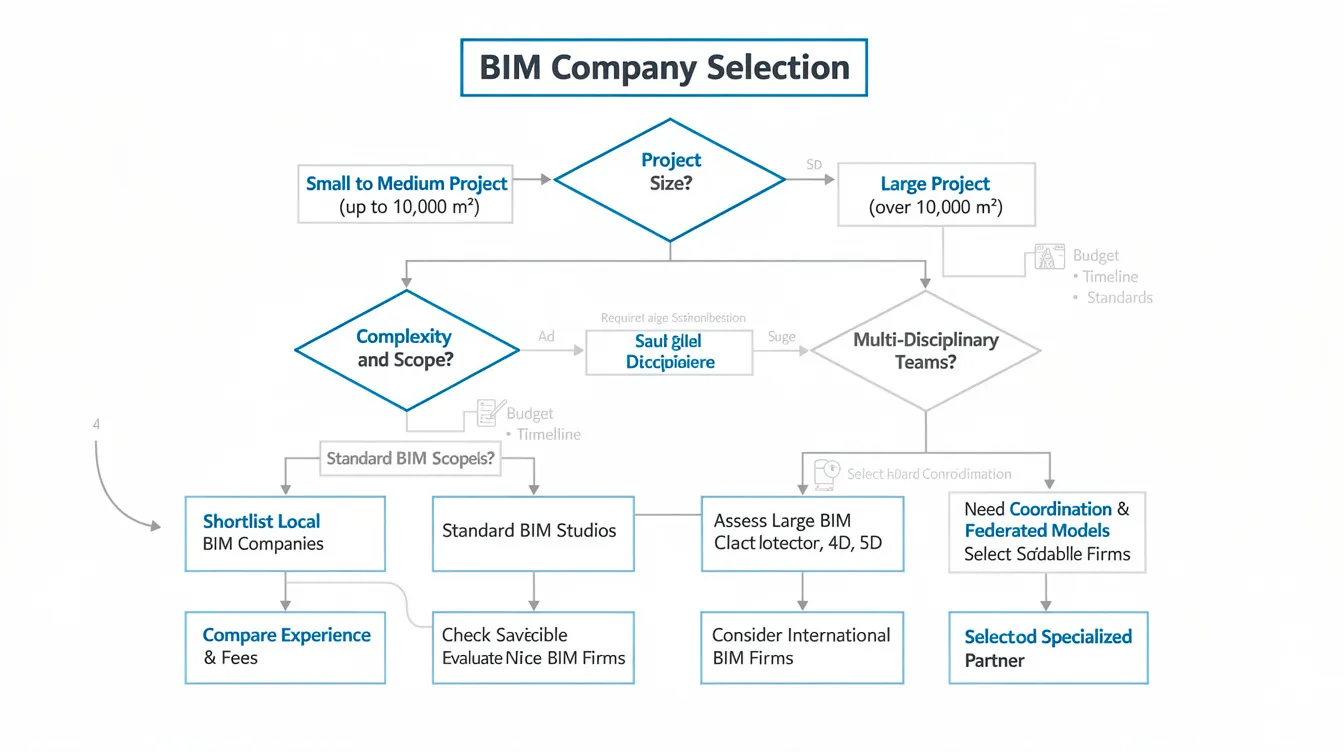
For small to medium developers wanting single-project compliance, project-based models (like Bimeco’s approach) offer the strongest cost predictability. For firms with ongoing pipelines needing constant BIM staffing, embedded models (like AcePLP’s approach) deliver better operational efficiency. For large multidisciplinary efforts, hybrid or full-service engagement (like ONG&ONG’s approach) provides the necessary depth.
BIM improves project efficiency by enhancing coordination, but the wrong service model can introduce friction rather than eliminate it. Understanding these trade-offs prepares you for the recurring challenges that arise during engagement.
Common Challenges and Solutions
Engaging BIM companies under the CORENET X regime introduces four recurring problems. BIM coordination minimizes costly errors and rework during design, but only when these pitfalls are anticipated and addressed contractually and operationally.
CORENET X Compliance Delays
Many projects face submission rejections due to missing metadata, classification mismatches in IFC-SG attributes, model coordinate errors (geo-referencing to SVY21), or improper discipline model splitting. BIM reduces costly errors and rework during design when compliance is built into the production workflow rather than bolted on at submission time.
Solution: Select BIM companies with proven first-time approval records and automated model checking tools (such as Bimeco’s Validator). Request pilot submissions in smaller gateways before committing to full project engagement. Use the CORENET X Code of Practice third edition to understand required attributes, and ensure your BIM partner’s workflows align with IFC-SG attribute accuracy and proper file splitting per BCA requirements.
Mid-Project Staff Turnover
Because BIM coordinator and BIM manager roles are specialized and in high demand across the built environment sector, turnover – especially for embedded staff – can disrupt model continuity and institutional knowledge. BIM services include 3D modeling, clash detection, and regulatory submissions, and losing the person who holds contextual knowledge of a specific BIM project creates real risk.
Solution: Include continuity clauses in contracts with documented handover procedures and backup coordinator availability. Insist on use of a Common Data Environment so versioning, audit trails, and decision history are decoupled from individuals. This preserves seamless coordination even when personnel change.
Scope Creep and Cost Overruns
Risk escalates when project deliverables are loosely defined – when levels of detail are vague, update frequencies are unspecified, or change orders lack pre-agreed rates. BIM Execution Plans must define model scope and submission timing; without this discipline, embracing BIM becomes a cost liability rather than a savings driver.
Solution: Define deliverables, LOD levels, and submission gateways upfront with pre-agreed change order rates. Consider fixed-price or hybrid pricing models for cost predictability. Reference each deliverable to a specific CORENET X gateway stage to prevent scope ambiguity throughout the project lifecycle.
Workflow Integration Issues
Hybrid workflows across internal design teams, external consultants, and contractors frequently produce mismatches in BIM software versions, classification systems, or coordination protocols. BIM enhances collaboration and workflow efficiency in architecture and construction – but only when all parties operate from aligned standards.
Solution: Choose BIM consulting partners offering training support, phased implementation, and proven change management experience. Require cloud CDE adoption, consistent classification (ISO 19650 or equivalent), and early alignment workshops covering naming conventions, LOD expectations, and geo-referencing standards. A clear digital transformation strategy at project kickoff prevents fragmented workflows downstream.
Addressing these challenges before they materialize is the difference between a BIM implementation that accelerates project delivery and one that adds overhead without corresponding value.
Conclusion and Next Steps
Singapore’s best BIM companies offer varying specializations – from regulatory compliance and automated validation to full-service architectural BIM services and Integrated Digital Delivery. The right BIM partner depends on your project’s specific requirements: discipline mix, GFA range, internal BIM capacity, budget structure, and compliance complexity. As of October 2026, GFA ≥ 5,000 m² requires BIM submissions, and the Building and Construction Authority continues to expand digital delivery expectations across the sector.
To move forward effectively:
-
Define your project BIM requirements – disciplines, GFA, building type, submission gateways, and LOD expectations
-
Request portfolios from 3–5 shortlisted companies – evaluate against matching project types and scale
-
Assess CORENET X compliance experience – ask for first-time approval rates, tool demonstrations, and gateway-specific case studies
-
Conduct pilot engagements – test a smaller deliverable or single-gateway submission before committing to full-project scope
-
Formalize contracts with continuity, pricing, and scope provisions – embed the protections discussed in the challenges section
For further exploration, consider reviewing BCA digital delivery standards, IDD implementation frameworks, and facility management integration strategies including maintenance schedules and COBie delivery requirements. Adopting BIM with the right partner transforms project delivery from a compliance burden into a source of competitive advantage across the built environment sector.

Additional Resources
-
CORENET X Code of Practice (Third Edition, 2025) – Defines model content requirements, IFC-SG specifications, geo-referencing to SVY21, multi-disciplinary coordination standards, and versioning good practice for all CORENET X gateway submissions
-
BCA BIM Guide v3.0 – Covers asset information delivery requirements, fabrication drawings standards, and facility management data expectations for handover, aligned with Singapore Standards SS550 and SS626
-
BCA IDD Technical Guide – Outlines 19 essential use cases and implementation guidance for Integrated Digital Delivery across design, fabrication, construction, and asset management phases
-
Singapore Institute of Architects (SIA) and Association of Consulting Engineers Singapore (ACES) – Professional body directories for identifying certified BIM professionals, registered firms, and BIM consulting practitioners with demonstrated key performance indexes