

For Singapore-based construction professionals evaluating alternatives to Ashe Training & Consultancy, the strongest options share three defining characteristics: demonstrated experience with Singapore’s statutory agencies, a structured approach to knowledge transfer, and the technical depth to manage complex project compliance across BCA, SCDF, URA, and related bodies.
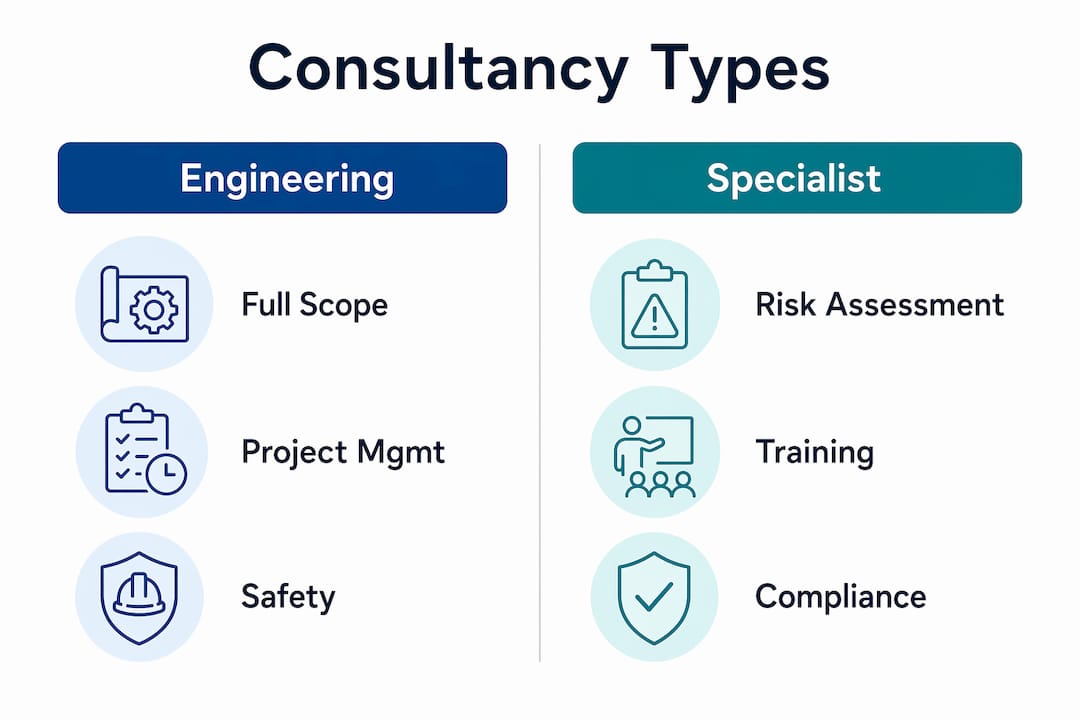
The leading categories of consultancy alternatives include:
- Comprehensive engineering and safety consultancies that handle statutory submissions, structural inspections, fire safety compliance, and M&E coordination under one engagement, serving property developers, construction firms, and government agencies.
- Specialist project management firms with structured delivery frameworks, risk management protocols, and clear reporting mechanisms suited to large-scale or phased construction programs.
- Design for Safety (DfS) focused providers whose professionals hold mandatory WSQ certification under the Workplace Safety and Health Act, covering hazard identification, risk assessment, and stakeholder communication throughout a building’s lifecycle.
- Multi-agency compliance consultancies experienced in coordinating approvals across BCA, URA, JTC, HDB, SCDF, PUB, and LTA simultaneously, reducing administrative delays for developers managing complex mixed-use or industrial projects.
Each category serves a distinct need. Firms prioritizing knowledge transfer and internal team mentoring deliver more durable outcomes than those supplying temporary manpower alone, a distinction that project management experts consistently emphasize for Singapore’s construction sector.
What sets ashe.com.sg alternatives apart in Singapore’s construction sector?
Selecting among similar consultancy providers requires a structured comparison across five dimensions: service scope, regulatory compliance depth, knowledge transfer commitment, client types served, and cost model transparency.
| Dimension | Comprehensive engineering consultancies | Specialist safety consultancies | Project management firms |
|---|---|---|---|
| Service offerings | Statutory submissions, structural, facade, M&E, fire safety, BIM | DfS, WSH compliance, hazard assessment, safety audits | Delivery frameworks, risk management, resource allocation |
| Industry expertise | Multi-disciplinary across construction and infrastructure | Safety and health regulation focused | Program governance and change management |
| Regulatory compliance focus | BCA, URA, JTC, HDB, SCDF, PUB, LTA | WSH Act, SCDF fire safety, BCA structural standards | General project governance; regulatory interface varies |
| Knowledge transfer emphasis | Mentoring, documentation, internal team capability building | Safety training, DfS professional development | Methodology coaching, reporting frameworks |
| Client types served | Developers, construction companies, government agencies, real estate investors | Contractors, developers, principal contractors | Corporations, government bodies, large construction programs |
The WSH Guidelines on Design for Safety recommend a phased GUIDE process covering detailed design, maintenance, and pre-construction reviews, which means a consultancy’s ability to integrate DfS tools at each phase directly affects project safety outcomes. Providers who apply this framework systematically offer measurably stronger risk mitigation than those treating safety as a compliance checkbox.
Cost structures across these categories vary considerably. Comprehensive engineering consultancies typically operate on project-based or retainer fee arrangements tied to submission milestones. Specialist safety firms often charge per audit cycle or training cohort. Project management consultancies generally price by program phase or day rate. Transparency in cost methodology, specifically how cost avoidance is prioritized over cost escalation, is a reliable indicator of a consultancy’s alignment with client interests.
Knowledge transfer is the dimension most frequently underweighted during selection. Provider collaboration models that build client internal capacity consistently outperform those focused solely on external resource supplementation. A consultancy that trains your team to manage future submissions independently delivers compounding value beyond the immediate project.
How to select the right construction consultancy for complex Singapore projects
The evaluation process for any ashe.com.sg alternative should be structured around verifiable criteria rather than general reputation.
Key evaluation criteria:
- Regulatory compliance experience: Confirm the consultancy has active, documented experience submitting to and receiving approvals from the specific agencies relevant to your project, whether BCA, SCDF, URA, or others. Generic claims of “regulatory knowledge” are insufficient.
- Knowledge transfer commitment: Ask for explicit documentation of how the firm transfers skills to your internal team. Training programs, written procedures, and mentoring schedules are concrete evidence; vague assurances are not.
- Project scale alignment: A consultancy experienced with large-scale industrial developments may not be the right fit for a landed residential project, and vice versa. Match their portfolio to your project type and complexity.
- Reporting transparency: Clear and frequent reporting with relevant metrics enables timely decisions during complex construction projects. Request sample reports before engagement.
- Cost control methodology: Establish whether the firm prioritizes cost avoidance strategies or defaults to scope expansion. A structured consultancy will articulate this clearly at the proposal stage.
Pro Tip: When evaluating knowledge transfer, ask the consultancy to describe a specific instance where their mentoring enabled a client’s internal team to manage a subsequent submission independently. A credible answer will include the agency involved, the submission type, and the timeline. A vague answer signals a gap.
Questions to ask potential consultancies:
- Which specific Singapore agencies have you submitted to in the past 24 months, and what was the approval timeline?
- How do you structure knowledge transfer within a fixed-term engagement?
- What is your escalation process when a regulatory submission encounters agency queries?
- Can you provide a sample project status report from a comparable engagement?
Red flags to watch for:
- No named professionals with current Singapore regulatory credentials on the proposed team.
- Inability to describe their DfS methodology or WSH compliance process in specific terms.
- Proposals that emphasize headcount over structured deliverables.
- Absence of any documented knowledge transfer component in the engagement scope.
Typical engagement timelines for construction consultancies in Singapore range from initial scoping and proposal (two to four weeks) through onboarding and regulatory submission preparation (four to eight weeks), with ongoing advisory support aligned to project phases. Firms that cannot articulate a clear onboarding process present a delivery risk from day one.
Leading construction consultancy alternatives in the U.S. construction industry
The U.S. construction sector operates under a distinct regulatory framework, with compliance obligations governed by bodies such as OSHA, the Army Corps of Engineers, and state-level building departments rather than Singapore’s BCA or SCDF. Construction professionals sourcing consultancy support in the U.S. context should prioritize firms with demonstrated OSHA compliance expertise, project delivery experience across federal and state permitting systems, and structured safety management programs.

Consultancy categories active in the U.S. market include multi-discipline engineering firms handling structural, civil, and MEP (mechanical, electrical, and plumbing) coordination; specialized safety management consultancies focused on OSHA 1926 construction standards; and program management firms supporting large infrastructure and commercial development programs. The WSQ Perform Design for Safety credential, while Singapore-specific, reflects a global standard of safety professional competency that U.S.-based firms increasingly mirror through OSHA 30-hour certification and Certified Safety Professional (CSP) credentials. Firms holding these credentials demonstrate a commitment to structured, regulation-aligned safety practice rather than ad hoc compliance.
Knowledge transfer remains as critical in the U.S. context as in Singapore. Consultancies that embed training, documentation, and mentoring into their delivery model build durable internal safety cultures within client organizations, reducing long-term reliance on external support.
Aman Engineering Consultancy: a direct alternative for Singapore construction projects
For construction professionals seeking a well-rounded alternative to Ashe.com.sg, Aman Engineering Consultancy offers a service range that covers the full compliance and project delivery spectrum in Singapore.
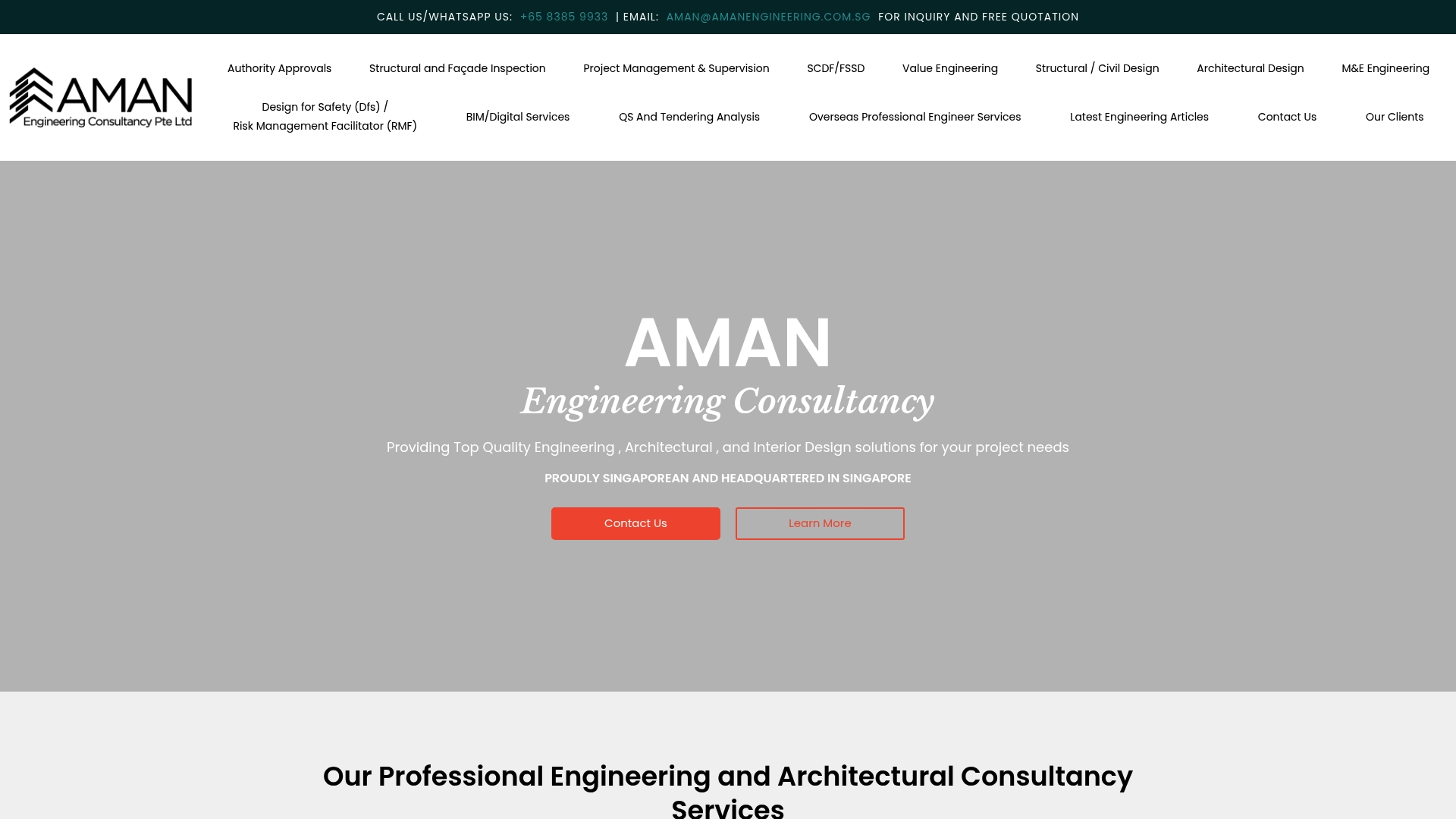
Com’s capabilities span statutory submissions, structural and facade engineering, M&E coordination, fire safety compliance, and BIM digital engineering services, positioning it as a single-engagement solution for projects requiring multi-agency coordination. Its client base includes property developers, construction firms, government bodies, and real estate investors, all of whom require consistent, agency-aligned compliance management.
What distinguishes Com from generic consultancy providers:
- Active submission experience across BCA, URA, JTC, HDB, SCDF, PUB, and LTA, reducing approval delays through established agency familiarity.
- Structured knowledge transfer programs that develop client internal teams rather than creating ongoing dependency.
- Multi-agency coordination that consolidates approvals and inspections, reducing administrative burden across complex projects.
- Coverage of valuation, feasibility studies, and risk assessments alongside core engineering services, supporting project decisions from pre-development through completion.
- Overseas engineering services for clients with regional project portfolios.
Construction professionals evaluating similar services to Ashe.com.sg can review Com’s full service scope and initiate a project consultation at Aman Engineering Consultancy.
Key Takeaways
Selecting the right ashe.com.sg alternative requires prioritizing regulatory alignment, knowledge transfer, and multi-agency compliance experience over general consultancy reputation alone.
| Point | Details |
|---|---|
| Regulatory alignment is primary | Confirm active submission experience with BCA, SCDF, URA, and other relevant agencies before engagement. |
| Knowledge transfer drives long-term value | Consultancies that mentor internal teams and document procedures deliver durable outcomes beyond the immediate project. |
| Multi-agency coordination reduces delays | Firms experienced across BCA, URA, JTC, HDB, SCDF, PUB, and LTA consolidate approvals and reduce administrative burden. |
| Red flags signal delivery risk | Absence of named credentialed professionals, vague DfS methodology, or no knowledge transfer scope are disqualifying indicators. |
| Com covers the full compliance spectrum | Aman Engineering Consultancy serves developers, contractors, and government agencies across statutory submissions, structural, M&E, fire safety, and BIM services. |