
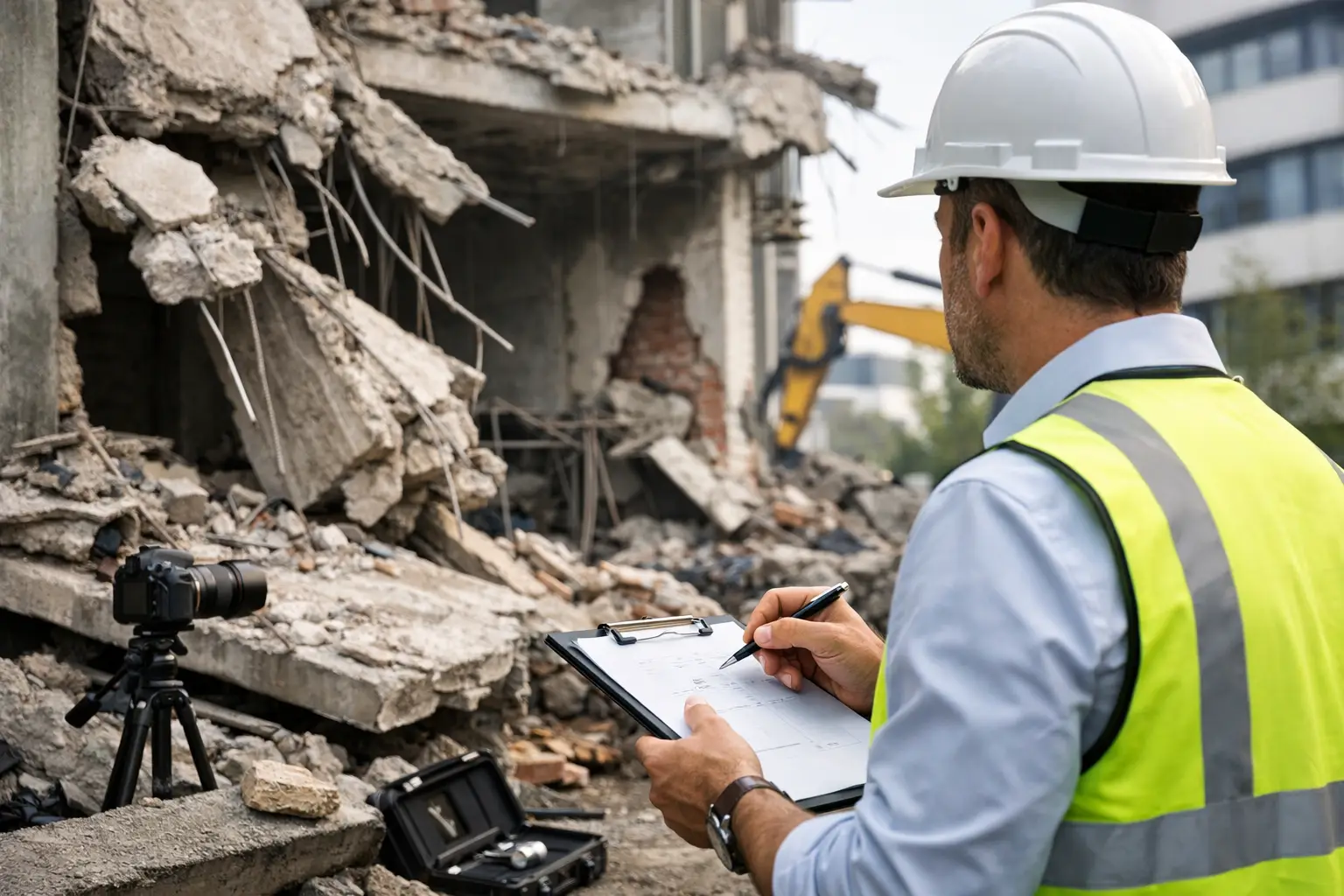
A cracked transfer beam after renovation, recurring façade distress, a warehouse floor that has started to settle, or water intrusion that keeps returning after multiple repairs – these are the situations where forensic structural engineer services become necessary. The issue is not just identifying visible damage. It is determining what failed, why it failed, how far the problem extends, and what must be done to restore safety, performance, and compliance.
For owners, developers, contractors, and building managers, the cost of getting that diagnosis wrong is high. Misreading the root cause can lead to repeated repair work, authority issues, insurance disputes, construction delays, and continued structural risk. A forensic investigation brings engineering evidence to a problem that may already involve multiple parties, incomplete records, or competing opinions.
What forensic structural engineer services actually cover
Forensic structural engineering is the investigation of structural distress, failure, defect, movement, or performance concerns in buildings and civil elements. The objective is not only to observe symptoms but to establish causation through site evidence, engineering analysis, document review, and targeted testing where required.
In practice, the scope may include crack mapping, condition assessments, structural reviews after fire or impact, investigation of water-related deterioration, assessment of settlement or deflection, evaluation of unauthorized modifications, and technical reporting for insurers, lawyers, owners, or authorities. Depending on the case, the engineer may also review design intent against as-built conditions, compare workmanship against specifications, and determine whether loading changes contributed to distress.
This distinction matters. A routine inspection can identify that a slab is cracked. A forensic investigation is expected to explain whether the crack is cosmetic shrinkage, reinforcement corrosion, overloading, differential settlement, poor detailing, thermal movement, or a sign of wider structural instability. The next steps are very different in each scenario.
When to engage forensic structural engineer services
The right time is usually earlier than most stakeholders expect. Once damage is patched over, debris is cleared, or new work starts, some of the best evidence is gone. Early involvement helps preserve physical conditions, establish a clear chronology, and reduce speculation.
Common triggers include visible cracking that is worsening, slab or beam deflection, façade detachment risk, wall movement, corrosion-related concrete spalling, damage after fire or vehicle impact, water leakage affecting structural elements, and distress discovered during addition and alteration works. It is also common to appoint a forensic engineer when a property transaction raises concern, when there is a dispute about responsibility, or when a failed authority submission requires an independent technical basis for rectification.
Not every defect requires a full forensic exercise. Hairline plaster cracks in a non-structural partition may only need a targeted inspection. But where safety, liability, repair scope, or statutory implications are involved, a forensic approach is usually justified.
How the investigation process typically works
A sound forensic assignment starts with defining the engineering question. Is the client trying to confirm whether a structure is safe for continued occupancy? Is the purpose to identify the cause of failure? Is the report meant to support rectification design, insurance evaluation, legal proceedings, or regulatory action? The investigation plan should reflect that purpose.
The first stage is document review. This may include original structural drawings, geotechnical records, renovation permits, calculations, maintenance logs, previous inspection reports, photos, and contractor method statements. In many real cases, the record set is incomplete. That does not stop the investigation, but it changes the level of inference required and often increases the need for field verification.
Site inspection follows. Engineers document crack patterns, deformation, moisture paths, connection conditions, support behavior, corrosion signs, and construction details. Measurements are important because pattern, width, location, and progression often reveal more than a single isolated defect. If conditions suggest active movement, monitoring may be required over time rather than relying on a one-day observation.
Testing is used selectively. This can include concrete strength assessment, cover scanning, reinforcement detection, level surveys, material sampling, or non-destructive testing. The best investigations do not order every available test. They choose tests that answer a specific question and can be correlated with structural analysis.
The final stage is engineering interpretation. This is where experience matters most. Structural behavior rarely points to a single cause in a clean, textbook way. Distress can result from a combination of design limitations, workmanship defects, environmental exposure, loading changes, poor maintenance, or later modifications. A credible forensic report separates proven findings from assumptions and explains the degree of confidence behind each conclusion.
Why root cause matters more than visible damage
Many building defects look similar on the surface. Two columns may show cracking, but one is suffering from corrosion expansion while the other is reacting to differential settlement. Both need repair, but the repair strategy, urgency, and cost profile will differ.
This is why cosmetic rectification often fails. If the source of movement, moisture, overload, or restraint is left untreated, the same defect returns. In larger assets, repeated patch repairs can also conceal worsening structural conditions until the intervention required becomes far more disruptive.
For owners and asset managers, root cause analysis protects capital planning. For developers and contractors, it helps establish technical accountability. For buyers and tenants, it clarifies whether observed damage is a manageable maintenance issue or a deeper structural concern.
The compliance and risk-management value
Forensic structural engineer services are not only about technical diagnosis. In regulated building environments, they also support decisions that may lead to submissions, endorsements, repair approvals, temporary protection measures, or change-of-use reviews.
If a defect affects structural safety, façade integrity, fire-damaged elements, or alterations performed without proper consideration of load paths, the engineering response may need to align with statutory processes. That is one reason clients often benefit from working with a consultancy that understands both investigation and follow-through. The report should not end with a problem statement. It should support practical next steps such as immediate risk controls, repair methodology, further design checks, or authority-facing documentation where required.
Aman Engineering Consultancy approaches this kind of work with that implementation lens – linking investigation findings to rectification support, technical submissions, and broader project coordination when a case moves beyond diagnosis.
What a good forensic report should give you
A useful report is clear, evidence-based, and decision-ready. It should identify the observed conditions, explain the likely causes, state whether there is an immediate safety concern, and define what additional action is required. Where the evidence is inconclusive, the report should say so directly and recommend the next level of investigation rather than overstating certainty.
It should also distinguish between structural and non-structural findings. This helps clients avoid overreacting to minor defects while ensuring that genuinely critical items are escalated quickly. In dispute settings, that clarity is especially important because vague technical language tends to create more disagreement, not less.
Choosing the right consultant for forensic structural engineer services
Not every engineer is equipped for forensic work. Design experience is valuable, but forensic assignments require a different discipline: observing failure patterns, preserving evidence, correlating field conditions with calculations, and explaining conclusions under scrutiny.
For that reason, clients should look for a consultant with structural credentials, investigation experience, strong reporting standards, and practical knowledge of repair implementation and approval pathways. The ability to coordinate with architects, contractors, façade specialists, fire consultants, and compliance teams is also important. Structural problems rarely stay in one silo.
Speed matters, but speed without method creates weak outcomes. The right consultant moves quickly to inspect and secure the situation while still building a technically defensible case.
When structural distress appears, the real question is not whether the damage looks serious from the ground. It is whether the cause has been established well enough for you to act with confidence. That is where disciplined forensic engineering earns its value.