
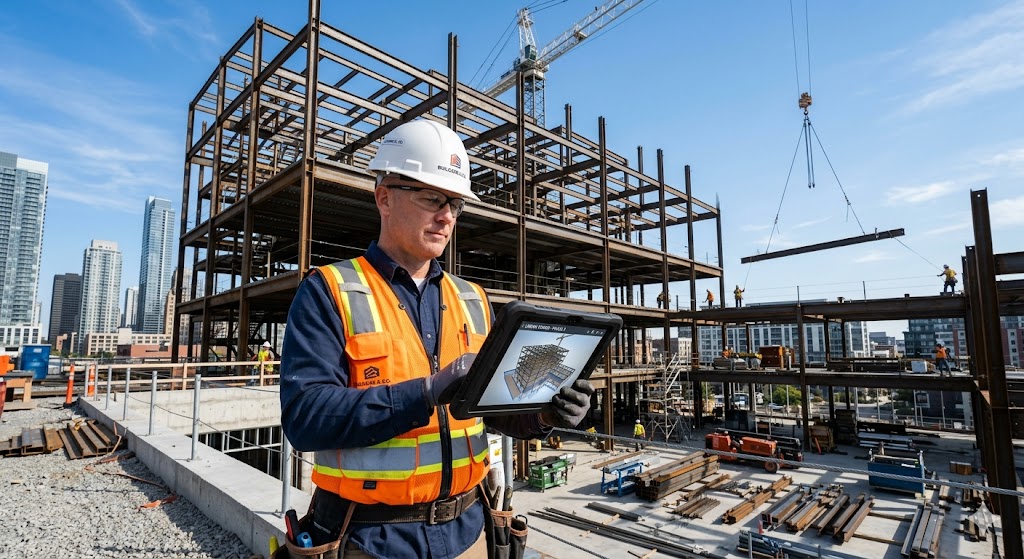
Why Your Project Needs a Professional Engineer: Structural Certification Legal Requirements
The Critical Need for a Professional Engineer
Every construction project requires absolute safety and compliance. Therefore, your project needs a professional engineer immediately.
A professional engineer understands complex building codes perfectly. Furthermore, they provide mandatory structural certification for new buildings. This structural certification acts as a formal legal guarantee. Consequently, building owners avoid catastrophic structural failures entirely.
The legal requirements of structural certification are incredibly strict. Ignorance of these legal requirements offers no legal defense. Moreover, a professional engineer minimizes financial risks for developers.
High SEO ranking helps these expert engineers find clients. Consequently, property owners can search for qualified experts online. This report details the vital role of the professional engineer. We explore the exhaustive legal requirements of structural certification worldwide.
Understanding the Legal Requirements of Structural Certification
Different nations enforce distinct legal requirements for building safety. However, the core objective always remains public safety. Structural certification proves that a building can withstand environmental stresses. Therefore, authorities demand that a professional engineer signs the designs.
A professional engineer calculates dead loads and live loads meticulously. Furthermore, they evaluate complex wind and seismic design parameters.
In Singapore, the Building Control Act governs these specific activities.1 The Building and Construction Authority (BCA) enforces these strict regulations.2 Conversely, the United States utilizes the International Building Code.3
The International Code Council develops these comprehensive building safety standards.3 A professional engineer must navigate these localized statutory environments carefully. Consequently, their structural certification ensures alignment with national safety standards.
The Professional Engineers Act
Singapore heavily regulates the engineering profession through dedicated legislation. The Professional Engineers Act 1991 established the Professional Engineers Board.1 This regulatory body oversees the registration of every professional engineer.1 Furthermore, the Act regulates engineering corporations and limited liability partnerships.4
No individual can legally supply professional engineering services without registration.
The law establishes clear definitions for allied professionals and builders.1 It defines building works with highly precise legal terminology.1 Furthermore, the Act empowers Disciplinary and Investigation Committees.1
These committees aggressively police the conduct of registered engineers.1 Therefore, the title of professional engineer carries immense legal weight.
Educational and Examination Mandates
Becoming a professional engineer requires exceptionally rigorous technical training. Authorities do not grant this prestigious title lightly.
Candidates must endure a lengthy, multi-staged legal qualification process. Furthermore, they must demonstrate flawless ethical character and technical mastery.
The Professional Engineers Board mandates specific educational achievements legally.5 Candidates must hold an approved degree from a recognized institution.5
Sometimes, supplemental Master’s or PhD degrees are legally required.6 Distance learning degrees rarely meet these strict qualification criteria.6
Examinations and Practical Field Experience
University education alone does not qualify a professional engineer. Candidates face extremely difficult statutory engineering examinations. First, they must pass the Fundamentals of Engineering Examination.6
This test assesses their grasp of core engineering principles.5 Subsequently, they attempt the Practice of Professional Engineering Examination.6 This secondary exam focuses on professional practice and local regulations.5
Furthermore, practical field experience is a non-negotiable legal requirement. Candidates need at least four years of post-graduate engineering experience.5
They must apply theoretical knowledge to real-world structural problems. Finally, candidates must attend a formal, rigorous professional interview.6 This interview assesses their overall competence, character, and reputation.5
| Certification Requirement | Detailed Legal Requirements | Relevant Legislation |
| University Education | Approved engineering degree from a recognized institution. | PE Act, Section 15 |
| Field Experience | Minimum 4 years of relevant post-graduate engineering work. | PE Rules, Rule 4A |
| FEE Examination | Pass the Fundamentals of Engineering Examination. | PE Rules, Rule 4A |
| PPE Examination | Pass the Practice of Professional Engineering Examination. | PE Rules, Rule 4A |
| Professional Interview | Attend a formal interview assessing character and competence. | PE Act, Section 15 |
Ethical Conduct and Professional Liability
A professional engineer must operate with absolute ethical integrity. They maintain the dignity and reputation of the engineering profession.7 Furthermore, they must discharge duties to clients with complete fidelity.7 However, their ultimate responsibility always lies with ensuring public safety.
Despite immense client pressures, they must favor the public interest.7
The Code of Professional Conduct and Ethics strictly regulates behavior.4 A professional engineer must actively avoid all conflicts of interest.
For example, they cannot exploit a salaried position improperly. They must not direct clients to firms where they hold interests.8 Furthermore, publicizing engineering services must remain highly professional.7 Misleading advertising brings the entire profession into disrepute.7
Signature Liability and Fraud Prevention
The signature of a professional engineer represents a legal guarantee. Consequently, they cannot sign plans they did not properly review.
Signing unverified calculations for public authority approval is strictly prohibited.8 They must personally verify, check, or prepare all structural submissions.8 Delegating this critical endorsement responsibility is a serious legal offense.9
The Step-by-Step Structural Certification Process
The structural certification process demands meticulous, step-by-step execution. Multiple professionals collaborate to ensure total legal and safety compliance. Furthermore, every step requires formal documentation and strict regulatory approval.
Appointing the Professional Team
Before any construction begins, owners must appoint a professional team. In Singapore, developers formally appoint a Qualified Person (QP).2
The QP is a registered professional engineer or architect.2 They take legal responsibility for the design and structural certification.2 Furthermore, developers often appoint a dedicated Structural Engineer (SE).2
Site supervision requires specialized, dedicated personnel immediately. Therefore, developers appoint Resident Technical Officers (RTO) or Resident Engineers.2
These professionals conduct daily inspections during the active construction phase.2 All appointments must utilize BCA-prescribed forms to remain legally valid.2 Verbal agreements hold absolutely no legal weight in structural certification.2
| Professional Role | Key Responsibilities in Structural Certification |
| Developer / Owner | Holds legal obligation to ensure certifications are obtained. |
| Qualified Person (QP) | Responsible for overall design, supervision, and structural certification. |
| Structural Engineer (SE) | Provides specialist design, review, and specific technical certificates. |
| Resident Engineer (RE) | Conducts day-to-day on-site structural inspections and record-keeping. |
Design Approval and Construction Inspections
The appointed QP must submit structural drawings to the authorities.2 They endorse these calculations as part of the building plan submission.2 Consequently, authorities must approve these plans before construction legally starts.2 Without this approval, a “Permit to Proceed” is strictly denied.2
During construction, the RTO conducts dynamic, mandatory site inspections.2 They maintain highly structured records directly on the construction site.2 These crucial records include site inspection logbooks and material reports.2
Furthermore, they retain all approved structural drawings and issued certificates.2 This meticulous record-keeping prevents compliance failures and costly project delays.2 Ultimately, all required structural certification must precede the Statutory Completion.2
Local Zoning Laws and Building Permits
Structural certification intertwines deeply with local zoning and permitting laws. A professional engineer ensures that designs meet specific municipal regulations. These legal requirements vary drastically between different states and cities. Therefore, hiring a local professional engineer guarantees accurate regional compliance.
Montana and Honolulu Regulations
In Montana, state building permits safeguard public health and safety.10 These permits ensure adequate structural strength, sanitation, and energy conservation.10 Furthermore, commercial building checklists guide the strict application process.10 Building permits must precede any plumbing, mechanical, or electrical permits.10 A professional engineer must submit construction plans for review.10
Similarly, Honolulu strictly enforces building permit requirements for any alterations.11 Erecting, enlarging, or demolishing buildings requires a formal permit.11 Constructing a retaining wall exceeding 30 inches also demands permits.11 However, minor repairs under $10,000 sometimes qualify for specific exemptions.11 Regardless, a professional engineer must oversee major structural changes legally.
New Mexico and Florida Building Commissions
New Mexico enforces strict rules regarding building valuations and fees.12 The Construction Industries Division calculates project valuations using established tables.12 Furthermore, a registered architect or structural engineer must seal specific plans.12 This includes construction utilizing steel studs or structural steel members.12 Prefabricated structures and retaining walls over three feet require certification.12
Florida enforces the rigorous Florida Building Code for all construction.13 The Florida Building Commission oversees continuous updates to these standards.13 Furthermore, they manage crucial milestone inspection reporting for aging structures.13
A professional engineer must remain updated on these complex legal requirements. Consequently, proper structural certification prevents severe legal and financial penalties.
| Jurisdiction | Specific Building Permit Legal Requirements |
| Montana | Permits require structural strength and energy conservation plans. |
| Honolulu | Retaining walls over 30 inches require strict permitting. |
| New Mexico | Steel structural members require a sealed professional engineer report. |
| Florida | Strict adherence to the frequently updated Florida Building Code. |
Special Inspections and the International Building Code
The International Building Code (IBC) governs construction safety globally. The IBC outlines strict rules for structural safety and compliance.14 Specifically, Chapter 17 of the IBC mandates rigorous Special Inspections.15
These inspections require highly specialized technical knowledge and dedicated expertise.16 Consequently, they provide critical quality assurance for complex structural components.16
A professional engineer must oversee or perform these special inspections.17
The IBC demands inspections for soils, deep foundations, and masonry.18 Furthermore, reinforced concrete and structural steel framing require intense scrutiny.18
Special inspectors verify cast-in-place piles and helical piles thoroughly.18 Ultimately, Chapter 17 aims to massively reduce catastrophic structural failures.16
Chapter 17 Special Inspection Requirements
Special inspections confirm compliance with all approved construction documents.15 The professional engineer ensures proper placement of components and connections.15 Furthermore, the inspector must evaluate structural and non-structural seismic resistance.15 This requires a professional engineer with specialized seismic resistance experience.15
The South Carolina Design Professional collects these final inspection reports.17 They certify that all required inspections occurred successfully on site.17 Furthermore, structural masonry construction demands an ICC Structural Masonry certificate.17 Reinforced concrete inspections require active ACI Concrete Field Testing certification.19 Consequently, structural certification demands an incredibly broad range of expertise.
| Special Inspection Category | Materials and Systems Inspected |
| Soils & Foundations | Proof rolls, density testing, cast-in-place piles. |
| Concrete Construction | Reinforced, prestressed, and post-tensioned concrete elements. |
| Steel Framing | Structural welding, structural steel framing, and bolting. |
| Fire Resistance | Sprayed fire-resistant materials and intumescent coatings. |
Seismic Design and ASCE 7
Seismic resilience is a critical component of international structural certification. The ASCE 7 standard outlines specific criteria for seismic design.20 It classifies nonstructural components into distinct active and passive categories.20 Active components involve moving parts, while passive components remain static.20
The IBC and ASCE 7 demand documented seismic structural certification.20 This structural certification must appear in the approved construction documents.20 The professional engineer must verify proper mounting and anchorage compliance.20 Furthermore, ASCE 7 determines Risk Categories based on building functions.21 Essential facilities sheltering people face higher risk category classifications.21 Consequently, these structures demand significantly higher design forces for safety.21
International Standards and Eurocodes
A professional engineer must master universally recognized structural design codes. These codes dictate exactly how structural loads are calculated safely. Eurocodes provide a highly unified standard for structural engineering design. They regulate the structural design of buildings and civil engineering works.22 Furthermore, they cover geotechnical aspects, structural fire design, and earthquakes.22
Transitioning to Structural Eurocodes
In Singapore, the government fully transitioned to the Structural Eurocodes.23 They withdrew the legacy British Standards permanently in April 2015.23 Consequently, Eurocodes are the only prescribed structural design standards locally.23 Mixing Eurocodes with legacy British Standards on one project is prohibited.24
The SS EN 1990 code establishes the critical basis of design.25 Furthermore, the SS EN 1993 series governs steel structure design.26 This covers everything from simple towers to massive industrial silos.26 Similarly, SS EN 1994 dictates rules for composite steel structures.24 A professional engineer must apply these complex formulas flawlessly always.
| Eurocode Designation | Structural Design Application Area |
| SS EN 1990 | Basis of structural design and structural actions. |
| SS EN 1993-3-1 | Design of steel structures: Towers and masts. |
| SS EN 1993-4-2 | Design of steel structures: Industrial tanks. |
| SS EN 1994-1-1 | Design of composite steel and concrete structures. |
| SS EN 1997-1 | Geotechnical design and general rules. |
The Digital Future: CORENET-X and BIM
The structural certification process is currently undergoing a massive digital revolution. Regulators demand higher accuracy and better cross-discipline project coordination.
Singapore developed the advanced CORENET-X digital submission platform.9 This new system entirely replaces the legacy CORENET document-based network.9
CORENET-X fundamentally changes how a professional engineer operates today. The platform strictly requires Building Information Modeling (BIM) digital submissions.9
Legacy 2D CAD drawings are no longer acceptable for major projects.9 Furthermore, structural models must be completely federated with architectural designs.9 Mechanical, Electrical, and Plumbing (MEP) models must also integrate seamlessly.9
Navigating Digital Submission Gateways
The transition to CORENET-X is legally mandated and strictly enforced. Since October 2025, large new projects must utilize this platform.9 This applies to developments exceeding 30,000 sqm in Gross Floor Area.9 Furthermore, by October 2026, the mandate becomes entirely universal locally.9 All new building projects will require CORENET-X submissions regardless of size.9
CORENET-X streamlines over 20 approval touchpoints into three key gateways.27 First, the Design Gateway resolves multi-agency key design parameters.28 Next, the Construction Gateway coordinates critical design details before construction.28 Finally, the Completion Gateway documents “As-Built” plans for statutory completion.28
Automated checks make passing these digital gateways incredibly challenging technically. The system automatically performs clash detection and model federation checks.29
It verifies classification correctness and overall information completeness rigorously.29 Consequently, submissions frequently face rejection for highly granular data deficiencies.9 Common errors include missing fire ratings or incorrect object classifications.9 A professional engineer must verify both design and digital model integrity.9
| CORENET-X Implementation | Project Size Threshold | Legal Mandate Date |
| Phase 1 Mandate | Gross Floor Area ≥ 30,000 sqm | 1 October 2025 |
| Universal Mandate | All new building projects | 1 October 2026 |
| BIM Data Mandate | Gross Floor Area > 5,000 sqm | Existing Requirement |
The Catastrophic Cost of Engineering Failures
Examining historical engineering disasters reveals the absolute necessity of structural certification. When a professional engineer fails to certify works properly, tragedies occur. These fatal failures highlight the immense responsibility resting upon structural engineers. Furthermore, they demonstrate how minor calculation errors trigger massive consequences.
The 1981 Hyatt Regency Walkway Collapse
The 1981 Hyatt Regency collapse remains a historically devastating structural failure. Two suspended walkways collapsed directly onto a crowded hotel atrium.30 Tragically, this horrific event resulted in 114 fatalities immediately.31 Furthermore, more than 200 innocent people sustained life-altering physical injuries.30
The primary cause was a disastrous, unauthorized design modification.30 The original design required continuous steel rods to suspend the walkways.30 However, the fabricator altered this to an offset hanger rod system.32
This unauthorized change effectively doubled the load on the connection points.30 Crucially, the engineer of record failed to review these modified drawings.33
The structural engineer only performed inadequate spot checks on the plans.33 Consequently, the overstressed box beams fractured, causing a total collapse.32 This tragedy underscores why rigorous structural certification is absolutely mandatory.
The 2004 Nicoll Highway Excavation Collapse
In 2004, Singapore experienced one of its worst civil engineering disasters.34 A deep excavation for a subway tunnel suddenly collapsed entirely.34 The resulting 30-meter-deep crater swallowed equipment and killed four workers.35 An intensive inquiry revealed a cascading series of severe engineering errors.34
The original design fundamentally misinterpreted the local marine clay geology.34 Engineers used effective stress parameters, over-predicting the soil’s shear strength.36 Consequently, the earth retaining system was severely and dangerously under-designed.36
Bending moments and deflections in the retaining walls were grossly underestimated.36 Furthermore, fatal construction errors worsened these critical design flaws rapidly.37
Workers omitted vital load-spreading sprays at the ends of the struts.37 Routine supervision completely failed to identify this blatant structural omission.37
The collapse initiated at the critically weakened 9th level strutting connection.37 Ultimately, the entire structural system lacked capacity to redistribute loads.34 Following this disaster, authorities mandated independent checking of temporary works.35
The 2021 Champlain Towers South Collapse
The Champlain Towers South collapse shocked the global engineering community recently. In 2021, this 12-story Florida condominium suffered a sudden partial collapse.38 The catastrophic failure resulted in mass casualties during the early morning.39 Investigators identified severe punching shear distress prior to the collapse.40
Photographic evidence showed significant vertical slab movement weeks before failure.40 This distress concentrated heavily above column K/13.1 in the pool deck.40 The structural failure mechanism likely took several years to develop fully.40
Ultimately, the pool deck collapsed first, exerting massive horizontal tension forces.40 This triggered a rapid, progressive failure of the main building columns.40 This disaster highlights why timely structural certification and inspections save lives.
Other Famous Engineering Disasters
Other major structural failures further emphasize the need for professional engineers. The Hartford Coliseum collapse demonstrated catastrophic failures in steel space frames.41 Furthermore, a large retail building in Yucca Valley collapsed tragically.41 The Harbour Cay Condominium collapse also resulted in numerous avoidable fatalities.41
However, proper engineering intervention can successfully prevent catastrophic loss of life. In 1978, the Citicorp Building in Manhattan faced a massive crisis.42 An undergraduate engineering student questioned the building’s stability under quartering winds.42
The 1970 New York building code only required face wind calculations.42 The chief engineer re-examined the wind tunnel test results bravely.42 He discovered the structure desperately needed emergency diagonal bracing reinforcements.42 Teams installed reinforcements at night, averting disaster before Hurricane Ella.42
| Famous Structural Failure | Year | Primary Causes of Failure | Fatalities |
| Hyatt Regency | 1981 | Unauthorized offset hanger rod design; lacked PE review. | 114 |
| Nicoll Highway | 2004 | Overestimated soil strength; omitted strut load-spreading sprays. | 4 |
| Champlain Towers | 2021 | Delayed inspections; punching shear distress in pool deck. | 98 |
Periodic Structural Inspections (PSI)
Structural certification does not end when initial construction finishes. Buildings age, materials degrade, and structural integrity naturally declines over time. Therefore, authorities mandate Periodic Structural Inspections (PSI) for older buildings.9 A professional engineer must conduct these critical, ongoing safety evaluations.43
In Singapore, buildings enter the PSI regime after 13 years.9 Following this, they face strict, recurring periodic structural inspection intervals.
Non-residential buildings require formal inspection and certification every 5 years.2 Residential buildings demand inspections every 10 years for continued compliance.2 Furthermore, the professional engineer must visually inspect the building’s condition.44
They identify any areas requiring remedial structural works urgently.43
Following the Champlain Towers collapse, Florida lawmakers drastically updated laws.45 Previously, Florida required inspections only at the 40-year mark.45 Now, condominiums face a strict 30-year milestone structural inspection requirement.45 Research proves the immense value of these periodic structural inspections continuously. Initial inspections force owners to execute necessary structural repairs promptly.45 Consequently, subsequent inspections reveal far fewer critical maintenance safety issues.45
Insurance Denials and Unpermitted Structural Work
Structural certification directly impacts property insurance and financial risk management. Homeowners frequently undertake renovations without securing proper municipal building permits.46
This unpermitted work includes unauthorized construction, structural modifications, or electrical changes.46 Consequently, unpermitted structural work creates massive financial and legal vulnerabilities.46
Insurance companies aggressively scrutinize properties containing known unpermitted structural works.46 If damage occurs within an unpermitted addition, insurers frequently deny claims.46 They accurately argue that the construction bypassed mandatory safety codes entirely.46 Furthermore, discovering unpermitted work can lead to sudden policy cancellations.46 In high-risk areas, insurers often require 4-point inspections for older homes.46 These inspections evaluate structural, roof, electrical, and plumbing system integrity closely.46
Overturning Insurance Claim Denials
Property owners facing denied insurance claims have powerful legal recourse available. A professional engineer can provide an independent, certified engineering inspection report.47 This document provides a highly detailed, expert analysis of property damage.47 The structural engineer uncovers the genuine, scientific cause of the failure.47
Often, these expert reports directly contradict the insurance company’s initial assessment.47 Insurers may falsely claim that structural damage was a pre-existing condition.47 However, a licensed home foundation inspector can definitively prove storm damage.47
Some insurance companies hire biased engineers to deny valid claims unfairly.48 Ultimately, structural certification provides the empirical evidence needed to win appeals.47 Therefore, hiring a professional engineer is a highly cost-effective financial defense.
The Business of Engineering: High SEO Ranking
Modern engineering firms must adapt to digital marketing and online visibility. Traditional marketing methods no longer work effectively for local structural engineers.49 Convenience constantly drives potential clients toward major online search engines.49 Consequently, engineering firms must optimize their websites for high SEO ranking.
Users frequently search for localized terms like “structural engineer near me”.50 This specific keyword generates massive search volume globally every single month.51 Furthermore, queries like “construction companies” see millions of eligible search results.49 To capture these high-intent leads, firms require targeted search engine marketing.52
A successful SEO strategy requires technically accurate, highly localized content creation. Generalist marketers rarely understand what AS9100 certification actually means.53 Therefore, specialized manufacturing SEO services create significantly better content consistently.53 Firms should build dedicated cluster pages for specific engineering services.54 Creating pages for seismic retrofitting or fire damage inspections drives traffic.52
SEO Keywords for Structural Certification
Incorporating keyword-rich headings and metadata drastically improves search engine visibility.54 Furthermore, structural engineers must optimize their sites for local search intent. Including city or neighborhood names in H1 tags is highly effective.55 Additionally, featuring client testimonials and industry certifications builds immense credibility.54
High SEO ranking requires continuous optimization and tracking of analytics data.50 Firms must ensure their website copy is simple and SEO-friendly.56 Complex technical jargon often drives potential residential clients away quickly.56 Ultimately, a professional engineer must be as visible online as possible. Excellent structural certification skills are useless without strong client lead generation.
| SEO Keyword | Monthly Search Volume | Competition Level |
| engineering | 1,220,000 | High |
| mechanical engineering | 450,000 | Analyze |
| structural engineer | 110,000 | Analyze |
| construction companies | 110,000 | Low |
| new home construction | 40,500 | Low |
| structural engineer near me | 33,100 | Analyze |
Conclusion
Structural certification is an uncompromising necessity in the modern built environment. It forms the ultimate barrier between public safety and structural catastrophe. Consequently, every major construction project absolutely requires a registered professional engineer.
These highly trained experts navigate complex building codes and legal mandates seamlessly. They assume massive personal liability to ensure that designs remain structurally sound.
The legal requirements governing this profession are necessarily strict and unforgiving.
From the rigorous Professional Engineers Act to comprehensive CORENET-X digital mandates, standards continuously rise. Furthermore, global codes like the IBC and Eurocodes demand exacting mathematical precision.
History repeatedly shows that ignoring these structural certification requirements leads to tragedy. The catastrophic collapses of the Hyatt Regency and Champlain Towers prove this permanently.
Furthermore, optimizing for high SEO ranking helps professional engineers find clients. Utilizing strategic keywords ensures structural certification services reach developers efficiently.
Overturning insurance denials requires the expertise of a professional engineer fundamentally. Ultimately, investing in a professional engineer is not merely a legal hurdle. It is the most critical investment in safety, compliance, and human life.
Works cited
- Professional Engineers Act 1991 – Singapore Statutes Online, accessed May 23, 2026, https://sso.agc.gov.sg/Act/PEA1991
- Structural certification in Singapore: A compliance guide for …, accessed May 23, 2026, https://www.amanengineering.com.sg/structural-certification-singapore-compliance-guide/
- CHAPTER 17 SPECIAL INSPECTIONS AND TESTS – 2021 INTERNATIONAL BUILDING CODE (IBC), accessed May 23, 2026, https://codes.iccsafe.org/content/IBC2021P2/chapter-17-special-inspections-and-tests
- Professional Engineers Act and Rules, accessed May 23, 2026, https://www1.peb.gov.sg/act-and-rules/
- The Professional Engineer in Singapore: A Definitive Guide to …, accessed May 23, 2026, https://structures.com.sg/the-professional-engineer-singapore-guide-endorsement-responsibilities-liabilities/
- Requirements – Requirements – professional engineers board singapore – professional engineers board singapore, accessed May 23, 2026, https://www1.peb.gov.sg/requirements/
- Professional Engineers (Code of Professional Conduct and Ethics) Rules 1991 – Singapore Statutes Online, accessed May 23, 2026, https://sso.agc.gov.sg/SL/PEA1991-R3?DocDate=20180112&ProvIds=Sc-&ViewType=Advance&Phrase=company+law&WiAl=1
- THE INSTITUTION OF ENGINEERS, SINGAPORE RULES FOR CODE OF PROFESSIONAL CONDUCT AND ETHICS [25TH JANUARY 2016] Revised 9th March – CEB, accessed May 23, 2026, https://cebsg.org/wp-content/uploads/2023/01/IES-Rules-of-Professional-Conduct-and-Ethics-Feb-2020-1.pdf
- PE Endorsement Singapore: When You Need One (2026 Guide), accessed May 23, 2026, https://www.cvcengineers.com/post/pe-endorsement-in-singapore-when-you-need-one-what-it-costs-and-what-s-at-stake
- Building Permits – Employment Standards Division, accessed May 23, 2026, https://bsd.dli.mt.gov/building-codes-permits/permit-applications/building-permits/
- Building Permit Requirements | Department of Planning and Permitting – Honolulu.gov, accessed May 23, 2026, https://www.honolulu.gov/dpp/permitting/building-permits-home/building-permit-requriements/
- BUILDING PERMIT GUIDE for RESIDENTIAL CONSTRUCTION – New Mexico Regulation and Licensing Department, accessed May 23, 2026, https://www.rld.nm.gov/wp-content/uploads/2021/06/BLDG-RES-GUIDE-jrr-03-09-12.pdf
- Florida Building Code, accessed May 23, 2026, https://www.floridabuilding.org/
- International Building Code Training Courses – Vector Solutions, accessed May 23, 2026, https://www.vectorsolutions.com/industries/engineering-design/international-building-code-training-courses/
- SPECIAL INSPECTIONS – City of Philadelphia, accessed May 23, 2026, https://www.phila.gov/media/20220815124145/Special-Inspections-Publication-Rev-8.2022.pdf
- Special Inspections 101 | Terracon, accessed May 23, 2026, https://www.terracon.com/wp-content/uploads/2011/03/Special-Inspections-101.pdf
- Special Inspection Procedure – IBC Chapter 17 – City of Goose Creek, accessed May 23, 2026, https://www.goosecreeksc.gov/sites/default/files/Planning%20and%20Zoning/Planning%20and%20Zoning%20Docs/DOCUMENTS/SPECIAL%20INSPECTION%20POLICY%2005-06-25.pdf
- IBC Chapter 17 Special Inspections | EAS Professionals, accessed May 23, 2026, https://eas-pro.com/ibc-chapter-17-special-inspections/
- Special Inspector Certifications – ICC – International Code Council, accessed May 23, 2026, https://www.iccsafe.org/professional-development/certifications-and-testing/special-inspector-exams/
- Understanding Seismic Certification Requirements for Nonstructural Components – SGH, accessed May 23, 2026, https://www.sgh.com/insight/seismic-certification-requirements-for-nonstructural-components/
- ASCE 7 Risk Categories Explained – Engineering Express, accessed May 23, 2026, https://www.engineeringexpress.com/wiki/asce-risk-categories-explained/
- SS EN 1990:2008 (2015) Eurocode – Basis of structural design – Singapore Standards, accessed May 23, 2026, https://www.singaporestandardseshop.sg/Product/SSPdtDetail/2b23fbdf-15dd-418b-8d57-e00aba9a0ba2
- Our Ref : BCA BC 15.0.3 25 Mar 2013 See Distribution Dear Sir/Madam IMPLEMENTATION OF STRUCTURAL EUROCODES IN SINGAPORE Objectiv, accessed May 23, 2026, http://www.ssss.org.sg/~ssssorgs/images/stories/docs/IMPLEMENTATION_OF_STRUCTURAL_EUROCODES_IN_SINGAPORE.pdf
- Eurocode Implementation in Singapore | PDF | Concrete | Mechanical Engineering – Scribd, accessed May 23, 2026, https://www.scribd.com/document/192453061/Implementation-of-Eurocodes-in-Singapore
- SS EN 1990 : 2008 Eurocode – Basis of structural design – Singapore Standards, accessed May 23, 2026, http://www.singaporestandardseshop.sg/data/ECopyFileStore/081014163804Preview%20-%20SS%20EN%201990-2008.pdf
- SSS 111993 SS EN 1993 Series – Singapore Standards, accessed May 23, 2026, https://www.singaporestandardseshop.sg/Product/SSPdtPackage/675c7ee7-27f0-49e2-aafe-892a6f2138b9
- CORENET X : MANDATORY SUBMISSIONS STARTING FROM 1 OCTOBER 2025 (FOR NEW PROJECTS ≥ 30,000 SQM GROSS FLOOR AREA), accessed May 23, 2026, https://www.ura.gov.sg/Corporate/Guidelines/Circulars/dc25-07
- 3-Gateway Process – Singapore – CORENET X, accessed May 23, 2026, https://info.corenet.gov.sg/regulatory-process/about-the-new-submission-process/3-gateway-process
- Code of Practice – CORENET X, accessed May 23, 2026, https://info.corenet.gov.sg/docs/default-source/default-document-library/corenet-x-cop—first-edition-2023-09.pdf?sfvrsn=acc4cd2_1
- Case Study: The 1981 Kansas City Hyatt Regency Walkway Collapse and the Role of Modern Contractor Management Portal – SHEQ Network, accessed May 23, 2026, https://sheqnetwork.com/2024/12/16/case-study-the-1981-kansas-city-hyatt-regency-walkway-collapse-and-the-role-of-modern-contractor-management-portal/
- Case Study: The 1981 Kansas City Hyatt Regency Walkway Collapse and the Role of Incident Management System – EHA Soft Solutions, accessed May 23, 2026, https://ehasoft.com/case-study-the-1981-kansas-city-hyatt-regency-walkway-collapse-and-the-role-of-incident-management-system/
- Hyatt Regency Walkway Collapse Analysis | PDF | Engineering – Scribd, accessed May 23, 2026, https://www.scribd.com/document/325139506/Hyatt-Regency-Collapse-Report
- The Hyatt Regency Walkway Collapse – ASCE, accessed May 23, 2026, https://www.asce.org/publications-and-news/civil-engineering-source/civil-engineering-magazine/article/2007/01/the-hyatt-regency-walkway-collapse
- IAP class probes Singapore highway collapse | MIT News, accessed May 23, 2026, https://news.mit.edu/2008/collapse-highway-0201
- Case Histories of Failure of Deep Excavation. Examination of Where Things Went Wrong: Nicoll Highway Collapse, Singapore – Scholars’ Mine, accessed May 23, 2026, https://scholarsmine.mst.edu/cgi/viewcontent.cgi?article=3091&context=icchge
- Revisiting Lessons Learned from the Nicoll Highway Collapse – Structure Magazine, accessed May 23, 2026, https://www.structuremag.org/article/revisiting-lessons-learned-from-the-nicoll-highway-collapse/
- TECHNICAL NOTE 002 | Lessons Learnt: Collapse of Nicoll Highway in Singapore, 2004 – Chun Wo, accessed May 23, 2026, https://www.chunwo.com/hubfs/_TechnicalNotes/TECHNICAL%20NOTE%20002%20Lessons%20Learnt%2C%20Collapse%20of%20Nicoll%20Highway.pdf
- Champlain Towers South Collapse | NIST – National Institute of Standards and Technology, accessed May 23, 2026, https://www.nist.gov/disaster-failure-studies/champlain-towers-south-collapse
- The Collapse of Champlain Towers South and the Implications for Existing Building Evaluation – Cold-formed Steel Engineers Institute, accessed May 23, 2026, https://www.cfsei.org/the-collapse-of-champlain-towers-south-and-the-implications-for-existing-building-evaluation
- The Champlain Towers South Collapse: A Forensic Engineering Analysis, accessed May 23, 2026, https://www.structuremag.org/article/the-champlain-towers-south-collapsea-forensicengineering-analysis/
- Case Studies | Structural Engineering Licensure Coalition, accessed May 23, 2026, https://www.selicensure.org/what-were-doing/case-studies
- Blown Away: Revisiting a Famous Engineering Case | NIST, accessed May 23, 2026, https://www.nist.gov/blogs/taking-measure/blown-away-revisiting-famous-engineering-case
- Periodic Structural Inspection (PSI) – Building and Construction Authority, accessed May 23, 2026, https://www1.bca.gov.sg/safety-and-standards/periodic-building-inspections/periodic-structural-inspection/
- GUIDELINES FOR STRUCTURAL ENGINEERS, accessed May 23, 2026, https://isomer-user-content.by.gov.sg/338/7fefc1c0-6299-41fa-bf17-17c3a9896f1a/psi-guidelines-for-structural-engineers-(sep-2024).pdf
- Champlain Towers collapse prompts probe into Florida building inspection intervals – ASCE, accessed May 23, 2026, https://www.asce.org/publications-and-news/civil-engineering-source/article/2025/06/24/champlain-towers-collapse-prompts-probe-into-florida-building-inspection-intervals
- Can You Insure a Home with Unpermitted Work?, accessed May 23, 2026, https://andersoninsgroup.com/can-you-insure-a-home-with-unpermitted-work/
- Insurance Claim Denied? A Professional Engineering Report Could Turn That Around, accessed May 23, 2026, https://rshengineering.com/blog/insurance-claim-denied-a-professional-engineering-report-could-turn-that-around/
- The Improper Use of Engineers to Deny Insurance Claims – Missouri Public Adjuster, accessed May 23, 2026, https://missouripublicadjuster.org/2017/03/09/fraudulent-engineer-reports-and-your-homeowners-insurance-claim/
- Free SEO Keyword Research – 50 Most Popular Keywords for Construction Companies & Where to Use Them – Digital Success Blog, accessed May 23, 2026, https://www.digitalsuccess.us/blog/free-seo-keyword-research-50-most-popular-keywords-for-construction-companies-where-to-use-them.html
- SEO for AEC Firms | Align Marketing Group, accessed May 23, 2026, https://alignmarketinggroup.com/marketing-for-aec-firms/seo/
- Top Engineering Keywords | Free SEO Keyword List | KeySearch, accessed May 23, 2026, https://www.keysearch.co/top-keywords/engineering-keywords
- SEM Services for Structural Engineering Firms » SEO, PPC & Local SEO – Xprez Marketing, accessed May 23, 2026, https://xprezmarketing.com/sem-services/
- Manufacturing SEO Strategy: How to Rank for High-Intent Industrial Keywords, accessed May 23, 2026, https://strategicconnection.net/manufacturing-seo-high-intent-keywords
- Structural Engineering SEO – Ranktracker, accessed May 23, 2026, https://www.ranktracker.com/blog/structural-engineering-seo/
- SEO & AI Search Best Practices to Implement in 2026 – Svitla Systems, accessed May 23, 2026, https://svitla.com/blog/seo-best-practices/
Digital Marketing for Structural Engineers, accessed May 23, 2026, https://maineventdigital.com/blogs/blog/digital-marketing-for-structural-engineers