

Missed checklist items in Singapore’s construction industry rarely produce minor inconveniences. They produce failed inspections, rejected submissions, mandatory rework, and project delays that cascade through every downstream trade and contract milestone. Structural engineers and project managers who operate without a rigorously maintained compliance checklist expose their projects to revisions that BCA, SCDF, URA, and JTC will not overlook. This article provides a structured, item-by-item checklist framework covering design, documentation, inspection, and authority communication, built specifically for Singapore’s regulatory environment.
Table of Contents
- Singapore’s structural engineering compliance essentials
- Complete structural engineering checklist for Singapore projects
- Comparison table: Checklist priorities by project phase
- Inspection and documentation: Avoiding common pitfalls
- Our take: Why checklists alone don’t guarantee compliance
- Need expert support? Streamline your compliance with Aman Engineering
- Frequently asked questions
Key Takeaways
| Point | Details |
|---|---|
| Checklist prevents delays | A complete structural engineering checklist helps avoid costly regulatory setbacks and rework. |
| Prioritize by project phase | Tune your checklist priorities for each project stage to minimize missed deadlines. |
| Documentation is critical | Accurate record-keeping and inspection reports are required for compliance and future audits. |
| Adapt checklist to project | No single template fits all—adjust your checklist for scope, structure, and the latest regulations. |
Singapore’s structural engineering compliance essentials
Every construction or addition and alteration (A&A) project in Singapore is governed by a layered set of regulatory requirements. Before any steel is placed or concrete is poured, the project’s structural compliance framework must already be in motion. Singapore’s Building Control regulations require all new construction and major A&A works to have approved structural plans prior to commencement. This is not a procedural formality. It is a legal prerequisite enforced by the Building and Construction Authority (BCA), and non-compliance carries penalties including stop-work orders.
Statistic callout: Over 85% of project delays in Singapore’s construction sector are linked to incomplete or non-compliant documentation submitted to regulatory authorities.
The foundational compliance categories every structural engineer must address include the following:
- Structural integrity documentation: Design calculations, load analysis reports, and soil investigation data that verify the structural system’s adequacy.
- Fire safety coordination: Compliance with the Singapore Civil Defence Force (SCDF) Fire Code, including structural fire resistance ratings for load-bearing elements. A practical fire code essentials reference helps map structural requirements to fire separation and compartmentation demands.
- Material specifications and traceability: Mill certificates, product conformance certificates, and third-party test results for concrete, steel, and other structural materials.
- Periodic inspection obligations: Statutory obligations for ongoing inspections of existing structures as defined under the Building Control Act.
- Authority submissions: Coordinated submissions to BCA, SCDF, URA, JTC, HDB, PUB, and LTA depending on the project’s location, use, and scope.
Referencing a detailed structural compliance guide at the outset of each project helps ensure none of these categories is omitted during early design planning. Understanding the structural safety principles governing connections and fastening systems is equally important when specifying structural components.
The BCA submission process operates through the Building Plan (BP) stage and the Structural Plan (SP) stage, each requiring distinct sets of documents and approvals. Project managers who attempt to fast-track the BP stage without complete structural inputs typically encounter plan check rejections that add three to six weeks to the submission cycle.
Complete structural engineering checklist for Singapore projects
A thorough project checklist reduces missed tasks and increases approval speed significantly across all project types. The following numbered checklist covers the core stages from design to structural completion.
“Start checklist review at the earliest design phase to flag issues before BCA submission. A checklist reviewed only at submission stage is a checklist used too late.”
Design phase checklist
- Confirm project scope, use classification, and applicable Singapore Standards (SS EN Eurocodes or earlier SS codes as required by BCA).
- Conduct geotechnical assessment and obtain soil investigation report; verify bearing capacity and settlement parameters.
- Complete structural modeling and analysis using software compliant with BCA’s accepted methodology; retain all analysis output files for submission.
- Prepare design calculations with full load combinations, member sizing, and connection design. BCA plan checkers review these in detail.
- Coordinate structural layout with architectural, M&E, and facade disciplines to avoid clashes that require re-design post-approval.
- Verify that structural fire resistance periods align with SCDF requirements for the building’s occupancy and height classification.
Pre-construction phase checklist
- Submit structural drawings and calculations to BCA under the Qualified Person (QP) framework; confirm QP appointment and Professional Engineer (PE) endorsement.
- Obtain Written Permission (WP) from URA where planning approval is required before the BCA structural plan can be approved.
- Secure JTC or HDB clearance for projects on industrial or public housing estates.
- Review and finalize the shop drawing process for fabricated structural elements, including steel connections, precast components, and embedded plates.
- Confirm material procurement sources and obtain advance mill certificates or material pre-qualification approvals where required.
- Prepare method statements for critical construction activities: deep excavation, temporary works, lifting operations, and structural steel erection.
Construction phase checklist
- Conduct foundation inspection at the correct stages: after excavation, before and after pile installation, and at cap/tie-beam casting.
- Inspect reinforcement prior to each concrete pour; obtain PE endorsement at critical stages.
- Verify steel inspection requirements for all structural steel connections, including weld quality, bolt torque records, and dimensional accuracy.
- Check secure fastening of embedded connections, anchor bolts, and structural brackets before concrete encasement.
- Maintain detailed inspection records for each stage; the Resident Technical Officer (RTO) or Resident Engineer (RE) must sign and date each record.
- Submit progress notices and inspection forms to BCA at the regulatory milestones defined in the building permit.
Post-construction phase checklist
- Prepare as-built drawings reflecting all field changes; PE must certify that as-built conditions comply with the approved structural design.
- Obtain Temporary Occupation Permit (TOP) and Certificate of Statutory Completion (CSC) by coordinating joint inspections with BCA, SCDF, and other relevant authorities.
- Hand over structural inspection records, material compliance certificates, and as-built drawings to the building owner for long-term retention.
- Confirm that the structural completion certificate (Form B2 under the Building Control Act) is submitted to BCA by the PE.
Pro Tip: Assign ownership of each checklist section to a named team member before the project begins. When an inspection record is missing at a critical stage, having a clear owner prevents the “I assumed you handled it” gaps that trigger BCA queries and delays.
Comparison table: Checklist priorities by project phase
Phase-based priorities help teams avoid missing time-sensitive compliance tasks at each transition point in the project lifecycle.
| Project phase | Priority tasks | Common bottleneck | Recommended action |
|---|---|---|---|
| Design | Geotechnical report, structural analysis, load calculations, code compliance verification | Incomplete soil data delays structural sizing | Obtain SI report before commencing detailed design |
| Pre-construction | BCA plan submission, QP/PE appointment, WP from URA, shop drawing approval | Shop drawing review cycle not scheduled early enough | Start shop drawing review concurrent with plan check |
| Construction | Foundation inspections, reinforcement checks, material certifications, RTO records | Missing intermediate inspection sign-offs | Use a staged inspection log with mandatory sign-off gates |
| Post-construction | As-built drawings, Form B2 submission, TOP/CSC joint inspections | As-built drawings not updated to reflect field changes | Assign RE to track and record all design variations in real time |
The design and pre-construction phases generate the most approval-stage bottlenecks. BCA plan checkers consistently flag missing load calculations, unresolved coordination conflicts between structural and architectural drawings, and incomplete geotechnical data as the leading causes of plan check rejections. Addressing these proactively, before submission, reduces the review cycle from multiple rounds to a single submission in most cases.
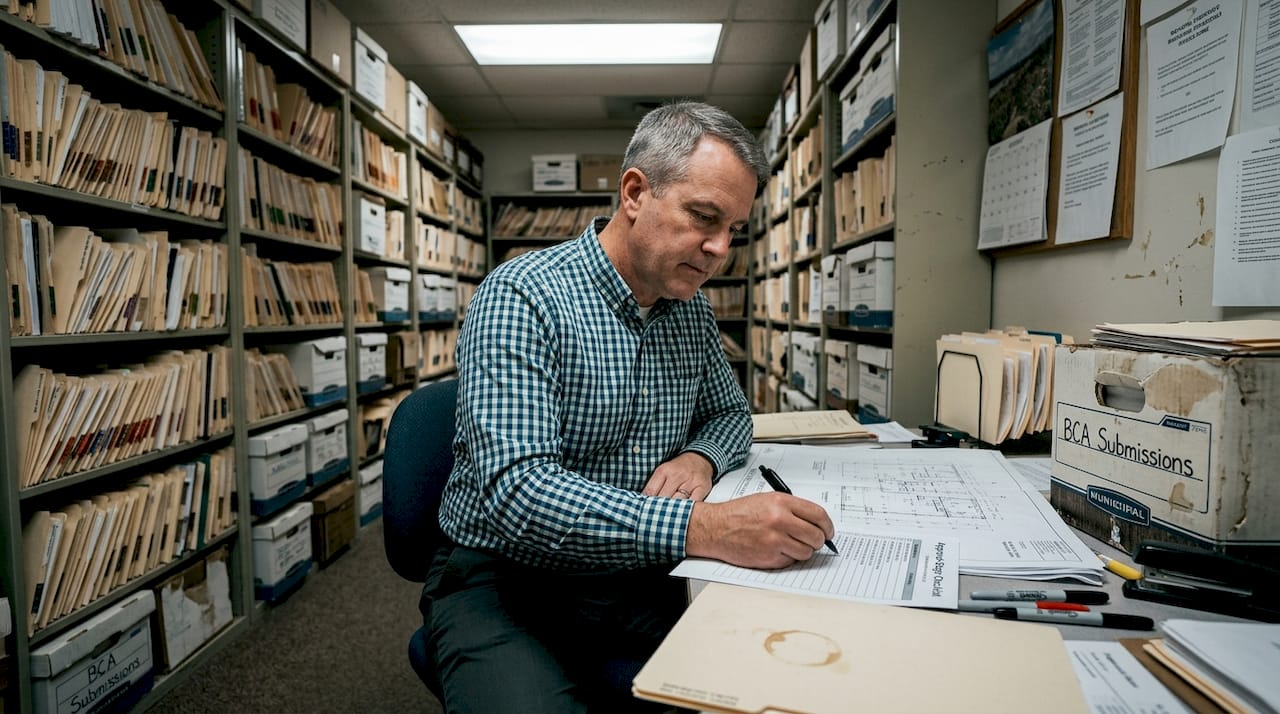
The construction phase introduces a different risk: missed intermediate inspections. When a PE or RTO fails to inspect reinforcement before a pour, the concrete must either be cored and tested or, in severe cases, demolished. Scheduling inspections as fixed calendar events rather than reactive site visits eliminates most of these failures.
The post-construction phase requires particular attention to Form B2 completeness. The structural certification guide outlines what the PE must certify, and any ambiguity in as-built conditions will delay CSC issuance.
Inspection and documentation: Avoiding common pitfalls
Regular inspections and accurate documentation are critical for project sign-off and legal compliance in Singapore. Structural teams that treat documentation as a secondary task, rather than a parallel workflow, consistently encounter problems during BCA or SCDF audits.
Top 5 documentation items every structural project must maintain:
- Inspection records: Dated, signed records for every statutory inspection stage, retained in a project inspection log that is accessible to BCA on request.
- Permits and authority approvals: Original BCA building permits, URA Written Permissions, JTC or HDB clearances, and any deviation approvals granted during construction.
- Engineering calculations: Full design calculation packages as submitted and approved; any revised calculations must be resubmitted and re-endorsed by the PE.
- Material compliance certificates: Mill certificates for structural steel, concrete mix design approvals, and third-party test reports for all structural materials specified in the structural drawings.
- As-built drawings: Final certified drawings reflecting every field variation, endorsed by the PE and retained by the building owner for the life of the structure.
The following table outlines the key inspection stages, required forms, and responsible parties for a typical Singapore structural project:
| Inspection stage | Required form / document | Responsible party |
|---|---|---|
| Excavation and foundation | Soil inspection log, pile test records | Qualified Engineer / RTO |
| Reinforcement before pour | RE/RTO inspection record | Resident Engineer or RTO |
| Structural steel erection | Steel erection inspection report | PE or Registered Inspector |
| Post-construction structural check | Form B2 (Structural Completion Certificate) | Professional Engineer (PE) |
| Periodic structural inspection (every 5 years) | Periodic Inspection Report | PE under BCA framework |
The structural assessment checklist provides additional guidance on what periodic inspections must cover for existing structures, including facades and external features. For fire safety documentation, fire code documentation requirements must be cross-referenced to ensure structural fire ratings are certified separately from the structural completion process.
On the materials side, understanding essential fastener types and their compliance requirements is relevant when specifying connection hardware in structural drawings, particularly for proprietary systems that require product approval documentation.
Legal retention periods for structural engineering records in Singapore are substantial. As-built drawings, structural calculations, material certificates, and inspection records must be retained for the life of the structure. Building owners and project managers who allow these records to be discarded after project completion create significant liability exposure when future A&A works or structural investigations require the original design basis.
Pro Tip: Deploy a construction management application or document control platform that allows field teams to upload inspection photos, sign off checklists, and attach material certificates in real time. This eliminates the end-of-project document recovery exercise that delays TOP applications by weeks.
Our take: Why checklists alone don’t guarantee compliance
Having guided numerous structural submissions and compliance programs across Singapore’s commercial, industrial, and institutional sectors, the critical observation is this: a checklist is a necessary tool, but it is not a sufficient one.
Teams sometimes treat a detailed checklist as a substitute for engineering judgment. They complete every item, tick every box, and still encounter plan check rejections because a checklist item was interpreted too narrowly, or because a recent BCA circular updated a specific requirement that the template did not reflect. Templates become outdated within months when regulatory frameworks evolve.
“The best projects combine a solid checklist with expert intuition and up-to-date knowledge of BCA and URA rules. The checklist tells you what to check. Experience tells you how to check it and when to escalate.”
The practical implication is that checklists must be treated as living documents, updated after every project to incorporate new regulatory requirements, lessons learned from plan check queries, and site conditions that exposed gaps in the previous version. A structural engineering team that reviews its checklist template only once a year is operating with outdated guidance for most of that year.
The second observation concerns contextual adaptation. A checklist developed for a commercial development in the CBD will not fully serve an industrial project on a JTC estate, even if the structural system is similar. Authority requirements differ across agencies, and scope-specific items, such as heavy machinery load provisions or specialized foundation systems, require project-specific additions that no generic template can anticipate.
Professionals seeking to build genuinely robust compliance systems should integrate their checklists with detailed design services that adapt structural deliverables to authority requirements from the outset, rather than retrofitting compliance at submission stage.
The conclusion from long-term practice is clear: experienced engineers who combine structured checklists with current regulatory awareness and disciplined document control deliver projects that reach TOP without multiple review cycles. Those who rely on the checklist alone, without the judgment layer, expose themselves to exactly the delays that the checklist was intended to prevent.
Need expert support? Streamline your compliance with Aman Engineering
Navigating Singapore’s multi-agency compliance landscape requires more than a well-organized checklist. It requires consultants who are current on BCA, SCDF, URA, JTC, and LTA requirements and who can translate those requirements into actionable project deliverables.
Aman Engineering Consultancy provides structural engineering teams and project managers with tailored compliance reviews, authority approvals management, and value engineering services that reduce submission cycles and prevent costly rework. For projects requiring PE design checks and authority approvals across BCA, URA, JTC, and SCDF, Aman Engineering provides end-to-end support from design certification through to statutory completion. Contact the Aman Engineering team to align your compliance workflow with the current regulatory requirements governing your project’s scope and site.
Frequently asked questions
What is the purpose of a structural engineering checklist?
A structural engineering checklist ensures all project steps, documentation, and regulatory requirements are systematically addressed, which reduces missed tasks and increases approval speed through each BCA submission stage.
What must be included in a BCA submission package for structural works in Singapore?
A BCA submission package must include approved structural plans, design calculations, PE endorsements, and all material compliance documents, as Singapore’s Building Control regulations require approved structural plans before any works commence.
How often are periodic structural inspections required in Singapore?
Most commercial, industrial, and shophouse premises require periodic structural inspections every five years under BCA regulations, unless site-specific conditions or authority directives specify a different interval.
Who is responsible for signing off structural engineering checklists?
A Professional Engineer registered with the Professional Engineers Board (PEB) of Singapore must endorse and sign off all statutory structural documents, including design calculations, inspection records, and the structural completion certificate.
Can a digital checklist be used for compliance documentation?
Yes, digital checklists and document management platforms are valid tools for compliance documentation in Singapore, provided the records are complete, traceable, and can be produced for BCA or other authority review upon request.