
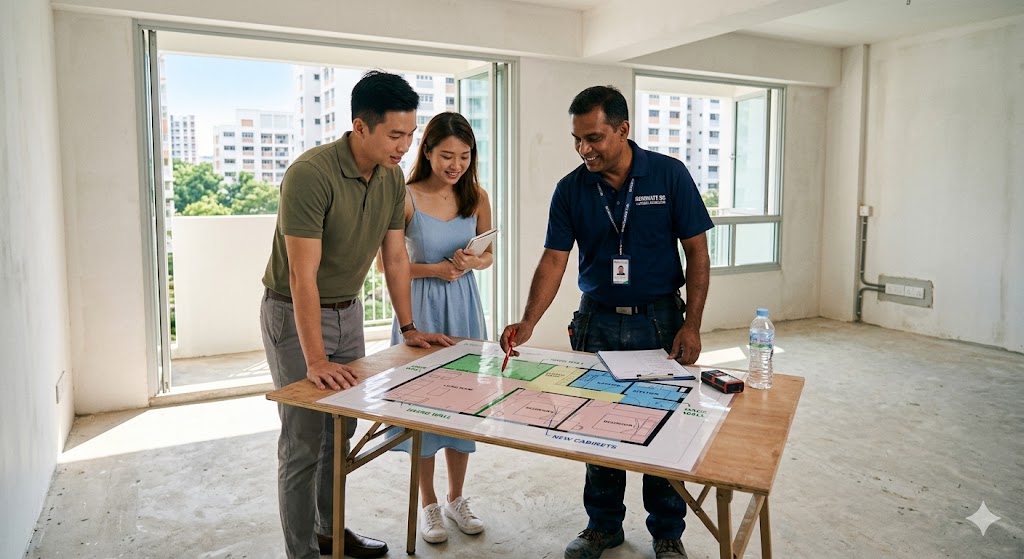


HDB Renovation Permits 101: A Beginner’s Guide
Strategic SEO Metadata and Content Configuration
Digital visibility requires highly precise technical keyword implementation. Interior design firms compete aggressively for Singaporean search traffic.1
Short-tail keywords possess massive search volume but convert poorly.2 Conversely, long-tail keywords generate significantly higher customer conversion rates.2 Consequently, digital content must target highly specific user intents.
Addressing common public inquiries builds essential topical authority.3 Therefore, comprehensive guides must address exact technical permit requirements.
Content gaps represent massive lost digital revenue opportunities.4 The following table outlines the required strategic metadata configuration. This optimizes search engine performance for home renovation topics.
|
SEO Element |
Strategic Value |
Functional Purpose |
|
Focus Keyphrase |
HDB renovation permit |
Captures primary high-intent organic search traffic reliably. |
|
Secondary Keywords |
BCA approved contractor, electrical loading |
Targets niche technical engineering inquiries accurately. |
|
SEO Title |
HDB Renovation Permits 101: A Beginner’s Guide |
Maximizes click-through rates on search engine result pages. |
|
Content Strategy |
Exhaustive technical compliance guide |
Establishes ultimate topical authority and professional industry trust. |
|
Target Audience |
First-time Singapore flat owners |
Defines the professional yet highly accessible narrative tone. |
Introduction to Public Housing Regulations
Renovating a Singapore flat is an exciting financial milestone. However, strict statutory regulations govern this entire transformation process across Singapore’s housing development sector. The Housing & Development Board (HDB) enforces these rules rigidly.
This strict oversight protects structural integrity and overall public safety.5 Unauthorised renovations carry heavy financial and severe legal penalties.
Errant homeowners face massive fines and expensive reinstatement costs.6 Therefore, understanding HDB renovation permits is absolutely essential. This comprehensive report explains everything a property owner must know.
It covers mandatory permits, HDB guidelines, technical guidelines, and strict compliance standards. Furthermore, it explores common contractor pitfalls and dispute resolution strategies.
The Complex Inter-Agency Regulatory Framework
Public housing operates within a highly controlled regulatory framework.5 Multiple statutory government agencies oversee different aspects of renovations.
HDB manages overall building integrity and internal layout modifications.7 The Building and Construction Authority (BCA) regulates critical window safety.8 The Singapore Civil Defence Force (SCDF) protects household bomb shelters.9
The Public Utilities Board (PUB) oversees all sanitary plumbing works.10 Finally, the Energy Market Authority (EMA) regulates internal electrical works.10
Homeowners must satisfy the strict requirements of every agency. Ignorance of these overlapping legal jurisdictions is never an excuse. Strict statutory compliance ensures a totally safe living environment.
The Directory of Renovation Contractors
Homeowners often engage an interior designer alongside approved contractors, but permit-related works must still be carried out exclusively by formally approved professional renovation firms. HDB maintains a strict Directory of Renovation Contractors (DRC).11
Only DRC-listed firms can legally perform permitted flat renovations.12 These approved contractors understand technical building guidelines intimately. Engaging unregistered contractors constitutes a very serious legal offence.
Homeowners face fines up to fifty thousand dollars.13 Moreover, poor workmanship creates long-term structural safety hazards.
Unlicensed electrical work can instantly void expensive appliance warranties.13 The Registered Renovation Contractors Scheme (RRCS) ensures baseline technical competency.13
Licensed professionals guarantee legal compliance and ultimate peace of mind.13
Specialized technical works require uniquely licensed professional tradesmen always. Electrical wiring requires an EMA-licensed electrical worker fundamentally.12
Sanitary plumbing requires a PUB-licensed water plumber specifically.12 Window installations require a BCA-approved window contractor exclusively.12 Gas pipe modifications require a licensed gas service worker.14
Contractors must visibly display their company uniforms onsite constantly.15 This ensures complete accountability and prevents unauthorised personnel entry.
Scams and Fraudulent Contractor Practices
The renovation industry contains many hidden financial dangers unfortunately. Fraudulent contractors target vulnerable, inexperienced homeowners quite frequently. Door-to-door repair scams target elderly residents specifically.16
Scammers impersonate HDB officials to demand immediate cash payments.16 They claim urgent structural repairs are absolutely necessary.16 These criminals typically disappear within forty-eight hours of payment.16
Material financing scams trap owners in high-interest personal loans.16 Contractors promise zero percent financing for premium building materials.16 However, homeowners unknowingly sign actual loans with massive interest.16
The subsequently delivered materials are incredibly cheap and substandard.16 Permit exploitation represents another very common industry scam.16
Contractors falsely claim they handled all HDB permits internally.16 They then proceed with highly illegal structural modifications.16 Consequently, HDB issues immediate stop-work orders and hefty fines.16
Application Workflows and Electronic Submissions
The permit application process follows a strict procedural sequence. Homeowners cannot apply for renovation permits directly themselves. Instead, the engaged DRC contractor submits the official application.17
They utilize the electronic APEX transaction system seamlessly, with the contractor uploading the project details as part of the submission.11 First, property owners sign an official statutory acknowledgement form.11 Next, contractors prepare highly detailed, colour-coded floor plans.18
Red ink indicates proposed demolition areas clearly.18 Blue ink highlights new structural additions or walls.18
Yellow ink denotes simultaneous demolition and immediate reconstruction.18 HDB evaluates these digital applications thoroughly and systematically through the HDB review process. The following table illustrates expected official processing timelines.
|
Project Complexity |
Estimated Processing Time |
Required Professional Endorsement |
|---|---|---|
|
Simple Cosmetic Works |
3 to 7 working days |
DRC Registered Contractor |
|
Standard Applications |
Up to 3 working weeks |
DRC Registered Contractor |
|
Complex Structural Works |
3 to 4 working weeks |
Professional Engineer (PE) |
Major structural changes require specialized professional engineering endorsement. A Professional Engineer (PE), the qualified person responsible for the submission where required, must endorse complex structural alterations.10 The PE evaluates load-bearing calculations and safety factors carefully.
BCA then reviews this detailed structural engineering submission.9 Upon approval, BCA issues a structural works permit.9 Finally, HDB grants the overall flat renovation permit.9 HDB does not charge any official permit application fee.18 However, contractors may charge administrative fees for preparing technical drawings.18
Financial Milestones and Payment Protection
Structuring contractor payments correctly prevents catastrophic financial losses. Homeowners must never pay the entire renovation cost upfront.19
Progressive payments protect homeowners from sudden contractor bankruptcy.19 The following table outlines a standard, safe payment schedule.20
|
Renovation Milestone |
Percentage of Total Contract |
Description of Completed Work |
|
Contract Signing |
10 Percent |
Initial deposit upon official quotation confirmation. |
|
Before Commencement |
40 Percent |
Prior to starting site works or material orders. |
|
Post-Demolition |
15 Percent |
After all hacking and site preparation concludes. |
|
Carpentry Fabrication |
25 Percent |
After factory carpentry measurements and fabrication begins. |
Final retention payments occur only after satisfactory defect rectification. This progressive structure ensures contractors remain highly motivated. It provides immense financial leverage if workmanship issues arise. Clear payment schedules must exist within the written contract.19
Deciphering HDB Floor Plans
Understanding architectural symbols is the first critical renovation step. Homeowners must decipher their specific unit layout accurately.21 Floor plans reveal vital structural and spatial information.
Different wall types feature distinct graphical representations. Deciphering these lines prevents catastrophic and illegal demolition mistakes. Furthermore, numbers on the plan indicate exact millimetre dimensions.22
|
Wall Type |
Graphical Representation |
Renovation Status |
|
Structural Wall |
Bold, thick solid lines |
Hacking is strictly prohibited. |
|
Normal Partition Wall |
Thin solid lines |
Demolition permitted with HDB approval. |
|
Gable-End Wall |
Pair of thin lines with gaps |
Demolition is strictly prohibited. |
Structural walls support the entire concrete building matrix.23 Consequently, hacking these load-bearing elements is strictly prohibited.6 Normal partition walls separate internal living spaces.24
These non-structural walls offer interior layout flexibility.25 Gable-end walls appear primarily in corner housing units.22 These exterior walls protect the interior from solar heat.22 Removing gable-end walls is strictly illegal and highly dangerous.23
Permitted Renovation Timelines and Extensions
HDB enforces strict renovation timelines, and homeowners should secure approval before renovation works begin to minimize community nuisance. Newly completed blocks must finish renovations within three months.7 Older existing blocks must finish within one single month.7 Standalone window replacements must finish within two weeks.7
If unforeseen delays occur, contractors must request official extensions.17 Requests must explain the specific reasons for the delay.26
General renovation hours span from 9:00 AM to 6:00 PM.7 These working hours apply strictly to weekdays and Saturdays, and all renovation works comply with approved permit conditions and timing rules.7
General renovations are completely prohibited on Sundays and Public Holidays.7 Contractors must properly display the official Notice of Renovation prominently.15 Immediate neighbours must receive five days of written advance notice.15
Noise Control and Hacking Regulations
Noisy renovation work is subject to even stricter timeline controls, especially for hacking works. Heavy drilling and demolition must end entirely at 5:00 PM.7 Furthermore, weekend hacking is completely and strictly prohibited.7 Contractors cannot hack walls for more than three consecutive days.7
Workers cannot use heavy industrial sledgehammers inside the flat.15 They must use explicitly approved hand-held electrical power tools.15
The gross weight of any hacking tool cannot exceed 7kg.15 Impact energy parameters must remain below specific scientific thresholds.15 Only two heavy power tools can operate simultaneously onsite.15
This minimizes structural vibrations and severe noise pollution. Contractors must barricade ground-floor areas during external window works.15 They must deploy nylon netting to catch falling debris safely.15
Structural Hacking and Demolition Guidelines
Demolishing concrete walls requires extreme caution and prior approval. Unauthorized hacking triggers a five thousand dollar immediate fine.27 Public housing blocks rely on interconnected concrete matrices.
Removing one load-bearing column transfers stress elsewhere immediately. This shifts massive dead weight to surrounding structural units. Consequently, this progressive loading threatens the entire residential block.
A single unauthorized demolition could cause catastrophic building collapse. Therefore, HDB strictly prohibits hacking structural walls entirely.6 Homeowners can only hack approved non-structural internal wall partitions.
However, this still requires a formal written HDB permit.7 The demolition process must proceed systematically from ceiling to floor.28 Contractors must properly bag and dispose of concrete debris.29
Dumping construction debris down rubbish chutes is strictly illegal.7 Professional haulage services must transport this heavy waste safely.7 Town Councils often coordinate these debris removal services locally.30
Haulage and debris clearance typically costs up to $2500.31 Discharging terrazzo slime into the sewage system is prohibited.7
Flooring Restrictions and Dead Weight Limits
Concrete floor slabs possess maximum safe weight capacities. The standard limit is 150 kilograms per square metre.7 Exceeding this limit threatens the entire building structure. Hardwood platform beds add immense concentrated dead weight.9
Therefore, the void beneath platforms cannot be sealed solid.9 Furthermore, homeowners cannot use these voids for heavy storage.9 Platform height must maintain a one-metre safety barrier to windows.9
Adding wet cement screed also increases the structural dead weight. Therefore, total screed thickness cannot exceed 50 millimetres, though bathroom or kitchen floor builds may require pre packed waterproofing screed beneath new tiles.6 This strict limit includes the final heavy tile finishes.6 Topping up flooring requires extremely lightweight, non-combustible materials.9
The total overall loading must never exceed 120kg per square metre.9 Existing floor finishes must be removed before topping up, depending on the renovation scope for the area.9
Heavy fish tanks present another massive structural weight challenge. Total tank weight cannot exceed 600 kilograms per room.6 This includes the water, sand, glass, and accessory equipment.6
Maximum tank dimensions are two metres by one metre.6 The maximum allowed water depth is 0.5 metres.6 Exceeding these strict limits requires special HDB engineering permits.6
BTO Bathroom Waterproofing Mandates
New BTO flats feature highly specific bathroom regulations. Homeowners cannot remove bathroom tiles for three full years.6 BTO bathrooms contain a hidden, highly delicate waterproofing membrane.
This vital membrane prevents water leakage to lower units.6 The building structure settles naturally during the first three years. Hacking tiles early disrupts this vital waterproofing layer easily.
Consequently, water seeps deeply into the porous concrete slab. This causes severe ceiling damage to neighbouring units below. Therefore, HDB strictly enforces this three-year waiting period.6 However, homeowners can safely overlay new tiles immediately. This adhesive overlay must not exceed 13 millimetres thick.9
Homeowners must not tamper with the existing floor traps.9 Waterproofing membranes must upturn at least 150mm against walls to protect adjacent wall finishes as well.32
Household Shelter Regulations
Household shelters provide critical wartime civilian blast protection. SCDF regulates these reinforced bomb shelters incredibly strictly.9 The maximum internal length of any shelter is 4000 millimetres.33 The minimum internal width is exactly 1200 millimetres.33
The reinforced walls, floors, and ceiling remain completely untouchable.9 Homeowners cannot hack or drill into these defensive structures.34
Modifying the heavy protective steel door is highly illegal.34 The exterior ventilation sleeve must also remain perfectly intact.34 Removing the fragmentation plates compromises the shelter’s protective integrity.9
However, minor cosmetic interior changes are legally permitted. Owners can paint the internal walls and concrete ceiling.9 They can lay floor tiles using wet cement mortar.9
Skirting tiles cannot exceed 100 millimetres in total height.9 Splatter dash provides a rough surface for feature walls.9 Heavy power tools cannot be used inside the shelter.
Only removable screws with non-metallic inserts are explicitly allowed.34 These screws cannot penetrate deeper than 50 millimetres.9 This perfectly preserves the structural integrity for national emergencies.
Window Safety Specifications and Rivets
Window safety remains a massive priority in high-rise Singapore. Falling windows cause fatal accidents in common public areas. Therefore, only BCA-approved contractors can legally alter windows.8 Windows face immense wind pressure in tall residential buildings.
Older aluminium rivets degrade rapidly over time due to weather. Constant opening and closing weakens these soft metal joints. Eventually, the aluminium rivet shears off completely and suddenly.
This causes the heavy window panel to detach entirely. A falling window panel possesses lethal kinetic energy. Consequently, the BCA updated its stringent safety regulations significantly. Aluminium rivets are strictly banned for variable geometry stays.35
Installers must replace them with stainless steel rivets.35 Specifically, Grade 304 stainless steel is absolutely mandatory.36 This specific steel grade resists rapid oxidation and rust.
It maintains high tensile strength under constant mechanical stress. Contractors must use minimum 4.8 millimetre diameter rivets.36
They must install four solid rivets per friction stay.36 This applies to all outward-opening aluminium casement windows.37 Contractors must submit official retrofitting reports to the BCA.35 These include Form A, Form B1, and Form D.35
|
Window Component |
Required Material Standard |
Specific Dimensions |
|
Rivet Material |
Grade 304 Stainless Steel |
Minimum 4.8mm diameter |
|
Friction Stay |
Grade 304 Stainless Steel |
Minimum 2.50mm thickness |
|
Screws |
Stainless Steel Self-Tapping |
Minimum size number 8 |
|
Connection |
Minimum 4 screws per side |
Maximum 700mm width |
Failure to maintain windows carries severe criminal legal consequences. A falling window triggers a twenty thousand dollar fine.38 Furthermore, the homeowner faces up to one year imprisonment.38 Homeowners must check, clean, and change window components regularly.39 Sliding windows require functioning safety stoppers and angle strips.39 Ground floor flats are exempt from these specific regulations.38
Grille Design and Balcony Enclosures
Grilles also face strict installation design guidelines and limitations. Invisible grilles are increasingly popular for modern balcony safety.40 However, grilles must not exceed the unit’s maximum height.37
Casement windows cannot face internal common public corridors.12 This prevents dangerous pedestrian collisions in shared hallway spaces. Full-height windows are illegal where not originally provided.12
Simple, horizontal bar grille designs remain the most popular.41 They allow optimal airflow and ensure easy routine cleaning.41
Gap spacing must remain below five inches for child safety.41 Enclosing interaction balconies requires SCDF fire safety approval.10 Awnings at open to sky balconies in a topmost unit also need HDB approval, as they can affect the building’s external appearance, drainage, and structural safety. A Professional Engineer must submit detailed building plans first.10 Combustible materials cannot be stored in balcony areas.37
Electrical Loading and Wiring Compliance
Electrical safety prevents devastating high-rise residential fires. Modern households consume massive amounts of electrical power daily. Induction hobs alone consume up to 3600 watts.42 Built-in ovens demand 3000 watts of continuous power.42
Instant water heaters also draw 3000 watts easily.42 Older public flats struggle with these high electrical loads. A 30-amp main switch supports only 6.9 kilowatts total.42
Running multiple heavy appliances simultaneously trips the main breaker. HDB upgraded newer flats to 40-amp main switches.43
This upgraded capacity safely supports 9.2 kilowatts of load.42 A Licensed Electrical Worker must calculate these loads accurately. Overloading circuits causes severe, life-threatening thermal fire hazards. Extension cords cannot support heavy-duty appliances safely.44
|
Appliance Type |
Average Power Load |
Approximate Amperage |
|
Induction Hob |
3600 Watts |
15.7 Amps |
|
Built-in Oven |
3000 Watts |
13.0 Amps |
|
Instant Water Heater |
3000 Watts |
13.0 Amps |
|
Air Conditioner (1.5HP) |
1500 Watts |
6.5 Amps |
Adding new 15-amp power sockets requires explicit HDB approval.45 Furthermore, SP Services must test all new electrical wiring.45 By July 2025, every home needs a specific safety device. Residual Current Circuit Breakers (RCCB) become strictly mandatory.46
This vital circuit breaker prevents fatal electrical shock incidents.46 Fully concealed wiring must follow specific approved routing paths.47 Contractors cannot tamper with the main electrical riser ever.47 Standard sockets safely provide around 13 amperes of current.44
Plumbing and Sanitary Regulations
Plumbing mistakes cause severe structural water damage instantly. Water pressure in high-rise residential blocks is extremely high. Faulty plumbing causes catastrophic flooding in lower residential units.
Therefore, pipe modifications demand highly skilled professional plumbing execution. Only PUB-licensed plumbers can legally execute sanitary water works.10 These licensed plumbers understand fluid dynamics and pressure limits.
They use correct pipe materials and waterproof joint sealants. HDB strictly prohibits embedding water pipes directly in floor slabs.14 Floor slabs contain vital structural steel reinforcement bars internally.
Chipping the concrete slab exposes these steel bars to moisture. Internal moisture causes the embedded steel bars to rust. Rust expansion cracks the surrounding solid concrete slab entirely.
This highly dangerous phenomenon is known as concrete spalling. Therefore, pipes must run inside walls or false ceilings safely. Altering soil discharge stacks requires extreme professional care.14
Changing a squat pan to a pedestal pan has strict rules.14 For example, relocating a wash basin within the approved dry area may also require permit checks and proper waterproofing. The minimum ceiling height must remain 2.2 metres.14 Removing existing ventilation pipes is completely and strictly prohibited.14
Concealment Rules for Pipes
Concealing water pipes requires specific ongoing compliance measures. Permanent concealment without access panels is strictly illegal.48 Owners must build removable inspection panels into the cabinetry.48
These panels must measure at least 600 millimetres square.14 This allows plumbers to perform future maintenance easily.14 Air-conditioner discharge pipes can be concealed within floor finishes.14
However, the structural floor slab itself must remain untouched.14 Gas pipes require the absolute strictest safety concealment measures. Highly flammable gas leaks cause catastrophic residential explosions.
Therefore, only City Gas personnel can alter gas pipes.14 Alternatively, a Licensed Gas Service Worker can perform modifications.14 Concealing gas pipes inside solid walls is completely prohibited.48
Embedding gas pipes in common partition walls is highly illegal.14 Gas leaks must remain easily detectable by human smell.48 Therefore, enclosed gas pipes need adequate ventilation openings.48
Fully sealing gas pipes prevents emergency shut-off access.48 A fully ventilated removable access panel is strictly required.14 This panel must cover the full height from ceiling to floor.14 Rooms containing active gas pipes cannot become sleeping bedrooms.14
Air-Conditioner Installation Guidelines
Singapore’s tropical climate demands efficient air-conditioning cooling systems. However, external compressor units present specific extreme physical dangers. Compressors are incredibly heavy and vibrate constantly during operation.
BCA-trained installers must perform all external air-con installations.45 Compressors must sit securely on designated concrete ledges.49 Installers must use approved stainless steel structural brackets.50
Rust and corrosion weaken these metal brackets over time.50 Therefore, bi-annual visual inspections are highly and strongly recommended.51 Falling compressors carry a twenty thousand dollar maximum fine.50
The condensing unit cannot exceed 110 kilograms per panel.45 Only one condensing unit is permitted per external wall panel.45
Concrete air-con ledges must remain completely unobstructed always.45 Homeowners cannot store boxes or items on these ledges.45
Proper drainage piping prevents nuisance leaks to lower floors. Contractors must submit an installation report within 14 days.45 Form CS/5H must be endorsed and sent to SP Services.45 A 20-amp double pole isolator restricts the running current.45
Strictly Prohibited Renovations
Certain renovations remain completely illegal under all circumstances. These prohibitions exist solely to protect collective public safety. Homeowners must understand these strict boundaries before planning.
|
Prohibited Action |
Primary Structural or Safety Reason |
|---|---|
|
Hacking Load-Bearing Walls |
Causes catastrophic building collapse. |
|
Exceeding 50mm Floor Thickness |
Overloads the concrete floor slab weight capacity. |
|
Removing BTO Bathroom Tiles |
Destroys the vital waterproofing membrane layer. |
|
Building Mezzanine Floors |
Exceeds designed structural load limits drastically. |
|
Modifying Bomb Shelter Doors |
Compromises emergency blast and fragmentation protection. |
First, hacking structural load-bearing walls is absolutely prohibited.6
Second, changing a fire-rated main entrance door illegally endangers everyone rapidly.6 A replacement door along a fire escape route must be a fire rated door set. The door and frame may need to be half hour fire rated and fitted with a self closing device. Fire-rated doors contain corridor fires for thirty vital minutes.
Third, exceeding the 50mm flooring thickness limit is illegal.6
Fourth, concealing exposed pipes permanently without access panels.6
Fifth, removing BTO bathroom tiles prematurely before three years.6
Sixth, building heavy mezzanine floors or loft structures.6
Seventh, tampering with the bomb shelter steel door.6
Eighth, installing unauthorised fixtures outside the flat exterior, including works affecting the sold recess area.6
Ninth, keeping heavy fish tanks exceeding 600 kilograms.6
Tenth, permanently enclosing balcony planter boxes with windows.6
Planter boxes feature specific complex drainage systems. Permanently sealing them alters the entire building’s external facade. Partitioning with combustible materials like plywood is strictly banned.7 Plastering of ceilings is also explicitly disallowed by HDB.7
Fire Safety and Alarm Devices
Fire safety remains a paramount concern in dense public housing. The Fire Code now requires Home Fire Alarm Devices (HFAD).7 All renovations involving fire safety works must install HFADs.7
These devices must be automatic smoke detectors specifically.7 They provide early warning systems during residential emergencies.7 Replacing a fire-rated main door mandates HFAD installation, especially where the door opens into common fire-protected areas such as lift lobbies.7 Enclosing a recess area also triggers this safety requirement.7 SCDF strongly encourages all existing homes to install HFADs.7
Specific Guidelines for Distinct Flat Types
Different public housing types feature unique architectural elements. 3Gen flats cater specifically to multi-generational extended families.52 They feature extra bedrooms and additional sanitary bathrooms.52
Design, Build and Sell Scheme (DBSS) flats differ slightly. DBSS flats follow specific private developer renovation guidelines.53 Executive Maisonettes span two separate vertical floors. These maisonettes have incredibly strict internal staircase rules.
Replacing staircase balustrades requires formal structural engineering approval. A Professional Engineer must draft the new balustrade design.28 The BCA must explicitly approve these structural plans first.28
The existing effective width of the staircase must remain.9 Extra approval concerns can arise where the staircase has a vertical drop exceeding 1 metre. Hacking the reinforced concrete staircase is completely illegal.6 Balcony enclosures in executive flats require full-height window systems.54 These must match the original building facade appearance exactly.54 Covering slit voids on staircases is allowed for decoration.9
Smart Homes and Security Enhancements
Modern flats increasingly feature integrated smart home technology. Digital locks and smart doorbells are highly popular upgrades. HDB explicitly permits smart doorbells on main entrances.55
These devices allow remote communication with delivery personnel easily.55 However, strict privacy rules govern CCTV camera installations outside. Security cameras must not face a neighbour’s door directly.55
This protects the basic privacy of surrounding corridor residents.56 Installing cameras along common corridors requires Town Council approval.55 Usually, police reports are necessary to justify external corridor cameras.57
Internal cameras require no permits or approvals whatsoever.58 Most modern digital locks do not require specific HDB permits. They easily replace standard door handles without structural modification.
The Home Improvement Programme (HIP) Overlap
Older flats eventually undergo the Home Improvement Programme (HIP). This government initiative resolves common maintenance issues fundamentally.59 It addresses structural decay in older housing estates systematically.
HIP generally targets flats built between 1970 and 1997.60 Essential improvements include repairing dangerous spalling ceiling concrete.60 Replacing cracked waste pipes is another mandatory HIP upgrade.60
Optional improvements include subsidized bathroom upgrades and new doors.60 Homeowners should coordinate their private renovations with HIP schedules. Overlapping private renovations with HIP wastes money entirely unnecessarily.
Wait for HIP completion before starting extensive personal upgrades. The electrical load is often upgraded during HIP works.60 This allows older flats to support modern appliance demands safely.
Renovation Costs and Hidden Fees
Renovation quotes rarely represent the final total expenditure accurately. Homeowners must anticipate several hidden administrative and logistical costs. These hidden fees disrupt poorly planned renovation budgets quickly.
Understanding these costs prevents stressful financial shortfalls during construction. The following table illustrates typical renovation cost ranges.31
|
Flat Type |
Basic Renovation |
Premium Renovation |
|
3-Room BTO |
$18,000 – $28,000 |
$42,000 – $60,000 |
|
4-Room BTO |
$38,000 – $50,000 |
$68,000 – $90,000 |
|
5-Room Resale |
$55,000 – $72,000 |
$92,000 – $130,000 |
|
Executive HDB |
$60,000 – $78,000 |
$100,000 – $140,000 |
Hidden costs plague many naive first-time homeowners.61 Haulage and debris clearance costs up to $2500.31 Relocating air-conditioners adds another $2500 to the bill.31
Extra electrical sockets cost around $100 each.31 Hiring a Professional Engineer costs up to $2000.31 Post-renovation deep cleaning usually costs around $600.31
Contingency funds are absolutely essential for any renovation project. Homeowners should reserve ten to fifteen percent extra cash.31
Resale flats often reveal unexpected plumbing or wiring disasters. Fixing these legacy issues consumes contingency budgets very quickly. Window grilles and lighting fixtures are often excluded initially.31
Managing Contractor Disputes and Legal Recourse
Disputes between owners and contractors happen extremely frequently. Unclear contracts usually cause these painful, drawn-out disagreements. HDB is never a party to these private contracts.7
Therefore, HDB will not mediate financial disputes directly.7 Homeowners should specify liquidated damages in their contracts.19 This provides financial compensation if contractors miss agreed deadlines.19
The Consumers Association of Singapore (CASE) handles difficult mediations.62 Mediation provides a cheaper alternative to expensive court lawsuits.19 If mediation succeeds, a new binding agreement is signed.19
Breaking this new agreement provides strong grounds for lawsuits.19 Alternatively, the Small Claims Tribunals resolve minor financial disputes.62 Documenting defects immediately with photographs strengthens any legal claim.62 Changing contractors mid-project requires mutual termination agreements.62
Severe Financial Fines and Legal Penalties
Rule violations trigger severe financial and criminal legal consequences. Unauthorized structural hacking carries a five thousand dollar fine.27 Recently, parliament raised maximum penalties for errant contractors significantly.
Fines can now reach twenty thousand dollars for contractors.63 Irresponsible contractors also face up to one year imprisonment.63 Homeowners must reinstate the damaged flat at their expense.13 Reinstatement works often cost tens of thousands of dollars under formal renovation control requirements.
The Urban Redevelopment Authority (URA) imposes massive civil penalties. Unauthorised works face fines up to two hundred thousand dollars.64
Offenders may face up to two years of imprisonment.64 Civil penalty rates vary based on processing fee multiples.64 Deception cases trigger penalties up to 25 times processing fees.64 The maximum deception penalty is one hundred and fifty thousand dollars.64
Recent case studies highlight these immense structural dangers clearly. In Simei, a contractor demolished pre-fabricated reinforced concrete walls.63
These walls supported the entire block above them structurally.63 HDB engineers worked overnight to prop up the beams and ensure proper repair.63 Both the homeowner and contractor faced severe legal prosecution, and unsafe structural damage had to be rectified with proper repair.63 Ignorance of HDB rules never excuses dangerous structural negligence.
Conclusion
Renovating public housing demands rigorous planning and absolute compliance. The complex regulatory framework protects the community from structural disasters. Homeowners must respect load limits, timelines, and approved materials.
Engaging DRC-listed professionals is the ultimate foundational requirement always. Hacking structural walls remains the most dangerous, prohibited offence.
Protecting waterproofing membranes prevents toxic inter-floor neighbour disputes. Properly installed windows prevent lethal accidents in public spaces.
Financial prudence requires understanding progressive payments and hidden costs. Homeowners must protect themselves from predatory scams proactively. Verifying licenses ensures quality workmanship and valid appliance warranties.
Following these exhaustive guidelines guarantees a smooth renovation journey. Ultimately, a compliant renovation secures a beautiful, legally sound home. Strict adherence to HDB regulations ensures peace of mind always.
Works cited
-
Why Singapore Businesses Should Choose SEO Over Google Ads in 2026 – STRIDEC, accessed May 2, 2026, https://www.stridec.com/blog/singapore-businesses-should-choose-seo-over-google-ads-in/
-
Long-Tail Keywords vs Short-Tail Keywords: What Every Singapore Business Needs to Know, accessed May 2, 2026, https://www.bestseo.sg/blog/long-tail-vs-short-tail/
-
Google’s People Also Ask Feature: How to Win PAA Boxes and Drive Organic Traffic, accessed May 2, 2026, https://www.bestseo.sg/blog/people-also-ask-seo/
-
Content Gap Analysis: 10 Practitioner-Tested Ways to Find and Fill Missing SEO Opportunities, accessed May 2, 2026, https://www.bestseo.sg/blog/what-is-content-gap/
-
HDB Renovation Permit in Singapore: A Strategic Homeowner’s Guide, accessed May 2, 2026, https://www.yangsid.com/blog/hdb-renovation-permit/
-
10 Illegal HDB Renovations You May Not Be Aware Of (Beware A …, accessed May 2, 2026, https://stackedhomes.com/10-illegal-hdb-renovations-you-may-not-be-aware-of-beware-a-5000-fine/
-
Important Information on Renovations – HDB, accessed May 2, 2026, https://www.hdb.gov.sg/managing-my-home/renovation-and-maintenance/renovation/important-information-on-renovations
-
Maintenance for Windows – Singapore – HDB, accessed May 2, 2026, https://www.hdb.gov.sg/managing-my-home/renovation-and-maintenance/home-maintenance/professional-help-and-contractors/windows
-
Renovation Guidelines for Building Works – Singapore – HDB, accessed May 2, 2026, https://www.hdb.gov.sg/managing-my-home/renovation-and-maintenance/renovation/renovation-guidelines/building-works
-
Application for a Renovation Permit – HDB, accessed May 2, 2026, https://www.hdb.gov.sg/managing-my-home/renovation-and-maintenance/renovation/application-for-a-renovation-permit
-
HDB Renovation Permit in Singapore: Complete 2025, accessed May 2, 2026, https://renovationcontractorsingapore.com/blogs/news/hdb-renovation-permit-complete-guide-2025
-
Ultimate Guide To HDB Renovation Rules & Regulations – Twothree Design, accessed May 2, 2026, https://www.twothree.sg/news/hdb-renovation-rules-regulations
-
Licensed HDB Renovation Contractors: Why Choosing Wrong Could Cost You $50K, accessed May 2, 2026, https://dphenomenal.sg/licensed-hdb-renovation-contractors/
-
Renovation Guidelines for Water and Sanitary Plumbing Works and Gas Works – HDB, accessed May 2, 2026, https://www.hdb.gov.sg/managing-my-home/renovation-and-maintenance/renovation/renovation-guidelines/water-and-sanitary-plumbing-works-and-gas-works
-
Terms and Conditions – HDB, accessed May 2, 2026, https://www.hdb.gov.sg/hdb-renovation-portal/terms-and-conditions
-
HDB Renovation Scam Guide Singapore 2025 | Avoid Fraud, accessed May 2, 2026, https://renovationcontractorsingapore.com/blogs/news/complete-hdb-renovation-scam-protection-guide-singapore
-
HDB renovation permits: What you need for compliance – Aman Engineering Consultancy, accessed May 2, 2026, https://www.amanengineering.com.sg/hdb-renovation-permits-what-you-need-for-compliance/
-
How To Apply For An HDB Renovation Permit: Process & Timeline – Twothree Design, accessed May 2, 2026, https://www.twothree.sg/news/how-apply-hdb-renovation-permit
-
Key Guidelines for Preventing and Resolving Disputes During Renovations – Uncle Defect, accessed May 2, 2026, https://uncledefect.sg/key-guidelines-for-preventing-and-resolving-disputes-during-renovations/
-
How Long Does Renovation Take? Timeline and Payment Schedule – MoneySmart, accessed May 2, 2026, https://www.moneysmart.sg/personal-loan/renovation-timeline-payment-schedule-guide-ms
-
How to Read and Understand Singapore HDB Floor Plans: A Beginner’s Guide – Lemon8, accessed May 2, 2026, https://www.lemon8-app.com/@nicoooleeeeee_/7245127535829320193?region=sg
-
Guide: How to read your floor plan – By Design Works Singapore, accessed May 2, 2026, https://bydesignworks.com/how-to-read-your-floor-plan/
-
How to Read and Interpret Any HDB Floor Plan in 5 Minutes | Qanvast, accessed May 2, 2026, https://qanvast.com/sg/articles/how-to-read-and-interpret-any-hdb-floor-plan-in-5-minutes-762
-
How To Read HDB Floor Plan? Here Are The 23 Guides – Interior Times, accessed May 2, 2026, https://sgit.sg/how-to-read-hdb-floor-plan/
-
How To Read HDB Resale Floor Plan (Basic Overview) – Hamid and Sons Interior Design, accessed May 2, 2026, https://www.hamidnsons.com/post/how-to-read-hdb-resale-floor-plan-basic-overview-1
-
How To Apply For A HDB Renovation Permit & Check The Status – U Credit, accessed May 2, 2026, https://www.ucredit.sg/how-to-apply-for-a-hdb-renovation-permit-check-status/
-
Breaking Walls, Breaking Rules: Illegal HDB Renovations That Could Cost You – PropNex, accessed May 2, 2026, https://www.propnex.com/picks-details/1096/breaking-walls-breaking-rules-illegal-hdb-renovations-that-could-cost-you
-
9 HDB Renovation Permits and Guidelines You Need When Renovating Your Home, accessed May 2, 2026, https://www.propertyguru.com.sg/property-guides/hdb-renovation-permits-in-singapore-16702
-
Guidelines for Renovation Works – HDB, accessed May 2, 2026, https://www.hdb.gov.sg/-/media/managing-my-home/renovation-and-maintenance/renovation/renovation-guidelines/design-build-and-sell-scheme-dbss-flats/parkland-hougang-reno-guidelines.pdf
-
Application for a Renovation Permit – Singapore – HDB, accessed May 2, 2026, https://www.hdb.gov.sg/sitecore/content/hdbinfoweb/home/managing-my-home/renovation-and-maintenance/renovation/application-for-a-renovation-permit
-
HDB renovation cost Singapore 2026 | Local Werkz, accessed May 2, 2026, https://www.localwerkz.com/hdb-renovation-cost-singapore-2026
-
Renovation Works That Require HDB or BCA Approval in Singapore (2026 Guide), accessed May 2, 2026, https://www.homematch.sg/renovation-guides/renovation-works-hdb-bca-approval
-
2023 EDITION TECHNICAL REQUIREMENTS FOR HOUSEHOLD SHELTERS – SCDF, accessed May 2, 2026, https://www.scdf.gov.sg/docs/default-source/cd-shelter-(docs)/technical-requirements-for-household-shelters-2023.pdf
-
What You Can (and Cannot) Do with Your HDB Household Shelter | Qanvast, accessed May 2, 2026, https://qanvast.com/sg/articles/what-you-can-and-cannot-do-with-your-hdb-household-shelter-2445
-
Windows safety | Building and Construction Authority, accessed May 2, 2026, https://www1.bca.gov.sg/safety-and-standards/periodic-building-inspections/windows-safety/
-
casement windows – HDB, accessed May 2, 2026, https://www.hdb.gov.sg/-/media/managing-my-home/renovation-and-maintenance/home-maintenance/home-care-guide/windows/casement.pdf
-
Renovation Guidelines for Window Works – Singapore – HDB, accessed May 2, 2026, https://www.hdb.gov.sg/managing-my-home/renovation-and-maintenance/renovation/renovation-guidelines/window-works
-
Keeping Windows of HDB Flats in Good Condition, accessed May 2, 2026, https://www.hdb.gov.sg/managing-my-home/renovation-and-maintenance/home-maintenance/home-care-guide/windows
-
OneService – Window Safety, accessed May 2, 2026, https://www.oneservice.gov.sg/docs/default-source/default-document-library/window-safety.pdf?sfvrsn=d413cece_0
-
Invisible Grill HDB Rules & Window Grill Costs Guide, accessed May 2, 2026, https://www.degrille.com.sg/article/are-invisible-grilles-approved-by-the-hdb/
-
What Is the Best Window Grill Design in Singapore? (2026 Guide), accessed May 2, 2026, https://www.hohodoorsingapore.com/single-post/what-is-the-best-window-grill-design-in-singapore-2026-guide
-
HDB Electrical Loading Guide: Safe Power Usage & Upgrades, accessed May 2, 2026, https://www.electriciansingapore.org/hdb-electrical-loading/
-
Check Electrical Load of HDB Block – Singapore, accessed May 2, 2026, https://services2.hdb.gov.sg/webapp/BN31AWERRCMobile/BN31SElectrical?loadAction=electrical
-
Essential Electrical Planning Guide for HDB Flats: Sockets, Ratings & Layout Tips – Lemon8, accessed May 2, 2026, https://www.lemon8-app.com/@miracullious/7246231869321413122?region=sg
-
Renovation Guidelines for Air Conditioner Installation Works – HDB, accessed May 2, 2026, https://www.hdb.gov.sg/managing-my-home/renovation-and-maintenance/renovation/renovation-guidelines/air-conditioner-installation-works
-
The Essential Guide to Four-Room Electrical Wiring for HDB Homeowners – FixFirst.SG, accessed May 2, 2026, https://fixfirst.sg/electrical-works/the-essential-guide-to-four-room-electrical-wiring-for-hdb-homeowners/
-
HDB Electrical Renovation Guide: What You Need to Know Before You Start – Home Genie, accessed May 2, 2026, https://homegenie.com.sg/blogs/news/hdb-electrical-renovation-guide-singapore
-
How to Conceal HDB Water & Gas Pipes | Home & Decor Singapore, accessed May 2, 2026, https://www.homeanddecor.com.sg/renovation/renovation-how-to-conceal-unexpected-piping
-
Maintenance for Air Conditioners – Singapore – HDB, accessed May 2, 2026, https://www.hdb.gov.sg/managing-my-home/renovation-and-maintenance/home-maintenance/professional-help-and-contractors/air-conditioners
-
Maintaining Air Conditioners in HDB Flats, accessed May 2, 2026, https://www.hdb.gov.sg/managing-my-home/renovation-and-maintenance/home-maintenance/home-care-guide/air-conditioners
-
Air-conditioning safety | Building and Construction Authority, accessed May 2, 2026, https://www1.bca.gov.sg/safety-and-standards/periodic-building-inspections/air-conditioning-safety/
-
HDB Flat Types and Classifications – MyNiceHome, accessed May 2, 2026, https://www.mynicehome.gov.sg/get-started/hdb-flat-types-classification-guide/
-
Renovation Guidelines – Singapore – HDB, accessed May 2, 2026, https://www.hdb.gov.sg/managing-my-home/renovation-and-maintenance/renovation/renovation-guidelines
-
Executive HDB Renovation: Maximising Space and Style in Singapore’s Largest HDB Flats, accessed May 2, 2026, https://www.interiordiary.com.sg/executive-hdb-renovation-maximising-space-and-style-in-singapores-largest-hdb-flats/
-
Installing Smart Door Devices and CCTV Cameras – HDB, accessed May 2, 2026, https://www.hdb.gov.sg/managing-my-home/home-ownership/installing-smart-door-devices-and-cctv-cameras
-
Install CCTV for HDB Corridor: HDB Door cameras are now legal | Home & Decor Singapore, accessed May 2, 2026, https://www.homeanddecor.com.sg/how-to/hdb-corridor-door-cctv-camera-permit-legal
-
CCTV installation outside HDB flats : r/askSingapore – Reddit, accessed May 2, 2026, https://www.reddit.com/r/askSingapore/comments/1hqwviz/cctv_installation_outside_hdb_flats/
-
Installing CCTV legally – Security Camera Singapore, accessed May 2, 2026, https://smartcamerasg.com/security-camera-legal-issues/
-
Home Improvement Programme (HIP) – Singapore – HDB, accessed May 2, 2026, https://www.hdb.gov.sg/managing-my-home/upgrading-and-redevelopment/home-improvement-programme-hip
-
Home Improvement Programme – what to know – CPFB, accessed May 2, 2026, https://www.cpf.gov.sg/member/infohub/educational-resources/home-improvement-programme-what-to-know
-
HDB Renovation Hidden Costs 2026 — What Quotes Don’t Show, accessed May 2, 2026, https://renovationcontractorsingapore.com/blogs/news/hidden-costs-of-hdb-renovation-singapore-2026-the-complete-guide-to-budgeting-beyond-your-quote
-
Essential Tips To Avoid And Resolve Renovation Disputes | Qanvast, accessed May 2, 2026, https://qanvast.com/sg/articles/essential-tips-to-avoid-and-resolve-renovation-disputes-1186
-
HDB officers get powers to enter flats to investigate, carry out repairs – CNA, accessed May 2, 2026, https://www.channelnewsasia.com/singapore/hdb-officers-get-powers-enter-flats-investigate-carry-out-repairs-5833566
Revised Civil Penalty Rates for Unauthorised Works in Singapore – what you need to know, accessed May 2, 2026, https://www.adxarchitects.com/blog/revised-civil-penalty-rates-for-unauthorised-works-in-singapore-what-you-need-to-know/
PE Endorsement vs QP Submission Explained
Hacking Walls in HDBs: Why You Need a Professional Engineer