
A ceiling crack over a shopfront, ponding on a warehouse slab, rust stains near a balcony edge, or a tenant complaint about vibration – these are usually the moments when owners start asking what is included in a structural inspection. The short answer is that a proper inspection goes well beyond a visual walk-through. It is a technical assessment of how key structural elements are performing, whether signs of distress are cosmetic or serious, and what actions may be needed to restore safety, serviceability, and compliance.
The exact scope depends on the building type, age, use, known defects, and whether the inspection is being carried out for due diligence, maintenance planning, authority submission support, or defect investigation. For a landed house, the concern may be settlement or unauthorized alterations. For a commercial or industrial building, the focus may shift to load-bearing capacity, corrosion, façade distress, water ingress, or movement at critical connections. That is why a structural inspection should be defined clearly at the outset and carried out by qualified professionals who understand both engineering behavior and regulatory implications.
What is included in a structural inspection in practice
In practice, a structural inspection typically starts with a review of available background information. This may include past drawings, previous inspection records, renovation history, additions and alterations, maintenance records, and known incident reports. If original plans are missing, the engineer may need to rely more heavily on site observations and measured verification.
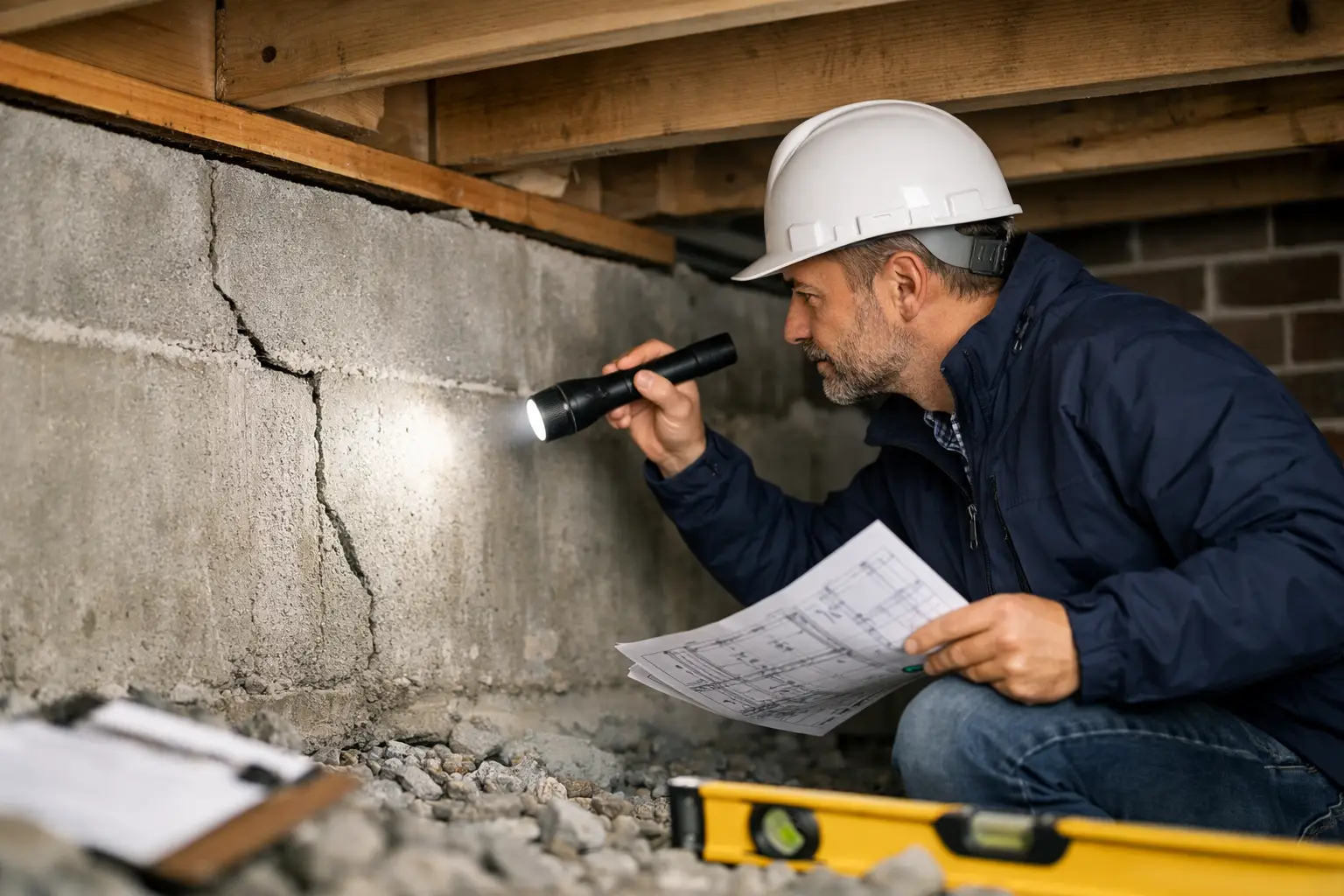
The site inspection itself usually covers the primary structural system. That means looking at slabs, beams, columns, walls, staircases, foundations where visible, roof structures, and any structural steel or reinforced concrete members that support the building. The purpose is not simply to record defects, but to understand what those defects suggest about structural performance.
Cracks are one of the most common findings, but not all cracks have the same meaning. Hairline plaster cracks may be superficial. Diagonal cracks at wall openings, widening beam cracks, slab soffit cracks with water staining, or recurring cracks after repair may point to movement, overstress, settlement, or reinforcement corrosion. A structural inspection considers crack width, location, direction, depth, and pattern rather than treating every crack as an equal risk.
Deflection and deformation are also part of the assessment. Engineers look for sagging slabs, sloping floors, uneven settlement, displaced connections, bowed walls, and roof members that appear to have moved out of alignment. Some movement may have been present for years without immediate danger, while some may indicate progressive deterioration. The difference matters.
Core elements assessed during a structural inspection
Material condition is a major part of the inspection. In reinforced concrete buildings, this often means checking for spalling concrete, exposed reinforcement, rust staining, delamination, damp patches, and signs of carbonation or chloride-related corrosion where relevant. In steel structures, attention is usually given to corrosion, section loss, failed coatings, loose bolts, weld condition, distortion, and water traps that accelerate deterioration. In timber elements, the inspection may cover decay, insect attack, moisture damage, splitting, and overstress.
Load path assessment is another key inclusion. The engineer needs to understand how loads are being transferred from slabs and beams down to columns, walls, and foundations. Problems often arise when renovations interrupt this load path, such as hacked walls, enlarged openings, added equipment loads, rooftop additions, or mezzanine modifications without proper engineering review. A structural inspection can identify whether previous works may have compromised the original design intent.
Water intrusion is frequently reviewed because moisture is not just a waterproofing issue. Persistent leakage can corrode reinforcement, weaken finishes that conceal structural defects, and accelerate deterioration in concrete, steel, and timber. When engineers inspect balconies, wet areas, roofs, basements, and façade interfaces, they are also checking whether water entry is creating a structural durability problem.
Where accessible, the inspection may extend to retaining structures, boundary walls, canopies, external staircases, and façade elements that present safety risks to occupants or the public. This becomes especially important where loose concrete, unstable cladding, or visibly distressed external components could fall or fail.
Visual inspection, testing, and measurement
A common misconception is that structural inspection always means visual inspection only. In reality, the visual survey is often the first layer. If findings suggest deeper concern, the scope may be expanded to include measurements, monitoring, and targeted testing.
This can include crack width measurement, level surveys to assess settlement or slab deflection, rebound hammer testing, cover meter scanning, half-cell potential testing, concrete core extraction, and selective opening-up works to confirm reinforcement arrangement or hidden conditions. For steel members, thickness checks and corrosion assessment may be relevant. For active movement, tell-tales or monitoring points may be installed to determine whether defects are stable or worsening over time.
Not every building needs intrusive testing. The right approach depends on the defect type, risk profile, and intended use of the report. A pre-purchase inspection for a low-rise property may remain largely observational if no major warning signs are present. An industrial floor carrying heavy machinery, or a building undergoing change of use, may require more technical verification because the consequences of error are higher.
What the engineer is trying to determine
A structural inspection is not just a defect list. The engineer is usually trying to answer several practical questions. Is the structure safe in its current condition? Are the observed defects cosmetic, serviceability-related, or structurally significant? Is deterioration localized or widespread? Are there signs of overloading, poor workmanship, movement, corrosion, or unauthorized alterations? Does the building require immediate restriction of use, repair design, further investigation, or authority-related action?
That distinction is important for owners and managers. A building can remain standing yet still have serious serviceability issues such as excessive cracking, water ingress, vibration, or durability deterioration that will become more expensive if ignored. On the other hand, some visible defects look alarming but can be managed with the right repair strategy after technical confirmation.
Reporting and recommendations
What is included in a structural inspection report is often just as important as the inspection itself. A useful report should document the inspected areas, limitations of access, observed defects, likely causes, risk implications, and recommended next steps. Depending on the engagement, it may also include photographs, annotated sketches, defect mapping, testing results, and prioritization of rectification works.
Recommendations can vary. Some cases require only routine maintenance or monitoring. Others may call for temporary propping, load restrictions, waterproofing rectification, localized concrete repair, corrosion treatment, strengthening works, or full structural redesign of altered elements. If the issue intersects with building regulations, redevelopment, additions and alterations, or statutory submissions, the report may need to support follow-up engineering design and authority coordination.
This is where clients benefit from working with a consultancy that can move beyond diagnosis into rectification support, submission strategy, and implementation coordination. For projects in Singapore, that often means understanding how structural findings may affect approvals, endorsements, and broader compliance obligations. Firms such as Aman Engineering Consultancy are typically engaged not only to inspect defects, but also to connect inspection outcomes with practical next steps on design, submission, and corrective works.
What is not always included unless requested
Clients should be aware that structural inspection scopes are not all identical. Some inspections exclude concealed elements, foundation systems below ground, geotechnical assessment, M&E-related defects, waterproofing design review, or destructive opening-up unless specifically included. Drone access, rope access, laboratory testing, and long-term monitoring are also usually separate items.
That is why a clear brief matters. If the concern relates to a specific event such as vehicle impact, fire exposure, major renovation, façade distress, or suspected overloading, the inspection scope should say so. A general condition survey and a forensic structural investigation are not the same service, even if they overlap.
When a structural inspection should be arranged
The best time to arrange a structural inspection is before a visible problem becomes a larger liability. Obvious triggers include major cracks, recurring leaks with concrete damage, sagging floors, corrosion, impact damage, differential settlement, and distress after alteration works. It is also sensible before buying older property, before adding significant loads, before change of use, or when recurring defects keep reappearing after patch repairs.
For commercial and industrial assets, inspections are often part of risk management rather than emergency response. A planned inspection can identify deterioration early, support budgeting, reduce tenant disruption, and prevent surprises during renovation or authority submission.
A structural inspection is valuable because it turns uncertainty into an engineering basis for action. If you are seeing signs of movement, distress, or repeated defects, the right next step is not guesswork or cosmetic patching. It is a properly scoped inspection that tells you what the structure is doing, what the risks are, and what needs to happen next.