
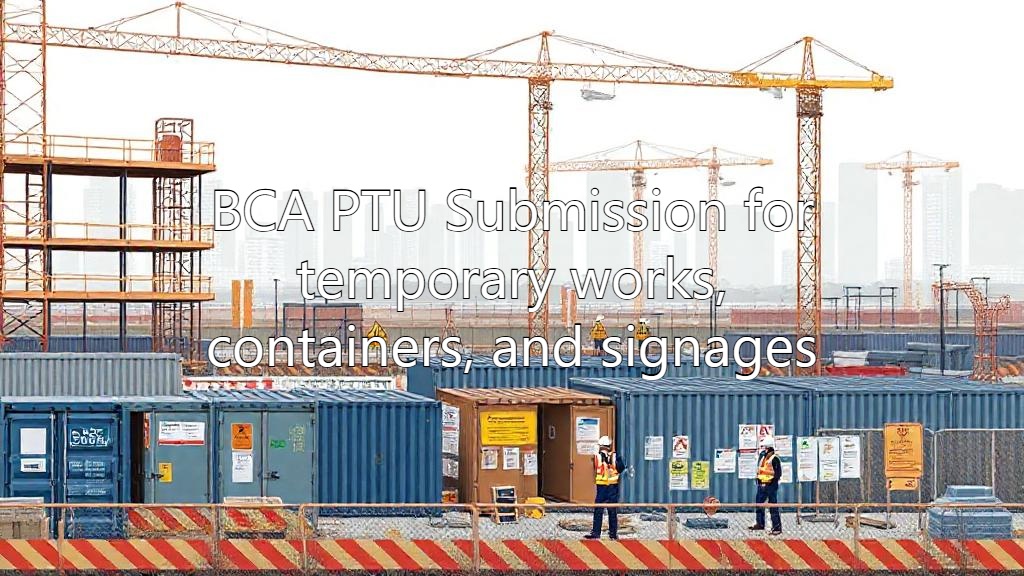
As the cityscape of Singapore continues to evolve, the landscape of construction sites is akin to a dynamic puzzle, with pieces constantly being added, removed, and rearranged.
With the average construction project requiring a plethora of temporary structures, from sturdy scaffolding to vibrant signages, the Building and Construction Authority (BCA) plays a vital role in ensuring that these ephemeral elements do not compromise the permanent fabric of the city.
The submission process for temporary works, containers, and signages is a crucial cog in this machinery, requiring meticulous planning and attention to detail to guarantee compliance with the authorities’ stringent regulations.
By navigating this complex process, developers and contractors can avoid the costly pitfalls of non-compliance, much like a ship avoiding hidden reefs in treacherous waters.
The BCA continues to uphold its commitment to building a safe and sustainable built environment, and the importance of a well-crafted submission for temporary works cannot be overstated.
Understanding BCA PTU Submission Requirements for Temporary Works and Structures
The Building and Construction Authority (BCA) in Singapore requires submissions for temporary works and structures to ensure safety and compliance with regulations.
This process, known as the PTU submission, involves careful planning and documentation to obtain approval from the BCA.
The submission requirements can be complex and time-consuming, making it essential for contractors and developers to understand the process thoroughly.
The fate of a construction project hangs in the balance, as a single misstep in the PTU submission can lead to costly delays and even project cancellation.
Here are some key insights:
- Timely submission is crucial to avoid delays in the construction project.
- Accurate documentation is essential to ensure that the submission is approved by the BCA.
- Understanding the regulatory requirements can help contractors and developers navigate the PTU submission process successfully.
Navigating the Process of Obtaining PTU Approval for Container Placement Onsite

As consideration is given to expanding business operations in Singapore, the need for temporary storage solutions, such as placing containers onsite, may arise.
This is where the concept of PTU approval comes into play, governing the placement of temporary structures like containers.
To obtain PTU approval, it is necessary to understand the regulations and submission requirements set by the relevant authorities in Singapore.
This involves preparing the necessary documents, including site plans and structural integrity assessments, to ensure container placement complies with safety and zoning regulations.
The process can seem daunting, especially for those unfamiliar with local regulations and bureaucratic procedures.
With the right guidance, it is possible to successfully obtain the necessary PTU approval for container placement needs.
Compliance Checklist for Signages and Billboard Advertising in Construction Zones
In Singapore, a construction company was fined for non-compliance with signage regulations in a construction zone, resulting in a significant loss of revenue and damage to their reputation.
The company had failed to ensure that their signages and billboards conformed to the standards set by the authorities, highlighting the importance of adherence to regulations.
This incident serves as a reminder to construction companies to prioritize compliance with signage regulations to avoid similar consequences.
Compliance with signage regulations is crucial for construction companies to avoid fines and penalties, as well as to ensure the safety of workers and the public.
By implementing a comprehensive compliance checklist, companies can ensure that their signages and billboards are properly installed, maintained, and removed, minimizing the risk of non-compliance.
A well-structured compliance checklist should include items such as permit requirements, signage design and content, installation and maintenance procedures, and removal protocols.
By regularly reviewing and updating their compliance checklist, construction companies can stay up-to-date with changing regulations and ensure that their signages and billboards are always in compliance, reducing the risk of fines and reputational damage.
Temporary Works Design and Planning for Successful BCA PTU Submission Outcomes
Temporary works design and planning is a critical component of construction projects in Singapore, requiring meticulous attention to detail and a deep understanding of the Building and Construction Authority’s (BCA) regulations and guidelines.
A well-planned temporary works design can be the difference between a project that runs smoothly and one that is plagued by delays and cost overruns.
The process involves assessing the site’s conditions, identifying potential risks, and developing strategies to mitigate them, all while ensuring compliance with the BCA’s requirements and industry best practices.
By engaging experienced professionals and leveraging cutting-edge technology, such as Building Information Modelling (BIM), construction teams can create comprehensive and accurate designs that meet the BCA’s standards, thereby increasing the chances of a successful PTU submission.
Effective communication and collaboration among stakeholders are also essential to ensuring that the temporary works design aligns with the project’s overall objectives and that any issues or concerns are addressed promptly.
Calculating Fees and Charges for BCA PTU Applications and Renewals Process

To navigate the BCA PTU applications and renewals process efficiently, it’s essential to understand the associated fees and charges.
The fees for BCA PTU applications can vary depending on the type of permit and the applicant’s qualifications.
Renewal fees may also apply, and these can be calculated based on the permit’s validity period and other factors.
Calculating these fees accurately is crucial to avoid any delays or penalties in the application or renewal process.
Beyond that, applicants should also consider other costs associated with the BCA PTU applications, such as consultation fees and document preparation costs.
These additional expenses can add up quickly, so it’s vital to factor them into the overall budget.
Preparing Mandatory Documents and Forms for BCA PTU Submission and Approval
To ensure a smooth submission process, it’s crucial to have all necessary documents in order.
- Gathering all required forms, including the BCA PTU application form and supporting documents
- Submitting duly filled and signed forms to the relevant authorities
- Verifying the accuracy and completeness of all submitted documents
- Obtaining necessary certifications and endorsements from relevant parties
- Tracking the status of the submission and following up on any issues that may arise
By carefully preparing and submitting these mandatory documents, applicants can avoid unnecessary delays and increase their chances of approval, ultimately saving time and reducing frustration in the long run.
Understanding Zoning Regulations and Land Use Plans for Temporary Construction
Zoning regulations play a crucial role in determining the feasibility of temporary construction projects.
Understanding these regulations is key to ensuring compliance and avoiding potential legal issues — a critical aspect of any construction project.
Temporary construction projects must adhere to local zoning laws and regulations to minimize environmental impact and ensure public safety.
A delicate balance between development and conservation is necessary, and achieving this balance requires careful planning and consideration of various factors, including land use plans, environmental assessments, and community feedback.
In Singapore, for instance, the Urban Redevelopment Authority (URA) is responsible for overseeing land use planning and enforcing zoning regulations.
Best Practices for Ensuring Safety and Security in Temporary Worksite Settings
Contrary to popular belief, temporary worksites are not inherently more dangerous than permanent ones, and with proper planning, they can be just as safe.
However, many people assume that the transient nature of temporary worksites makes them more prone to accidents.
This misconception can lead to complacency and a lack of attention to safety protocols.
In reality, temporary worksites often have unique challenges that require specialized safety measures, such as limited access to amenities and unpredictable environmental conditions.
“The construction industry accounts for approximately 20% of all work-related fatalities, with many of these incidents occurring at temporary worksites”
Mitigating Risks and Addressing Common Issues in BCA PTU Submission and Approval
To ensure a smooth BCA PTU submission and approval process, it is crucial to identify and mitigate potential risks, such as incomplete or inaccurate documentation, which can lead to delays or rejection.
By conducting thorough reviews and analyses of the submitted plans and documents, applicants can address common issues, including non-compliance with regulatory requirements, and minimize the likelihood of errors or omissions.
Moreover, engaging with experienced professionals and leveraging their expertise can help navigate the complexities of the submission process, ultimately reducing the risk of rejected applications.
Effective communication and collaboration between stakeholders, including architects, engineers, and contractors, are also essential in resolving issues promptly and ensuring compliance with BCA regulations.
The key to successful BCA PTU submission and approval lies in meticulous planning and attention to detail.
A well-prepared and thoroughly reviewed submission package is essential to minimizing risks and ensuring a timely approval from the BCA PTU authorities
As the submission process for temporary works, containers, and signages comes full circle, it is essential to consider the long-term impact of these structures on the urban landscape of Singapore.
The careful planning and approval process undertaken by the Building and Construction Authority (BCA) ensures that these temporary features do not compromise the city’s aesthetic and safety standards.
Looking ahead, it will be fascinating to see how innovative and sustainable designs for temporary works, containers, and signages can be integrated into the city’s infrastructure, potentially transforming the way we interact with and experience public spaces.
Ultimately, the BCA’s guidelines for PTU submission serve as a foundation for creating a more harmonious and dynamic urban environment, where functionality and creativity coexist in perfect balance, much like the vibrant cityscape of Singapore that continues to evolve and thrive.