
Site Investigation & Data Collection


Authority submissions include:
Building and Construction Authority (BCA), establish comprehensive requirements for structural design that prioritize public safety while promoting innovation and efficiency. The regulatory framework encompasses multiple aspects of structural engineering, from foundation design and load calculations to seismic considerations and progressive collapse prevention. Recent updates to the building codes have introduced new requirements for climate resilience, including enhanced wind load provisions and flood protection measures that reflect changing environmental conditions.
Professional Engineers utilize advanced analysis techniques including finite element modeling, performance-based design, and reliability analysis to optimize structural systems. This optimization process can reduce material costs by 10-20% while maintaining required safety factors. They consider multiple design alternatives, evaluating each for structural efficiency, constructability, and lifecycle costs.
PEs ensure full compliance with Singapore Standards (SS), Eurocodes, and BCA regulations. They stay updated with regulatory changes, including recent amendments to SS EN 1992 for concrete structures and SS EN 1993 for steel structures. Their expertise covers specialized requirements for deep excavations, basement construction, and seismic design considerations.
Implementation of comprehensive quality control procedures including design verification, independent checking, and construction supervision. PEs establish inspection and testing plans that verify material quality and workmanship standards. They conduct regular site inspections to ensure construction aligns with design intent and specifications.
Professional Engineers specializing in landed property construction often develop expertise in specific technical areas that are particularly relevant to this sector. Foundation engineering represents a critical specialization, with PEs developing deep knowledge of Singapore’s varied geological conditions and appropriate foundation solutions. This expertise encompasses the design of pile foundations for properties built on soft marine clay, raft foundations for stable soil conditions, and hybrid solutions that combine multiple foundation types to address site-specific challenges.
Basement construction and deep excavation works represent another area where PE expertise is invaluable. Singapore’s land scarcity has driven demand for multi-level basements in landed properties, creating complex engineering challenges related to groundwater control, earth retention, and protection of adjacent properties. Professional Engineers specializing in this area must understand advanced techniques including diaphragm wall construction, ground anchoring systems, and dewatering methods. They must also navigate stringent requirements for instrumentation and monitoring during construction to ensure the stability of surrounding structures and infrastructure.
The renovation and adaptive reuse of existing landed properties requires specialized knowledge that combines structural assessment techniques with creative engineering solutions. PEs working in this area must be proficient in non-destructive testing methods, structural strengthening techniques, and the integration of new structural systems with existing construction. This expertise is particularly valuable for conservation properties, where structural modifications must preserve architectural character while meeting modern safety and functionality requirements.
The design phase of structural engineering for landed properties in Singapore represents a critical period where conceptual ideas are transformed into detailed technical solutions that meet regulatory requirements, client expectations, and engineering best practices.
Initial design activities commence with comprehensive site investigation and data gathering. Professional Engineers coordinate geotechnical investigations that may include soil boring, Standard Penetration Tests (SPT), and laboratory analysis of soil samples. These investigations provide essential data on soil bearing capacity, groundwater levels, and potential geotechnical hazards that inform foundation design decisions. Simultaneously, topographical surveys establish accurate site levels and boundaries, while utility searches identify existing services that may impact construction. This foundational information forms the basis for all subsequent design decisions and must be thoroughly documented and verified.
The conceptual design stage involves close collaboration between structural engineers, architects, and clients to establish the structural system that best supports the architectural vision while meeting functional requirements. Engineers evaluate multiple structural options, considering factors such as span capabilities, floor-to-floor heights, column locations, and integration with mechanical and electrical services.
Detailed structural analysis represents the technical core of the design phase, where sophisticated engineering calculations verify the adequacy of proposed structural members and systems. Professional Engineers employ advanced finite element analysis software to model complex load paths, analyze structural behavior under various loading combinations, and identify critical design conditions. The analysis must consider all relevant loads including dead loads from the structure itself, live loads from occupancy and use, wind loads based on Singapore’s design wind speeds, and seismic loads as required by current codes. Special attention is given to serviceability criteria including deflection limits, vibration control, and crack width limitations that ensure occupant comfort and structural durability.
The journey from construction commencement to obtaining the Temporary Occupation Permit (TOP) and subsequently the Certificate of Statutory Completion (CSC) requires meticulous coordination, continuous supervision, and strict adherence to approved plans and specifications.
The construction phase commences with site establishment and preparation works that set the foundation for all subsequent activities. This includes site hoarding installation, temporary facilities setup, and implementation of environmental control measures required under Singapore’s environmental regulations. Soil excavation and earth retention works often represent the first major structural activities, particularly for projects involving basements. The installation of earth retention systems such as sheet piles, soldier piles, or secant pile walls requires careful monitoring to ensure stability of adjacent properties and infrastructure. Professional Engineers oversee the implementation of instrumentation and monitoring programs that track ground movements, groundwater levels, and structural responses throughout excavation works.
Foundation construction represents one of the most critical stages of the construction phase, where errors or deficiencies can have severe long-term consequences for structural integrity. For landed properties in Singapore, foundation systems vary based on soil conditions and structural loads, ranging from simple pad footings to deep pile foundations extending 30 meters or more below ground level. Bored pile construction requires careful control of concrete placement to prevent soil contamination or necking of piles. Driven pile installation must consider vibration impacts on nearby structures.
Professional Engineers must conduct mandatory inspections at specific construction stages as required by BCA regulations:
Verification of founding levels, soil bearing capacity, and pile installation records before concrete placement
Checking of rebar sizes, spacing, and placement before each concrete pour for structural elements
Verification of formwork stability, dimensions, and alignment before concrete placement
Supervision of concrete pours for critical elements including foundations, transfer beams, and cantilevered structures
Inspection of welded and bolted connections for steel structures, including verification of weld quality
Supervision of load tests for cantilevered structures, long-span elements, or where required by design
Inspection of basement waterproofing, roof membranes, and wet area treatments
Comprehensive inspection before TOP application to verify compliance with approved plans
The Permit to Commence Structural Works, commonly referred to as the Building Plan (BP) approval or Permit to Start Work, represents the formal authorization to begin construction activities on site. This permit is issued only after structural plans have been approved and all prerequisite requirements have been satisfied. The permit application process involves additional documentation beyond plan approval, including appointment of builders and site supervisors, insurance provisions, and workplace safety and health documentation. Professional Engineers must coordinate with contractors and other parties to ensure all requirements are met before construction mobilization.
The Builder’s License requirements under the Building Control Act significantly impact the permit application process. Only licensed builders with appropriate grading and financial capacity are authorized to undertake structural works for landed properties.
Critical Permit Requirements
Before commencing ANY structural works, ensure:
Commencing works without proper permits can result in stop-work orders, fines, and potential demolition of completed works.
The BCA demolition permit application must include comprehensive documentation demonstrating safe demolition planning:
Detailed description of demolition sequence, equipment, and techniques including structural stability during partial demolition
Comprehensive safety measures including hoarding, scaffolding, catch platforms, and exclusion zones
PE certification of demolition plan adequacy and structural stability provisions
Noise control measures, dust suppression systems, and waste management procedures
For sites affecting public roads, including temporary diversions and safety measures
For buildings constructed before 1991, identifying and addressing asbestos-containing materials
Public liability and contractor’s all-risk insurance coverage verification
Confirmation of licensed demolition contractor with appropriate experience and equipment
Structural stability during partial demolition works presents unique engineering challenges that require sophisticated analysis and careful execution. When retaining portions of existing structures, Professional Engineers must evaluate the effects of removed elements on overall stability, load redistribution, and potential failure mechanisms. Temporary propping and shoring systems may be necessary to support remaining structures during demolition operations. The design of these temporary works requires consideration of construction loads, wind loads, and accidental impact forces. Sequential demolition planning ensures that structural integrity is maintained at each stage, with clear hold points for inspection and verification.
Safety management during demolition operations encompasses multiple layers of controls designed to eliminate or minimize risks to workers and the public. The hierarchy of controls prioritizes elimination of hazards through design, followed by engineering controls, administrative measures, and personal protective equipment.
Addition and Alteration (A&A) works for landed properties represent a significant segment of Singapore’s construction industry, driven by homeowners seeking to modernize, expand, or reconfigure their properties to meet evolving lifestyle needs. These projects range from minor internal renovations to major structural modifications including additional floors, basement construction, and significant lateral extensions. The complexity of A&A works often exceeds new construction due to the constraints of working with existing structures, unknown conditions, and the need to maintain partial occupancy during construction.
Structural strengthening and modification techniques for A&A works have evolved significantly with advances in materials technology and construction methods. Carbon fiber reinforced polymer (CFRP) systems enable efficient strengthening of beams and slabs without significant thickness increases. Steel plate bonding provides robust strengthening for heavily loaded members requiring substantial capacity increases. Micro-pile underpinning addresses foundation inadequacies or facilitates basement construction beneath existing buildings. Post-installed anchors and chemical adhesive systems enable reliable connections between new and existing structures. The selection of appropriate strengthening methods requires consideration of structural requirements, constructability constraints, and long-term durability.
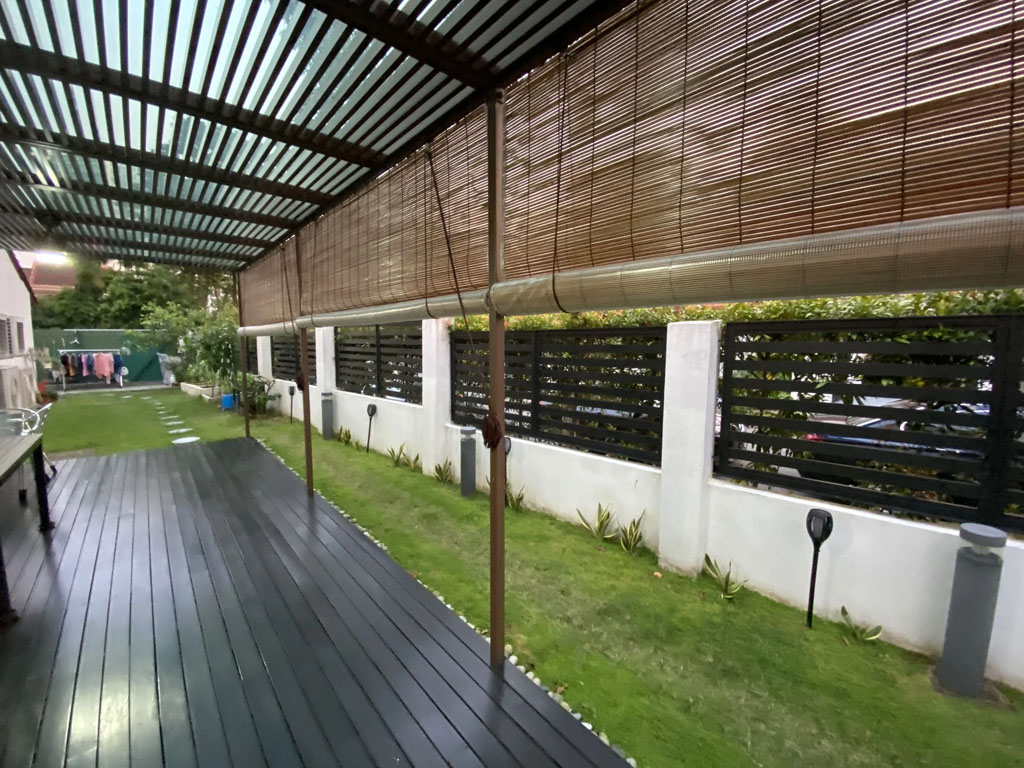
Roof trellis additions create covered outdoor spaces while managing solar heat gain. Structural considerations include wind uplift resistance, connection to existing structures, and waterproofing integration. Typical spans range from 3m to 6m using steel or aluminum frames with polycarbonate or glass covering. BCA submission requires demonstration of adequate structural capacity and compliance with plot ratio and building height regulations.
Lateral extensions at existing floor levels expand living spaces within building setback limits. Structural systems must integrate with existing frames while addressing differential settlement potential. Common solutions include independent foundations with movement joints or tied foundations with underpinning. Extensions exceeding 50% of existing floor area may trigger requirements for full building upgrade to current codes.
Adding floors to existing buildings requires comprehensive structural evaluation and often substantial strengthening works. Foundation capacity verification through load tests or analytical methods is essential. Column and wall strengthening using concrete jacketing, steel sections, or FRP wrapping increases vertical load capacity. Seismic and wind load implications of increased building height must be addressed in design.
Critical Considerations for A&A Works
Before proceeding with A&A works, property owners must understand:
Advanced structural analysis capabilities enable Professional Engineers to address complex design challenges beyond the scope of conventional methods. Non-linear analysis accounts for material and geometric nonlinearity in structures subject to extreme loads or large deformations. Dynamic analysis evaluates structural response to time-varying loads including earthquakes, wind gusts, and machinery vibrations. Progressive collapse analysis ensures structural robustness through alternate load path evaluations following member loss scenarios. Performance-based design approaches optimize structures for specific performance objectives rather than prescriptive code compliance. These advanced techniques require specialized software, theoretical knowledge, and interpretation skills that distinguish expert practitioners.
Forensic engineering and failure investigation services address situations where structures have experienced distress, damage, or collapse. Professional Engineers conduct systematic investigations to determine failure causes, evaluate structural safety, and recommend remedial measures. Investigation techniques include visual inspection, non-destructive testing, material sampling, and structural analysis of damaged conditions. The documentation of findings through detailed reports, photographs, and drawings supports insurance claims, legal proceedings, and repair design development. Expert witness services may extend to testimony in arbitration or court proceedings where technical expertise assists in dispute resolution.
Analysis of multiple landed property projects reveals recurring themes and critical success factors:
Singapore law mandates that all structural works for landed properties must be designed and supervised by a qualified Professional Engineer. Non-compliance can result in severe penalties including:
Property owners who proceed without proper PE endorsement risk not only legal penalties but also potential insurance voidance, difficulty in property transactions, and compromised structural safety.