
Setting Alert, Action, and Limit (AAL) Levels for ERSS in Urban Singapore

Key Takeaways A defensible ERSS AAL framework turns monitoring data into timely, proportionate decisions. It must be grounded in the design, the site baseline, Singapore’s regulatory setting, and clear responsibilities. Establish movement objectives before selecting trigger values. Build the baseline risk profile before excavation begins. Match instruments and thresholds to each receptor and construction stage. […]
Slope Stabilisation & Soil Nailing: Submission Workflows for Temporary Hillside Excavations

Key Takeaways A defensible hillside excavation submission connects the ground model, temporary works design, authority requirements, and construction controls from the beginning. Define the temporary and permanent works interfaces before design responsibility becomes unclear. Investigate soil, rock, groundwater, drainage, adjacent assets, and existing utilities proportionately to risk. Verify soil nailing against local and global failure […]
The Annex C & Annex E Workflow: On-Site ERSS Compliance During Execution

Key Takeaways ERSS compliance during execution depends on disciplined supervision, clear authority, and records that connect site actions to approved design and monitoring requirements. Annex C controls the construction and inspection workflow for ERSS works. Annex E provides the monitoring, threshold, and response framework. The RE, RTO, and Site Manager need distinct but coordinated responsibilities. […]
The Cost of ERSS Submissions in Singapore: Breakdown of Consultant Fees, Checking Fees, and Testing

Key Takeaways ERSS costs depend on the excavation, ground conditions, design responsibility, checking requirements, and the level of construction-stage support needed. A useful budget separates professional fees from testing, monitoring, authority coordination, and risk allowances. ERSS is a temporary earth-retaining system used to support excavations and control ground movement. Consultant fees rise with excavation depth, […]
Leveraging AI and Machine Learning in Geotechnical Back-Analysis for ERSS Submissions

Key Takeaways AI can make geotechnical back-analysis faster and more consistent, but it does not replace the Professional Engineer responsible for the design and submission. The strongest ERSS workflows connect trustworthy monitoring data, calibrated numerical models, transparent assumptions, and clear authority evidence. Back-analysis helps reveal how soil, groundwater, support systems, and adjacent structures behave in […]
Eurocode 7 (SS EN 1997) for Singapore ERSS: Ultimate Limit State (ULS) vs. Serviceability Limit State (SLS)
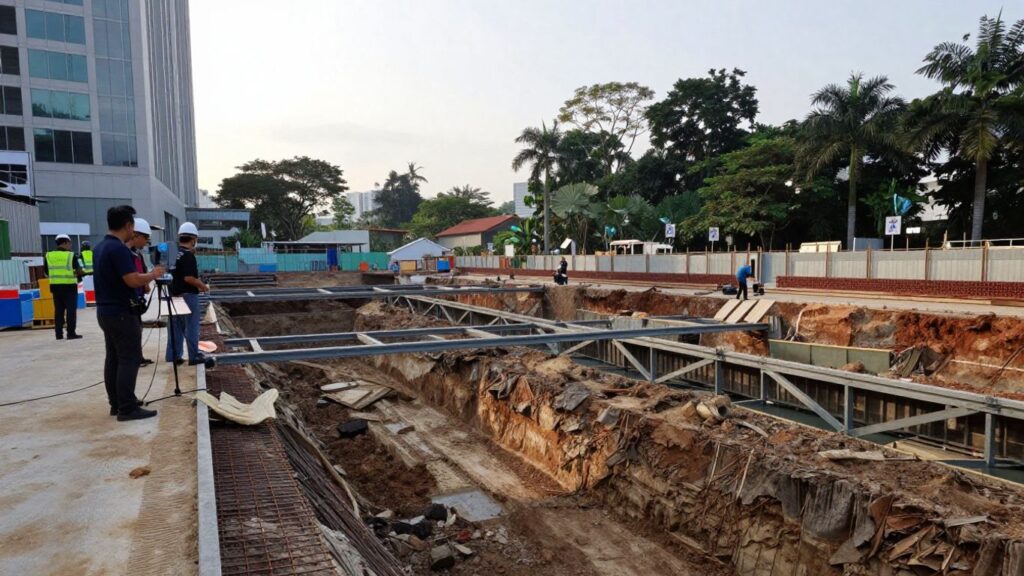
Key Takeaways Eurocode 7 provides the limit-state framework for Singapore ERSS, but a compliant design also depends on local ground conditions, construction stages, and movement control. ULS checks resistance against collapse, instability, hydraulic failure, and structural failure. SLS checks movements, settlement, deformation, and effects on neighbouring assets. Groundwater and soil variability must be reflected in […]
Designing ERSS for Kallang Formation: Navigating Marine Clay in Singapore Basements
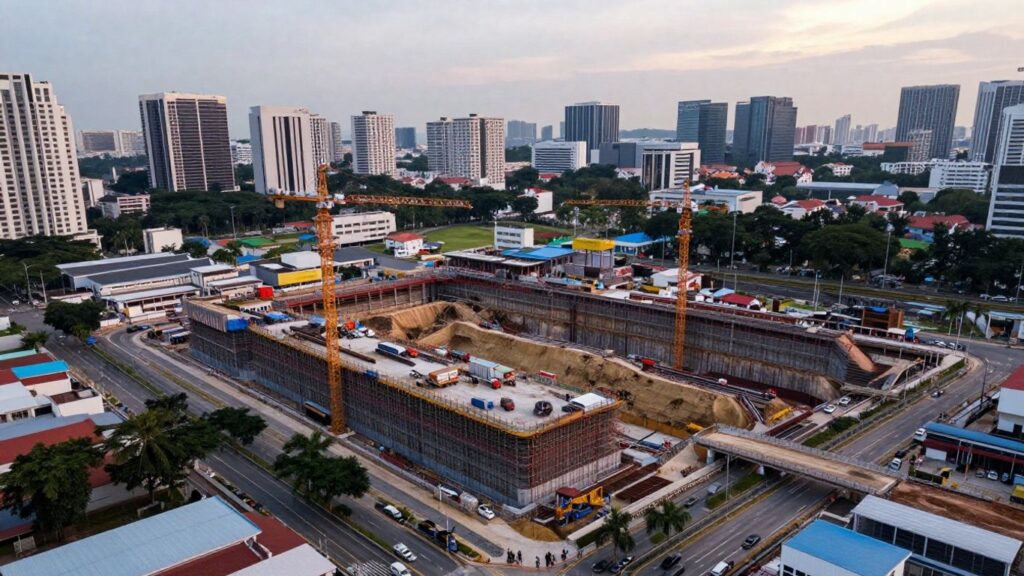
Key Takeaways Deep excavation in Kallang Formation demands a ground model that accounts for soft marine clay, variable fill, groundwater, and time-dependent movement. ERSS design is strongest when geotechnical and structural decisions remain coordinated from investigation through construction. Build the geological and groundwater model before selecting the ERSS. Treat excavation staging, support installation, and monitoring […]
Temporary King Post and Strutting Systems: Structural Detailing for BCA Approval
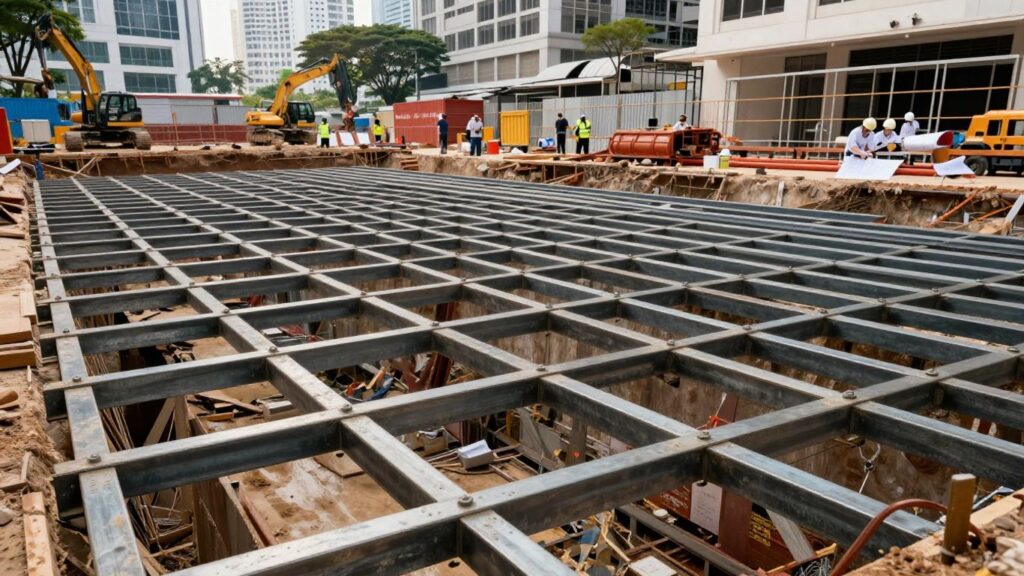
Key Takeaways A temporary king post and strutting system is only as reliable as its design basis, connections, construction sequence, and site control. BCA approval depends on a coordinated package that explains both the engineering and how the system will be built. Define the ground, loading, geometry, and construction stages before detailing steel. Check member […]
Roof extension regulations in Singapore: Structural limits you must know

Key Takeaways Adhering to Singapore’s strict building codes is essential for any roof extension project, requiring careful planning and professional oversight to remain compliant. BCA approval remains the primary requirement for all structural additions. Proper calculation of dead and live loads ensures long-term safety. Professional Engineers must endorse all structural analysis documentation and plans. Climate […]
Periodic Facade Inspection (PFI) Singapore: A compliance guide for aging buildings

Key Takeaways Staying ahead of regulatory maintenance is vital for property owners managing aging building stock. This overview summarizes critical steps, roles, and technical considerations involved in maintaining safe, compliant structures in Singapore. Mandatory PFI applies to buildings over 13 years old, requiring inspection every 7 years. Qualified Persons (QP) are legally responsible for conducting […]